

By Abhishek Gupta and Phoolmaya Dimdung Tamang
Laurea Experience
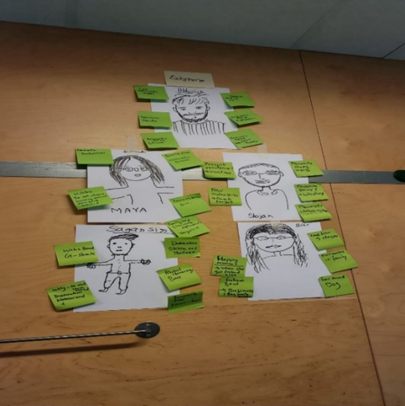
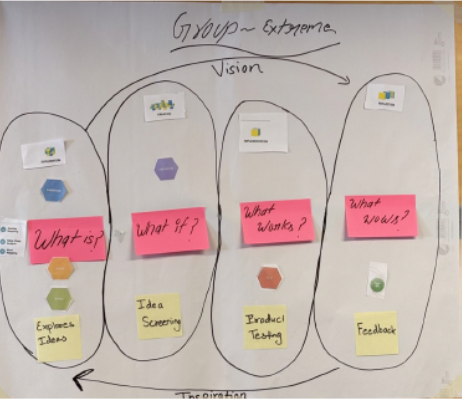
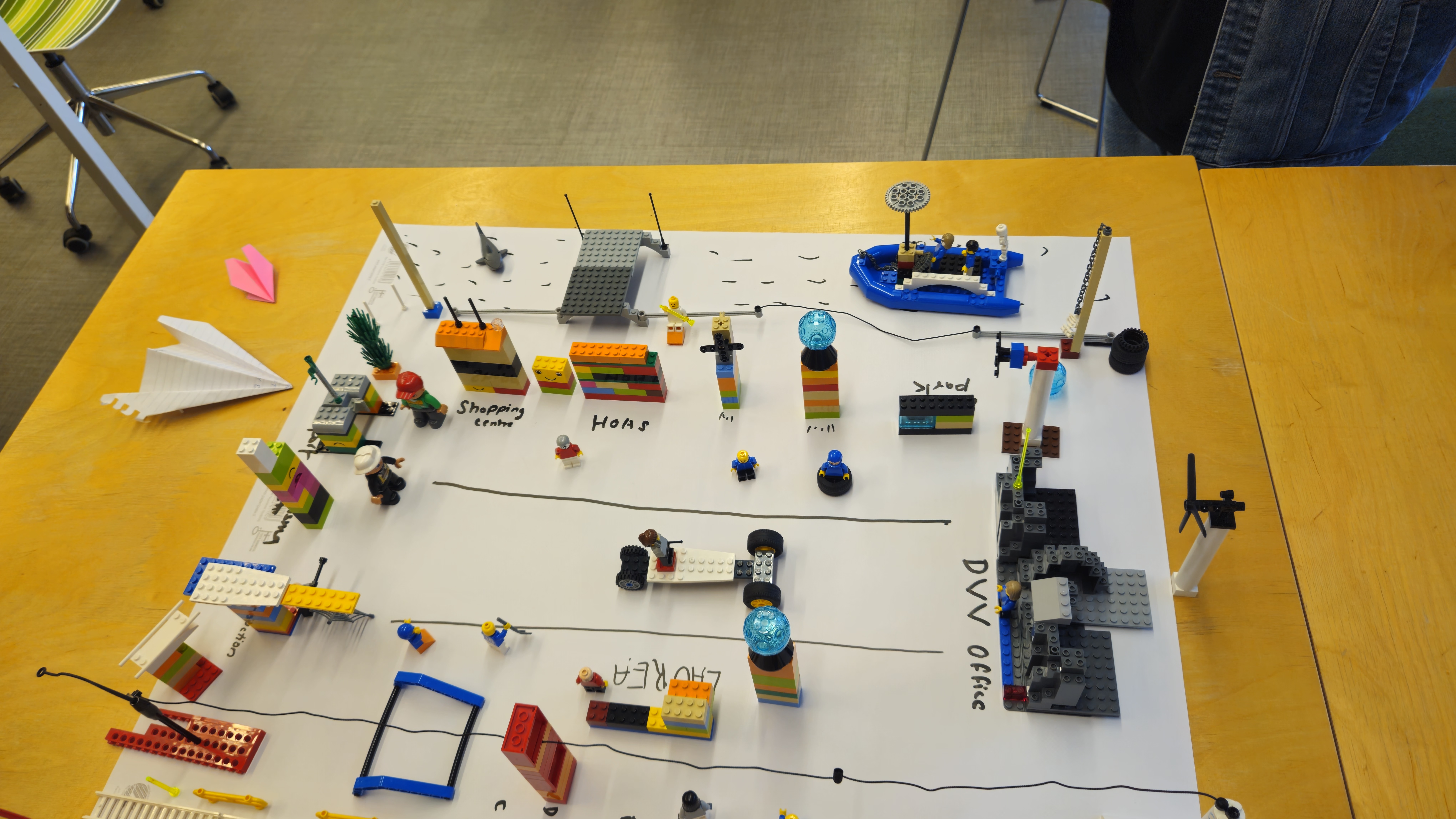
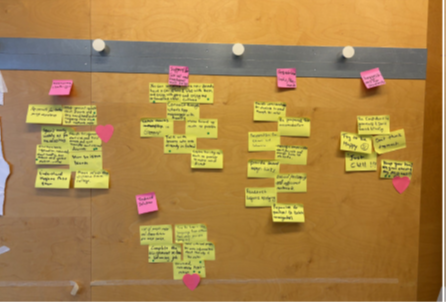
The experience of our first couple of days at Laurea on 1st and 2nd Oct was very peculiar one as it was the first time for us to be at Laurea and we were starting our journey with SID masters. As international students, we got introduced to very different teaching methods which is not so common for us. We started with the fun activities and then lectures and group work. Our lecturer took us into the world of wide design thinking which introduced us to the history and background of design thinking. Also we got to know different design thinkers who brought the concept of design thinking to reality (Tschimmel, 2026). We really enjoyed the part where we made our own models of design thinking and presented. We came to know that design thinking is not just about having creative ideas but also about looking problems from different angles.
Understanding design thinking
We have discovered that it’s no single definition for design thinking (Johansson-Sköldberg et al., 2013). In ‘Design thinking: Past, present and possible futures’ they stress that there are a lot of different definitions for design thinking depending on context. Many researchers discuss whether design thinking is just a trend or has an important role in innovation. In this article they review many different sources such as books, academic articles and professional articles. (168 sources) They have found that when it comes to academic articles, they focus on the theory of design thinking. However for professional articles they focus on the practical side. Many different researchers have different views on design thinking such as Herbert Simon, Donald Schön, Richard Buchanan, Bryan Lawson, Nigel Cross, Klaus Krippendorff. Yet, in a professional perspective, Martin (2009) argues that in organisations design thinking can give them a real advantage in terms of competitiveness.
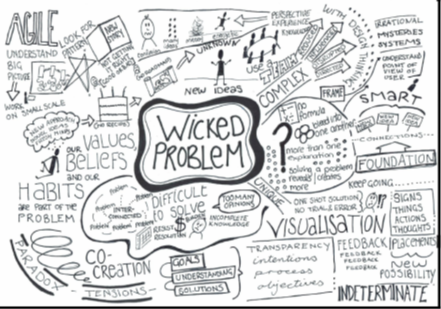
Our 2nd day of class our lecturer introduced us to the idea of ‘Wicked Problems in Design Thinking’. Wicked problems are the complex problems which is difficult to solve, because there is no one solution (Buchanan, 1992). The mind of Richard Buchanan made it easier for us to understand the complex topic after we had gone through it. He mentioned that designer needs to view the problem from different angles to come up with more adaptable solution. Even though the researcher did not provide any specific solution to the challenges within society, he did emphasise on the importance of being creative, having different perspectives and be adaptable. If there is no one solution to a problem, how do designers know which is more suitable?
Our inspiration: Creative Confidence
Having the right attitude and self-belief are the keys for solving complex wicked problems and dealing with uncertainty for designers. We have a great source of inspiration in the authors of the book ‘Creative Confidence’, David & Tom Kelley. They tell us that everyone can be creative and have the creative confidence through experimenting with new ideas. And they give us examples of how Thomas Edison or Wright brothers went through thousands of failed experiments to finally succeed. Failure is such a significant part of innovation. We need to have failures to understand what the problem is and get chances to create solutions. We can’t just read about or think about creativity to have creative confidence. We need to start small and experiment with new ideas.
References
Buchanan, R. (1992). Wicked problems in design thinking. Design Issues, 8 (2), 5-21. https://web.mit.edu/jrankin/www/engin_as_lib_art/Design_thinking.pdf
Johansson-Sköldberg, U., Woodilla, J., Çetinkaya, M. (2013). Design thinking: Past, present and possible futures. Creativity and Innovation Management, 22 (2), 121-146.
Kelley, T., & Kelley, D. (2013). Creative confidence: Unleashing the creative potential within us all. Crown Business. http://www.creativeconfidence.com/
Martin, R. (2009). The design of business: Why design thinking is the next competitive advantage. Harvard Business Press.
Tschimmel, K. (2026). Design thinking masterclass. [Contact session slides]. SID, Laurea University. 1-2 October.


Leave a Reply