
“It’s not ‘us versus them’ or even ‘us on behalf of them.’ For a design thinker it has to be ‘us with them’”.
–Tim Brown
Reflections by Marita Ruotsalainen and Katja Räisänen
The workshop days of Design Thinking with engaging pracademic Daniela Marzavan felt like looking at something familiar through a pair of new glasses and on the other hand putting on right gloves, new and natural. It felt impressive how in a few hours we went through the five methods in design thinking process from PESTEL analyzing to persona identification – dealing a challenge (Urban Gardening for Teens) by doing, even the field observation part in the close by park. The physical implementation was crucial and insightful. From diverse backgrounds, education, experience and cultures we were reminded to ask why, why, and again why.
Why wicked?
Design thinking approach could be applied to any area of human experience (Buchanan 1992, 16). To outline the emergence and the features of design thinking, one must look back to timeline of history. If design thinking can be understood as a new liberal art of technological culture, the roots tracked to the era of Renaissance where liberal arts originated need to be mentioned. Richard Buchanan reminds of four broad areas in which design thinking is explored throughout the world: Symbolic and visual communications, material objects, activities and organized services and the complex systems or environments for among others living and working. Essential is to remember, that these are not categories but places of invention where all diverse kinds of designers may work. (Buchanan 1992, 5, 8-10)
The structure is diverse, and the problems that designers address are also often wicked problems according to Rittel, where the relation between determinacy and indeterminacy is fundamental (Buchanan 1992, 15). One could think the model of design thinking is based on definite conditions and then the production of a solution. But wicked problems approach underlines the indeterminacy and the special nature of the subject matter of design, which can be universal.
Rittel describes the wicked problems a class of social system problems which are ill-formulated, where the information is confusing, where there are many clients and decision makers with conflicting values… (Buchanan 1992, 15). ‘The Urban Gardening for Teens’ challenge we had during our design thinking workshop serves as a good example of wicked problem, as the challenge involved, among other things, conflicting and opposing values and needs (e.g. ecology, sustainability, mental health of young people and urban development). This became interestingly apparent when, for example, we explored the stakeholders of the topic.

Persona illustration for The Urban Gardening for Teens challenge, Daniela Marzavan Design thinking workshop, Laurea University of Applied Sciences
Why empathy?
Design thinking focuses on people, their needs and improving their challenges. The real goal for a design thinker can be to find the real needs, which can often be latent, not just fulfilling the wished needs (Brown 2019, 45-46). Just listen, reminded Marzavan. The essential elements to help reveal the game changing needs are insight, observation and empathy (Brown 2019,46).
Kouprie & Visser (2009, 442-443, 445) have highlighted in their article how important stepping in and out of the user’s world is to the design process. This requires deep empathy which can be broken down two (affective & cognitive) components and further to four distinct stages in the process. The four stages involve getting in the user’s world on an emotional level and understanding the context where the user exists. Using the cognitive component involves separation from the emotional stage and starting to look into the future.
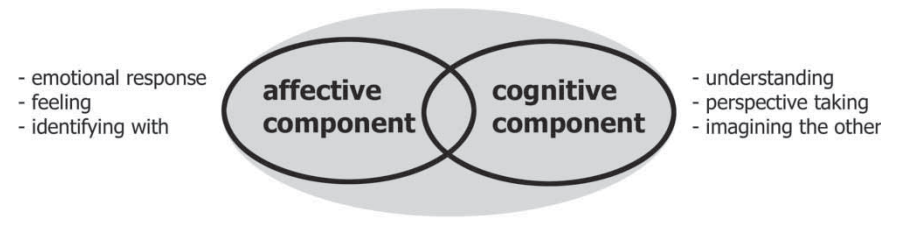
Empathy towards the user is gained by observing the user and asking questions. You should ask why and not what emphasizes Brown (2009/2019). It is good to note that having someone look into users’ personal life may evoke different emotions and reactions. These very human responses are a great gateway to gain real insight into the user’s life.
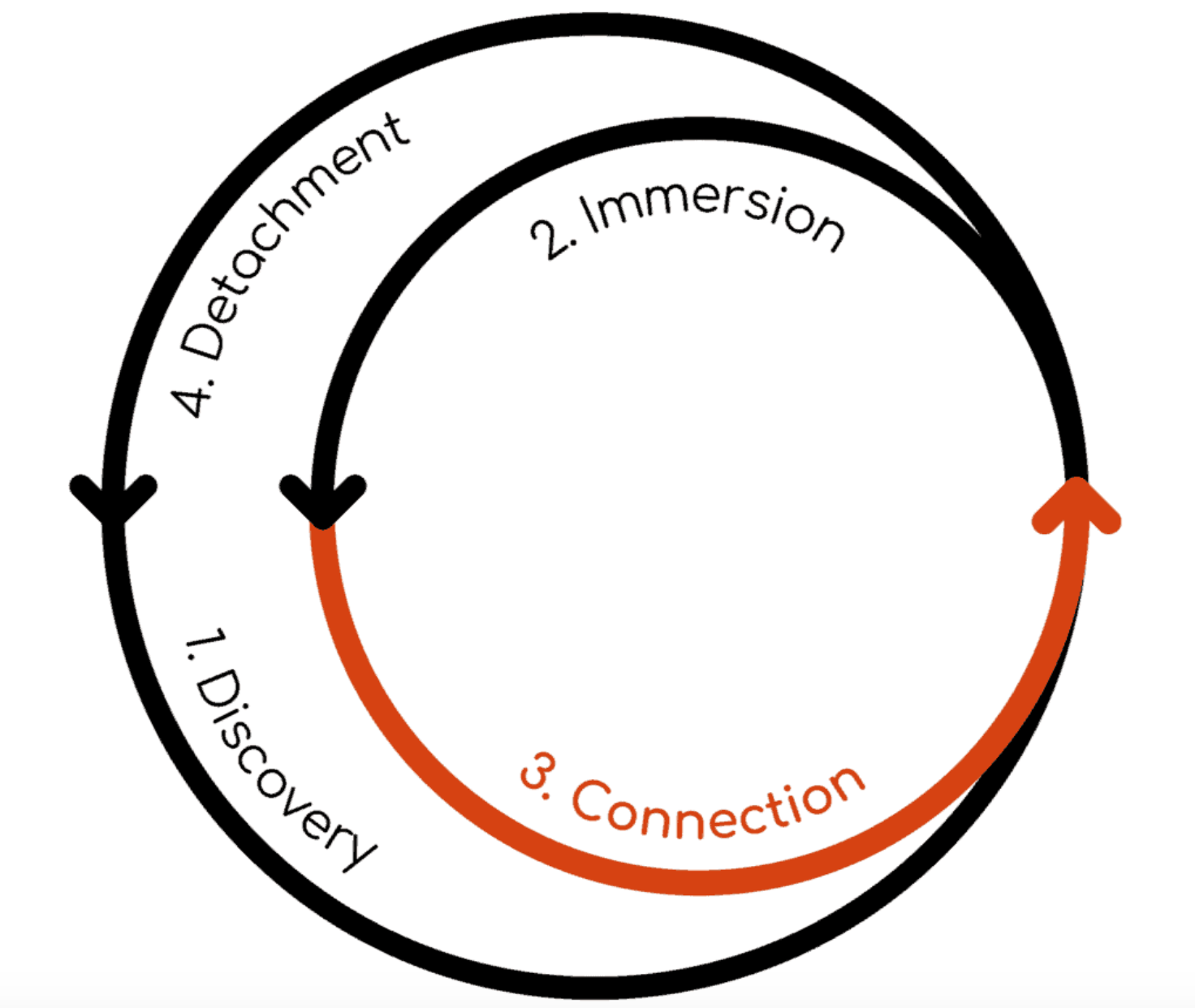
During the class by Daniela Marzavan in ‘Wallet-challenge’ students had to inspect another person’s wallet and use the empathy framework to build an understanding of the problem before figuring out a solution. Sharing a messy and disorganized wallet full of receipts and change in the most random places was a surprisingly emotional experience. A designer needs to notice these moments and start asking more questions to uncover the real issue. This is where empathetic connection to the user opens a gate to a real discovery and a chance to improve the user’s life were the problems wicked or not. We believe the human center-oriented design thinking is the crucial approach in today’s societies – from head to heart and hand.
Sources
Brown, Tim. 2009/2019: Change by Design. Harper Collins.
Kouprie, Merlijn & Sleeswijk Visser, Froukje. 2009: A framework for empathy in design: stepping into and out of the user’s life. Journal of Engineering Design. Vol. 20, No. 5: 437–448.
Buchanan, Richard. 1992: Wicked Problems in Design Thinking. In Margolin, V. & Buchanan, R. The Idea of Design. A Design Issues Reader, Vol.8, No.2. Cambridge: The MIT Press.
Marzavan, Daniela. 2024. Design thinking lecture material. Sept 6-7, 2024. Laurea University of Applied Sciences.


Leave a reply to satumuratte Cancel reply