

written by Ujeli Bhattarai & Bharat Gautam.
We were wondering how well Design Thinking can be learned in a classroom. Can hands on practice really prepare us for using it in the world? This question was on our mind during our two day Design Thinking workshop on 9-10 March. We got an introduction to the core phases of the design process. We worked in teams discussed ideas and reflected on what we were doing. We used methods that are commonly talked about in Design Thinking literature. We also saw a familiar problem: the gap between using Design Thinking in a classroom and using it in the real world.
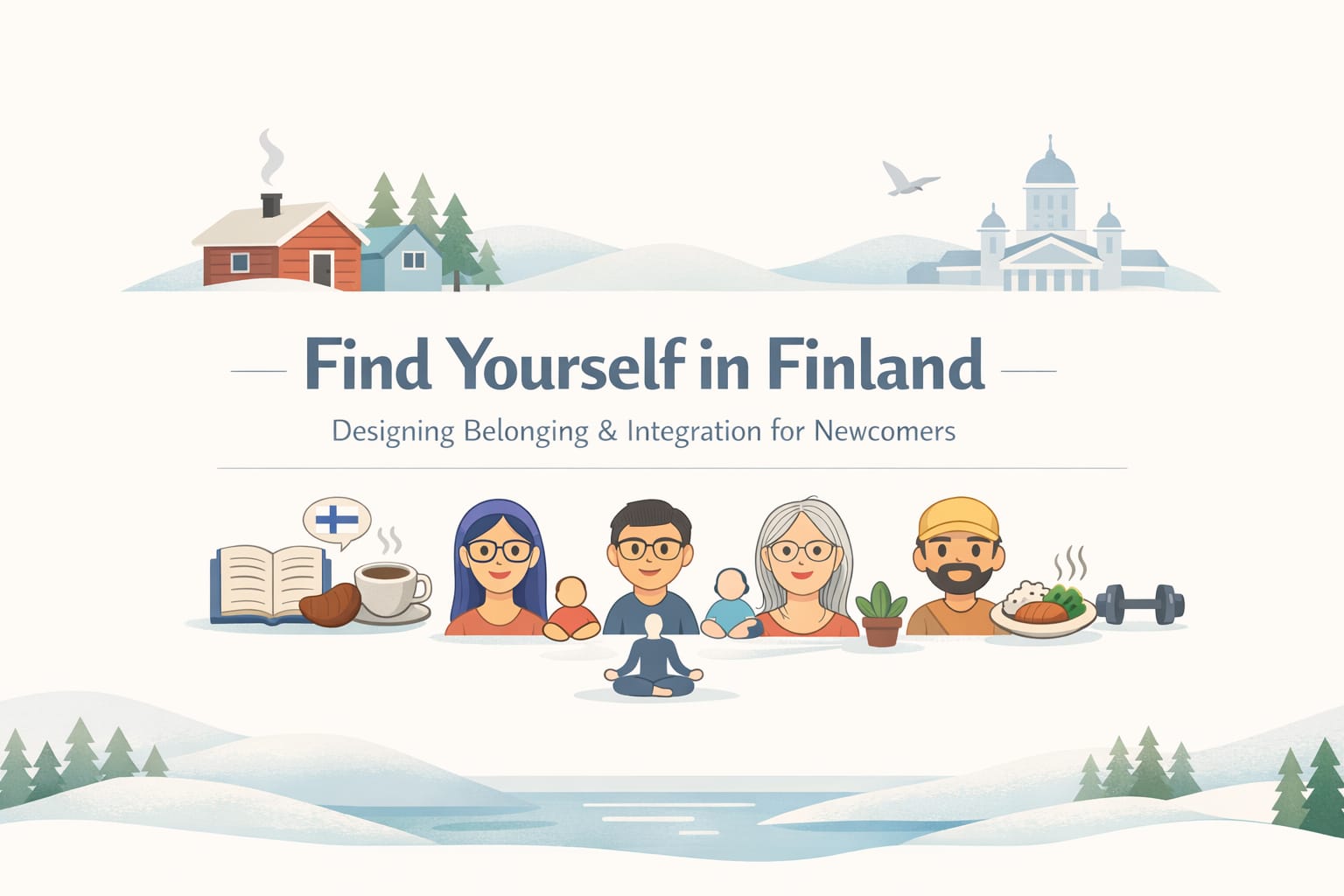
Developing the Concept: “Find Yourself in Finland”
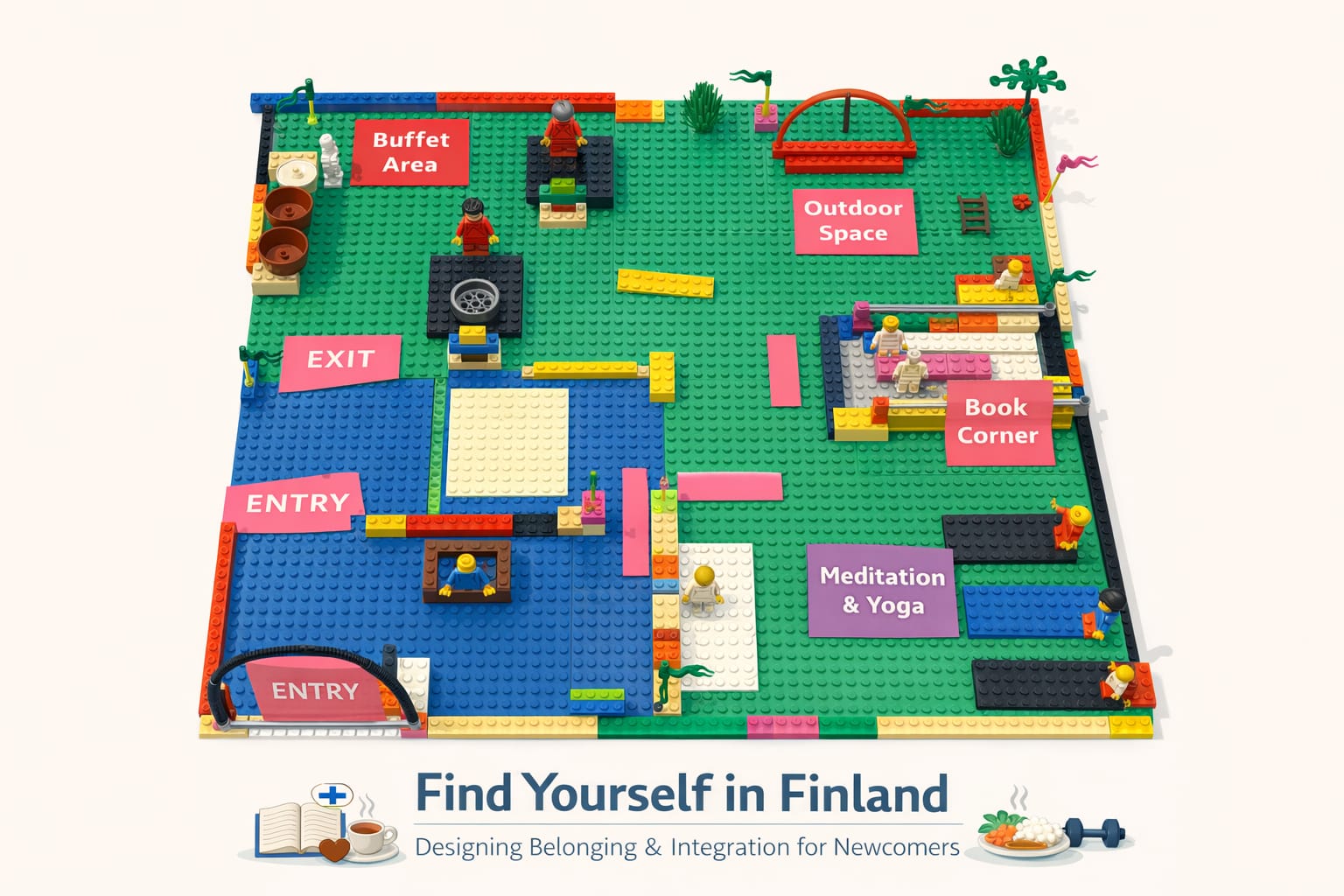
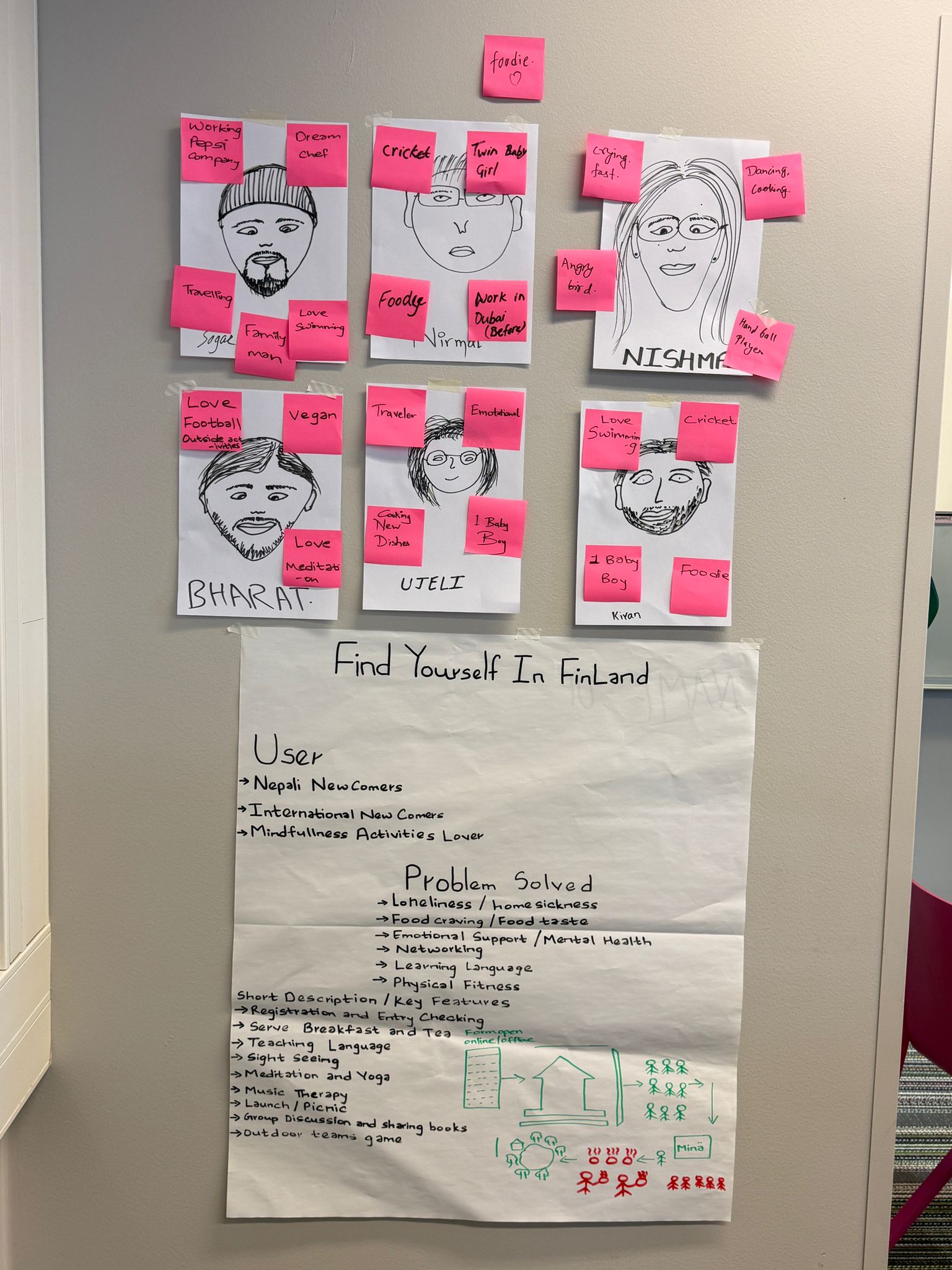
During the workshop our team created a service concept called “Find Yourself in Finland”. It was meant to help newcomers adapt to life in Finland. Our prototype included:
- A two hour yoga and meditation session
- A walk in nature
- A home cooked Nepali meal
- A short lesson in Finnish
- A closing meditation
The concept was about wellbeing, cultural integration and community. All things that are really important in Finland. In the classroom the idea seemed to make sense and was meaningful. It seemed to meet the needs of newcomers.
Recognizing the Limitations of Classroom Design Thinking
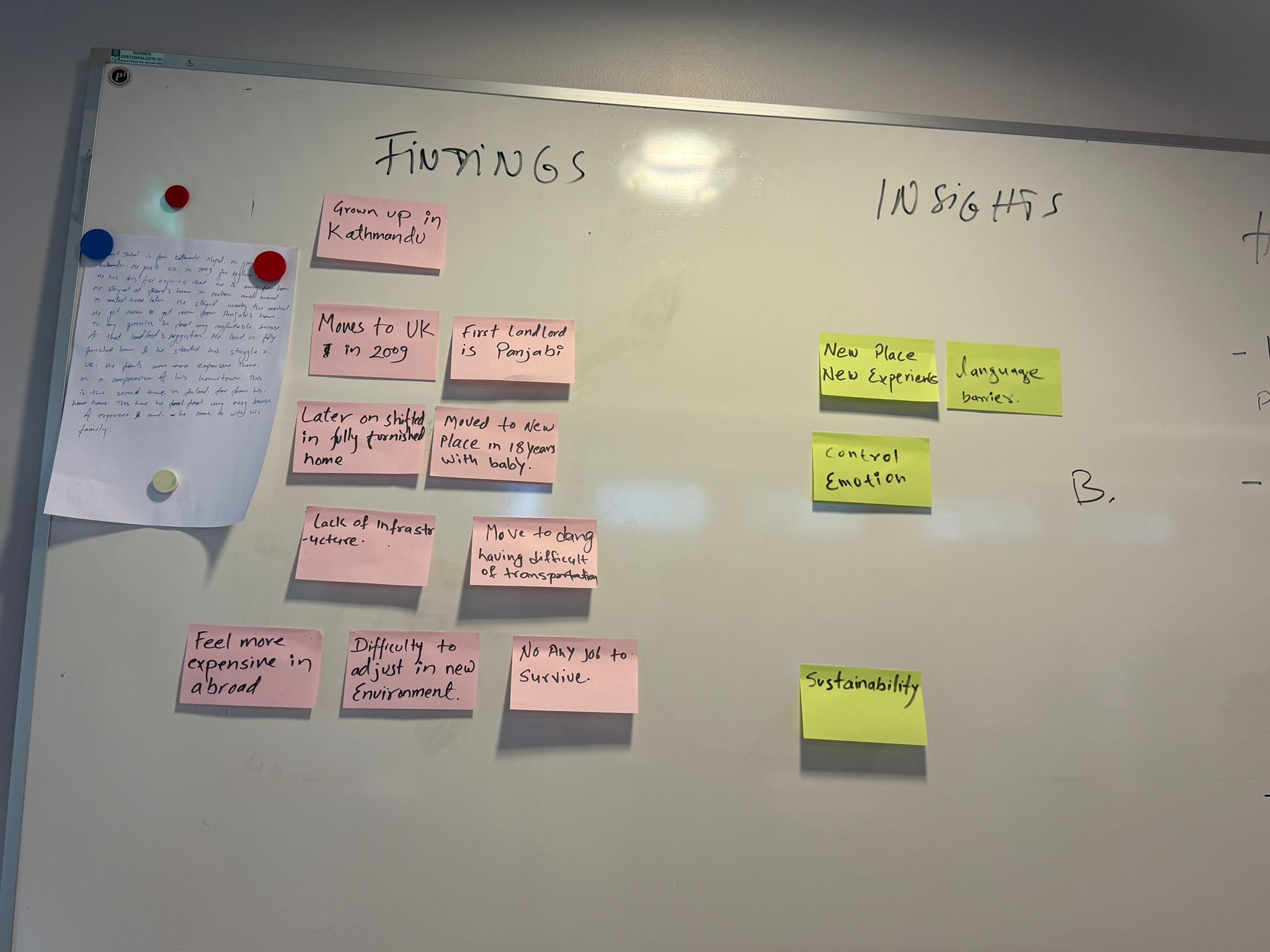
When we looked at the concept more closely we saw some limitations. We had only talked to a real users we had not checked if our ideas were correct and we had not thought about operational or logistical problems. This is similar to what Jon Kolko said in 2015. He said that Design Thinking is often not implemented deeply.
Kolko said that organizations often use the tools of Design Thinking like brainstorming sessions and rapid prototyping without making the changes that are needed for real innovation. Our prototype was like this: it was a classroom exercise but it was not based on real user insights and feasibility considerations.
Connecting Theory to Practice: Insights from Tim Brown
Tim Browns article Design Thinking from 2008 helps us understand this issue. Brown said that empathy, experimentation and iteration are parts of Design Thinking. In the workshop we got to practice these elements a little. We did not get to test and refine our ideas like Brown said we should. Without user feedback our prototype was an idea, not based on evidence.
Brown also wrote a book called Change by Design, where he said that Design Thinking is a mindset that is based on curiosity, collaboration and being comfortable with uncertainty. He said that to innovate we need to keep learning and not follow a process. The workshop introduced us to these principles. It also showed us how hard they are to apply in the real world.
Bridging the Theory-Practice Gap
The difference between our classroom experience and what Kolko and Brown said shows why Design Thinking seems simple in theory but is complex in practice. In a classroom we have safety, structure and time limits which make the process seem manageable. But in the world we need:
- To really engage with different users
- To test and refine our ideas many times
- To think about feasibility, resources and constraints
- To have organizational support for experimentation
The workshop helped us see that to master Design Thinking we need to do more than just follow a process. We need to be okay with uncertainty question our assumptions. Keep learning.
The workshop was helpful in teaching us about Design Thinking tools and methods.. The most important thing we learned was about the limitations of our prototype. The difference between our classroom experience and what Kolko, Brown and Change by Design said helped us see why Design Thinking seems easy in theory but is harder in practice. To bridge this gap we need to not use the tools but also have the mindset, empathy and discipline to really use Design Thinking.
References
Brown, T. (2008). Design Thinking. Harvard Business Review. https://hbr.org/2008/06/design-thinking
Brown, T. (2009). Change, by Design: How Design Thinking Transforms Organizations and Inspires Innovation. HarperCollins. https://www.researchgate.net/publication/338394954_Tim_Brown_Change_by_Design_How_Design_Thinking_Transforms_Organizations_and_Inspires_Innovation_2009
Kolko, J. (2015). Design Thinking Comes of Age. Harvard Business Review. https://hbr.org/2015/09/design-thinking-comes-of-age
Images are created through the help of Microsoft Co-pilot


Leave a comment