
Written By: Nishma Basnet & Sagar Bhandari
“The approach, once used primarily in product design, is now infusing corporate culture” by Jon Kolko
Design Thinking is a human-centered method that change the way of understanding and solving problems. This approach was discussed during the contact sessions on 9-10 March, where we carried out practical exercise based on empathy, collaboration, and experimentation. Together with these experiences and the knowledge provided by Brown (2008), Kolko (2015), and Brown (2019), they show how design thinking reshapes it focus away from merely finding solutions to a problem to finding meaningful possibilities.
Understanding the problem
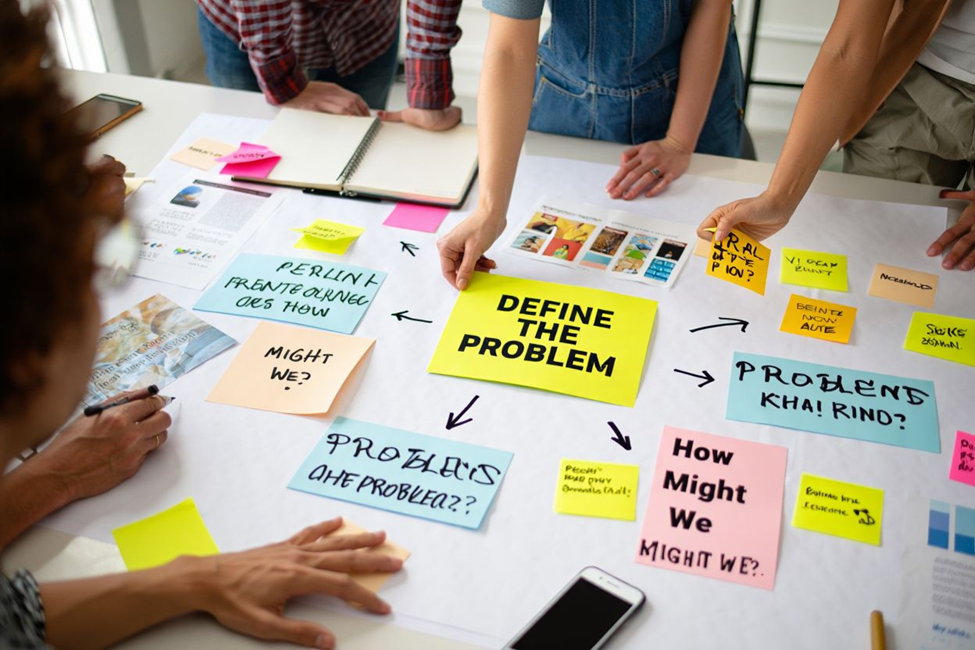
An important lesson of the sessions was that it is important to have an in-depth problem understanding. We did not hurry to come up with solutions, but instead, we performed user interviews and observations to identify the actual needs. This process has shown that most of the assumptions that were initially made were false.
This is supported by Kolko (2015) who notes that design thinking is centered on the experience of users, in particular emotional. It is advised that organizations should monitor behaviors and see what people require, but not what they want. On the same note, Brown (2008) claims that innovations starts with empathy-putting people in the middle of the process.
This phase demonstrated that it is important to define the right problem. Even the most creative solutions may not work without this base.
Ideation and Possibility Generation

Once the issue was made clear, we proceed to ideation. This stage promoted critical thinking and innovation without judgment. Brainstorming was used to come up with diverse ideas including unconventional ones.
Brown (2019) states that collaboration and free flow of ideas are essential to design thinking. He points out that radical ideas are the drivers of innovation, not incremental advancements. This can be seen in our sessions, as the idea of adding on to the ideas of others resulted in more innovative ideas than working alone.
The ideation phase proved that creativity is not a process of finding one right solutions, but one of discovering many opportunities.
Prototyping and Testing
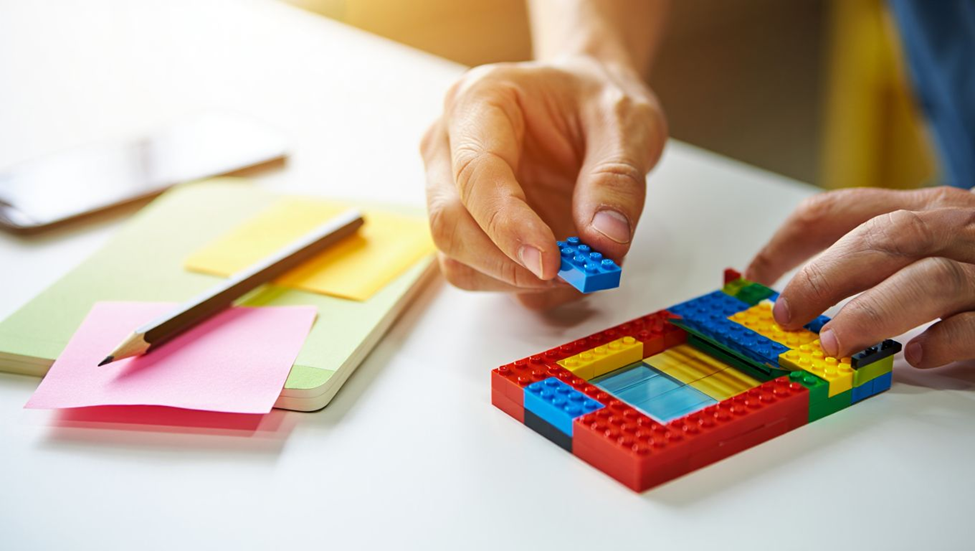
Prototyping translated ideas into reality. We developed models to visualize solutions and test them in quick time. This practical style simplified the process of determining strengths and weakness.
According to Kolko (2015), prototypes are the keys to findings solutions and sharing ideas. They enable teams to be experimental, learn and refine ideas. Notably, design thinking promotes failure-tolerance-design thinking considers mistakes as learning opportunities instead of failures.
Based on the Book Change by Design, Brown (2019) emphasizes that innovation is a continuous process that entails inspiration, ideation, and implementation. Prototyping relates these stages by making ideas become a reality which is subject to testing and improvement.
Conclusion
Transformation of problem to possibilities is a dynamic process. Design Thinking is not linear and consists of learning, testing and refining.
The contact sessions revealed the practice of empathy, creativity, and experimentation in practice. This literature also supports the fact that design thinking is not a designer tool only but a way of thinking that can change organizations and lead to innovation.
Finally, design thinking teaches us to live with uncertainty, prioritize human experiences, and see problems as opportunities. Through this, it helps us overcome constraint an open the door to new opportunities.
Reference
Brown, T. (2008). Design thinking. Harvard Business Review, 86(6), 84-92
Kolko, J. (2015). Design thinking comes of age. Harvard Business Review, 93(9), 66-71
Brown, T. (2019). Change by design: How design thinking transforms organizations and inspires innovation (Revised and updated edition). New York, NY: Harper Business
Images are created through the help of reve.com


Leave a reply to Tripti Sapkota Cancel reply