

–Niraj Adhikari and Jay Naresh Chaudhary
What happens when you walk into a class with no clear task—and walk out having built a service prototype? That was exactly our experience during two intensive and eye-opening days in the Design Thinking and Creativity course at Laurea University.

At first, the ambiguity was uncomfortable. There were no step-by-step instructions, no predefined outcomes. Instead, we were divided into teams of six and encouraged to ask questions, collaborate, and explore. Looking back, this uncertainty was not a flaw—it was the starting point of design thinking.
Embracing the “Messiness” of Design Thinking
As highlighted in the article Design Thinking Comes of Age(2015), design thinking shifts focus from pure functionality to user experience and emotions.
In our case, this meant stepping away from “what should we build? to who are we designing for and why?
Similarly, the second article Design Thinking: Past, Present and Possible Futures by Ulla Johansson-Sköldberg et al emphasizes that design thinking is not a single method but a combination of different ways of thinking—problem-solving, meaning-making, and reflective practice.
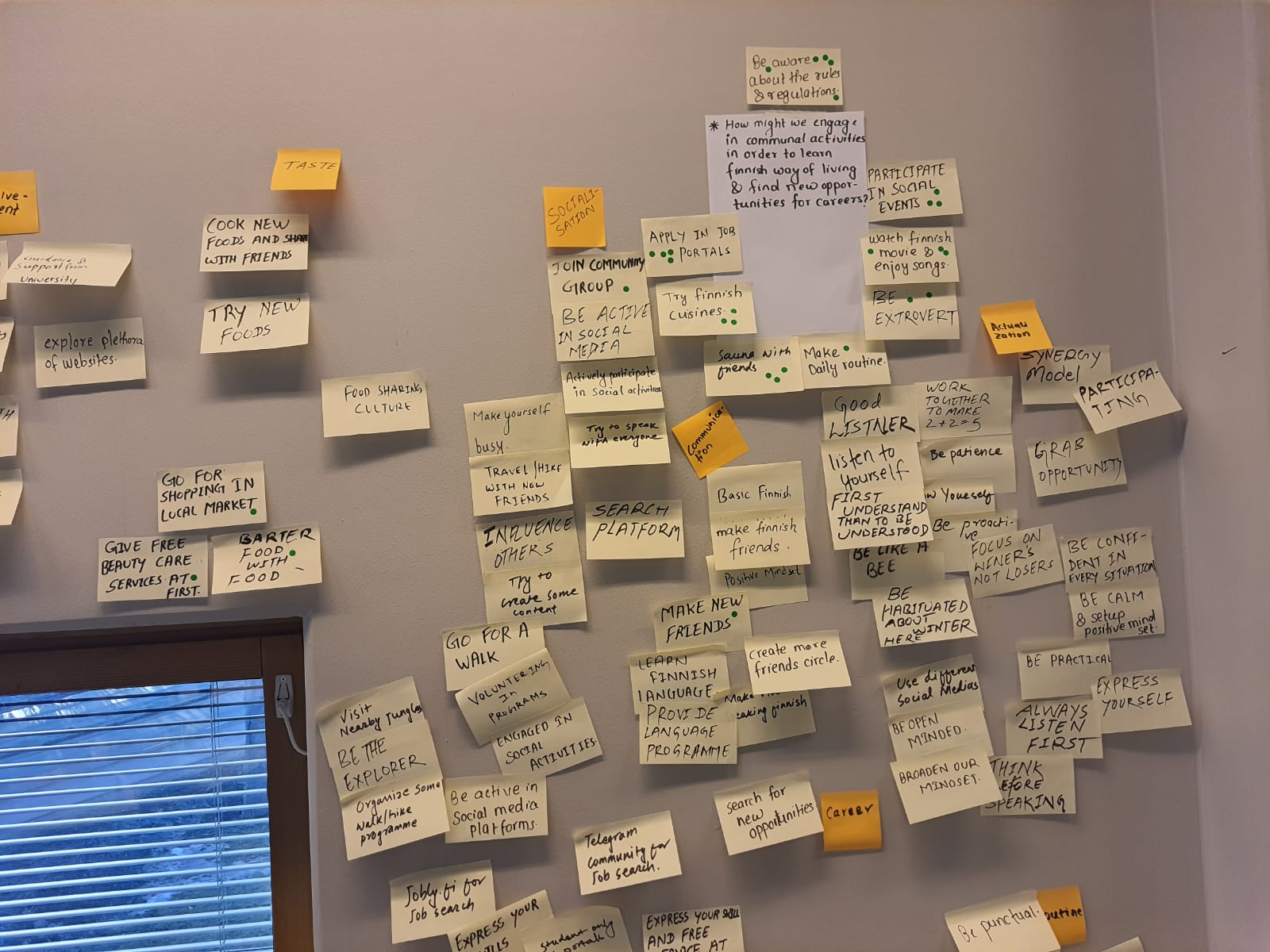
During the sessions, we experienced this firsthand. Our discussions were not linear. Ideas emerged, failed, evolved, and sometimes contradicted each other as we are group of six. This aligns with the concept of “wicked problems,” where challenges don’t have one clear solution but require continuous reframing.
Learning by Doing: Collaboration and Prototyping
Working in a diverse group of six was both challenging and enriching. Each member brought a different perspective, which pushed us to question assumptions and rethink ideas. Instead of debating endlessly, we were encouraged to visualize our thinking—through sketches, diagrams, and quick models.
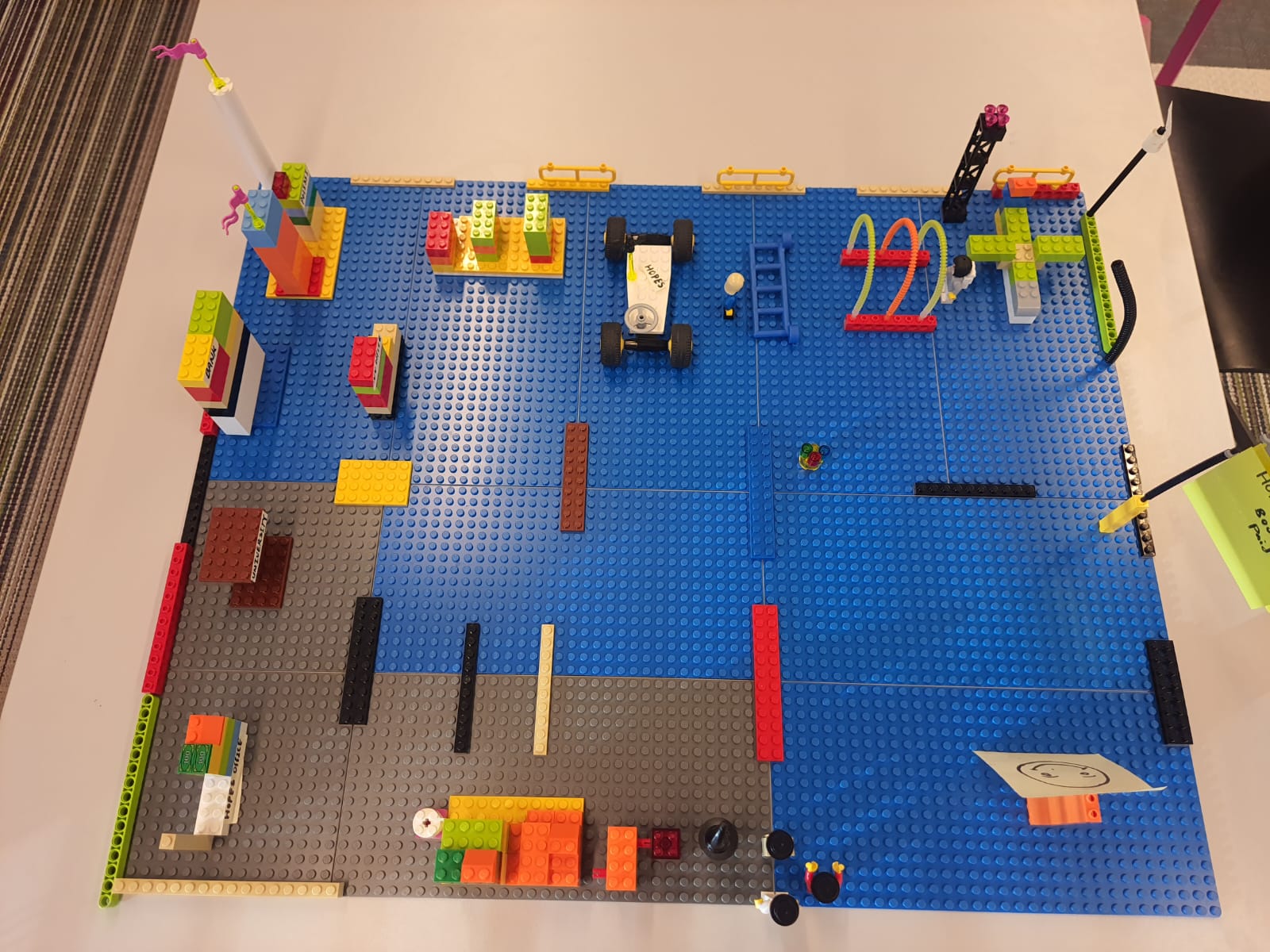
This reflects a key principle discussed in the article Design Thinking Comes of Age (2015): design thinkers use artifacts and prototypes to explore ideas rather than relying only on abstract discussions.
By the end of the class, we had created a small service prototype. It wasn’t perfect and that was the point. The process of building, testing, and refining mattered more than the final output.
Connecting Practice with Strategy
Our experience also resonates with insights from Idris Mootee’s book Design Thinking and Strategic Innovation (2013). Mootee argues that design thinking is not just about creativity but about shaping strategic innovation by deeply understanding users and experimenting with ideas.
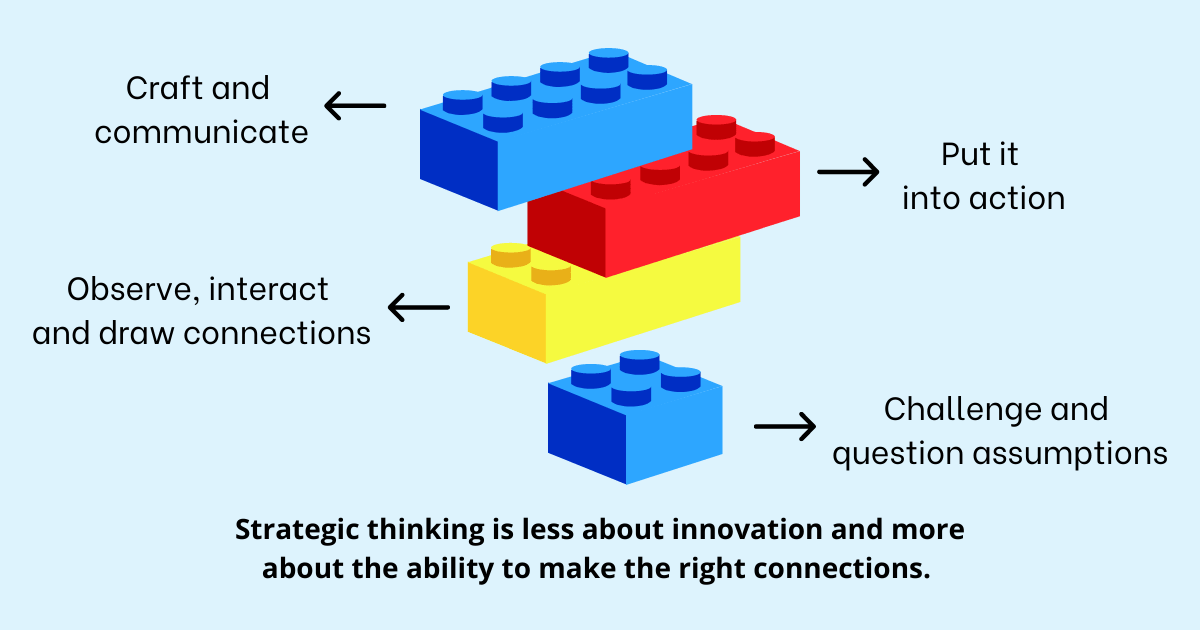
In our group work, strategy emerged organically. We didn’t start with a business model; instead, we built empathy, defined the problem, and then explored solutions. This iterative process reflects how modern organizations tackle complexity—by learning through action rather than planning everything upfront.
Reflection: What Did We Really Learn?
These two days changed how we see learning and innovation. Design thinking is not about following a rigid framework—it is about embracing uncertainty, collaborating openly, and being willing to fail and repeat.

Most importantly, we realized that:
- Asking the right questions is more powerful than rushing to answers.
- Collaboration creates richer solutions than individual thinking.
- Prototyping turns abstract ideas into real insights.
As students of Service Design, this experience was more than just a classroom exercise. It was a glimpse into real-world problem solving. It showed us that innovation is not a straight path but a dynamic journey shaped by people, perspectives, and experimentation. And perhaps the biggest takeaway? Sometimes, not knowing the task at the beginning is exactly what makes the learning meaningful.
References
- Mootee, Idris (2013) Design Thinking for Strategic Innovation: What They Can’t Teach You at Business or Design School https://ebookcentral.proquest.com/lib/laurea/reader.action?c=RVBVQg&docID=1358566&ppg=3
- Kolko, J. (2015). Design thinking comes of age. The approach, once used primarily in product design, is now infusing corporate culture. Harvard Business Review September 2015, 66-71. https://hbr.org/2015/09/design-thinking-comes-of-age
- Ulla Johansson-Sköldberg, Jill Woodilla and Mehves Çetinkaya (2013) Design Thinking: Past, Present and Possible Futures https://www.punyamishra.com/wp-content/uploads/2018/08/Johansson-Sköldberg_2013_DT_past_present_future.pdf


Leave a comment