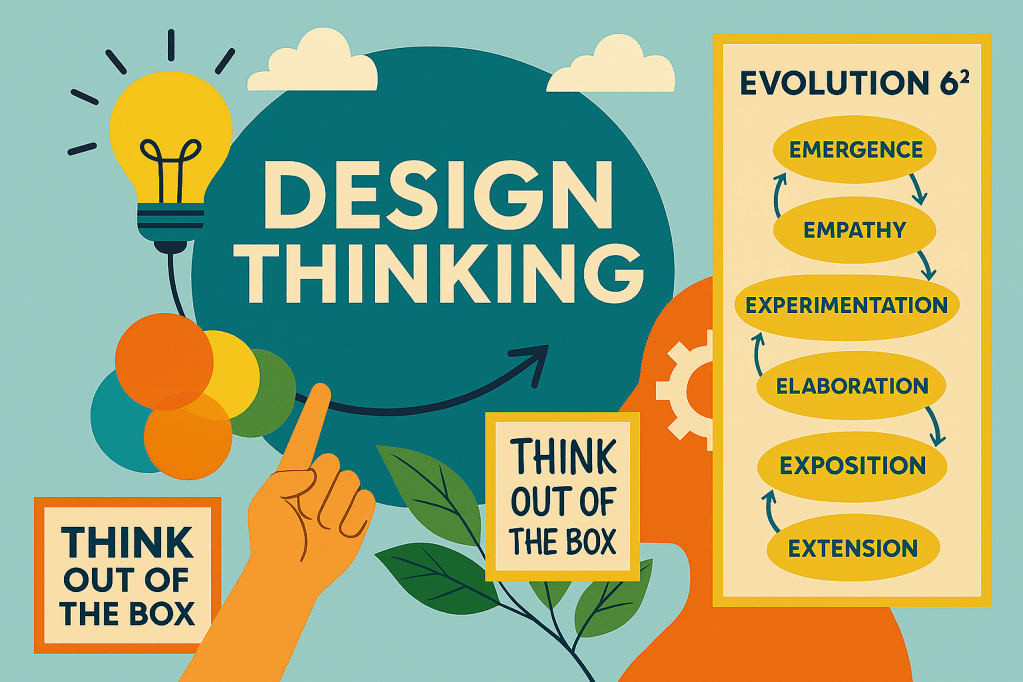
Our Design Thinking Journey: Think Outside the box

In modern epoch, we are facing many new challenges, so we need new and creative solutions. Design thinking is a useful method that helps people solve problems in a creative way. It focuses on innovation, people, environment, and continuous improvement. Designers use this method to create practical and useful solutions for real-life problems.

From our study materials and our two-day design thinking class with Katja Tschimmel, we learned that design thinking is a human-centered approach. This means every problem can have a solution if we understand people’s needs, experiences, and challenges. By interviewing users and understanding their situation, designers can find the real problem and then work on the right solution.


According to the E6 model, design thinking has six stages: emergence, empathize, experimentation, elaborate, exposition, and extension. Based on this model, our team created a prototype. First, we scanned trends and signals related to our service using mind mapping. After that, we conducted interviews and found that there is a cultural gap for international students coming to Finland. Then we generated ideas and different possible solutions. After selecting the best idea, we created a prototype for a cultural exchange workshop. After presenting our prototype to other groups, we received feedback and improved our idea and created a roadmap for better results.

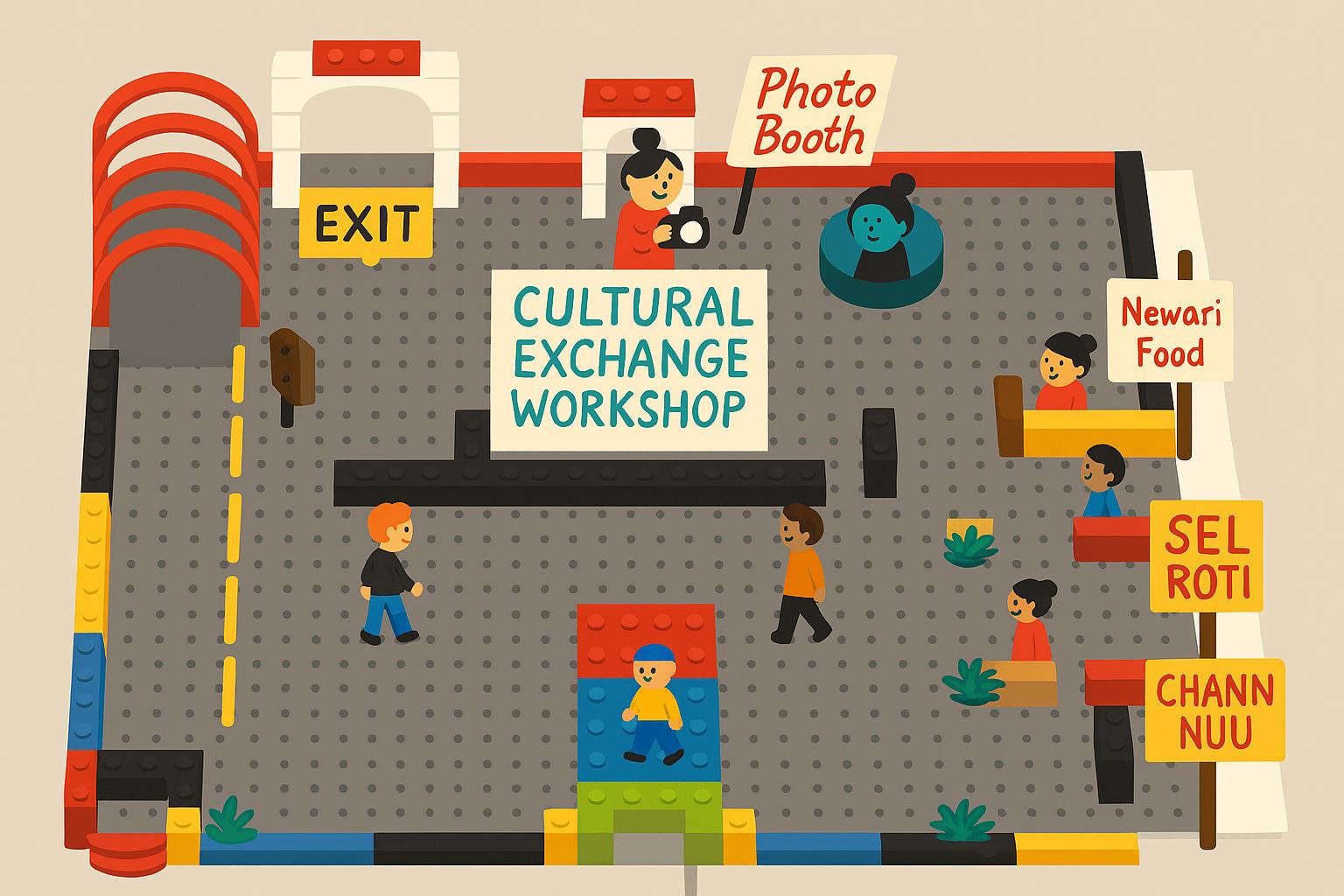
Our Lego prototype represents the cultural exchange workshop. We tried to solve the problem that international students face when adapting to a new culture. Our idea was to create a friendly and homely environment where students from different countries can share their culture. In this workshop, we planned activities like cultural dress exchange, food tasting, storytelling, cultural presentations, photo booths, and coffee discussion areas. There would also be an open stage where students could show their talents. This kind of environment helps students feel comfortable and connected.
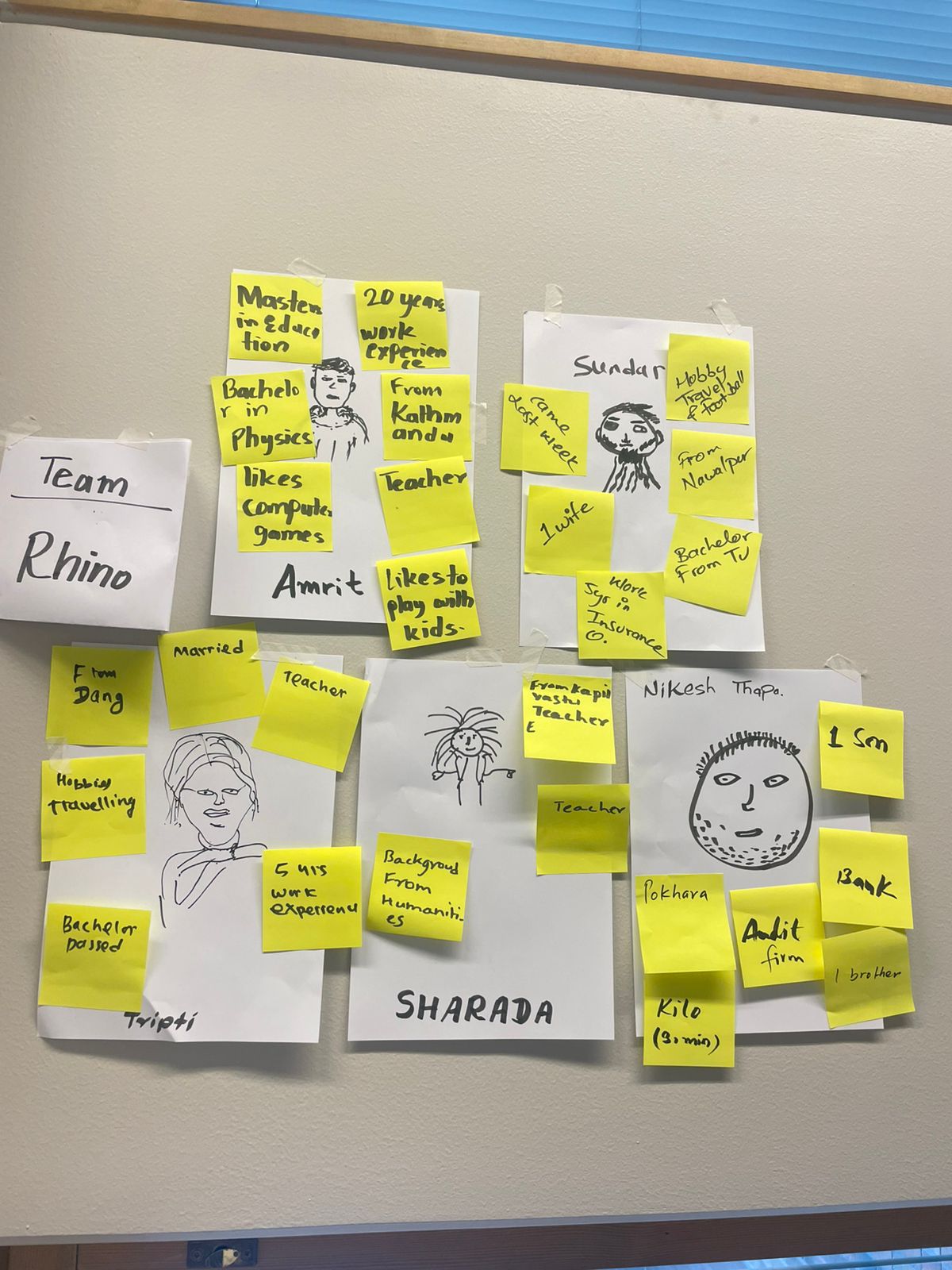
Collaboration is also a very important part of design thinking. In the beginning, we introduced ourselves and tried to understand each other’s strengths and weaknesses. This helped us work better as a team. We also did a fun activity where we drew each other’s pictures. Even though the drawings were not very good, the activity helped us know each other better and made our teamwork stronger.
A successful design thinking solution must balance three important factors: desirability, feasibility, and viability. Our solution was desirable because it solved a real problem faced by international students. It was feasible because it was simple and easy to organize in a college environment. It was also viable because it could be continued by future students with simple resources.
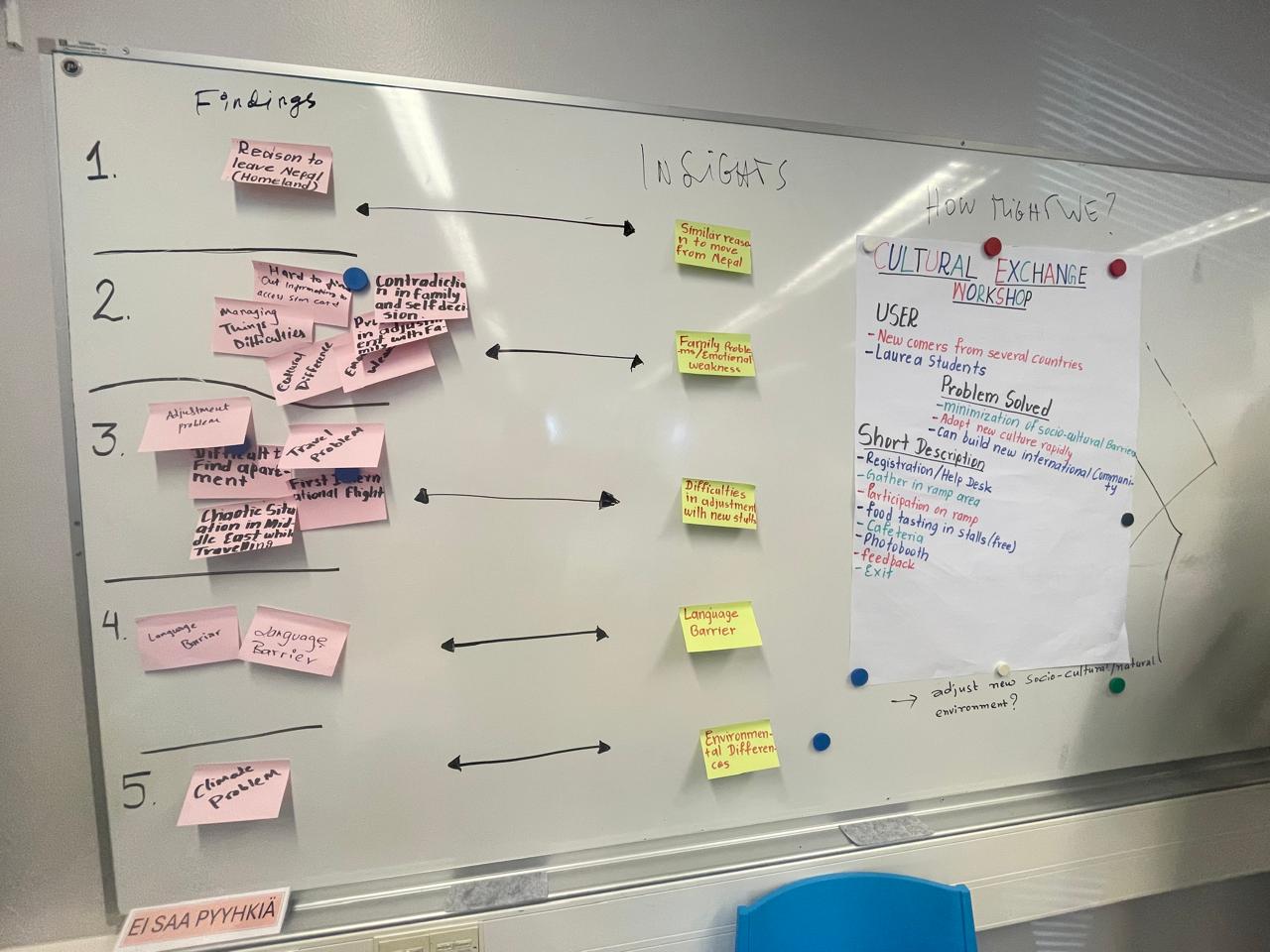
A designer must always be ready for unexpected challenges. The design thinking process is not a straight line; it is a continuous loop where we keep improving our ideas and solutions. This process helps organizations and individuals to innovate, improve services, and adapt to changes.

Today, organizations should focus not only on profit but also on long-term goals and sustainability. They should be responsible towards society and future generations. Design thinking helps improve communication, encourages creativity, and helps organizations manage change effectively.

In conclusion, design thinking is a powerful way to solve problems. By focusing on people, encouraging creativity, and continuously improving ideas, it helps create meaningful and innovative solutions. Design thinking can be used in business, education, and everyday life to solve problems and create a positive impact.

REFERENCE:: Our Design Thinking Journey: Think Outside the box

Kumar, V. & LaConte, V. 2012. 101 Design Methods. John Wiley & Sons, Incorporated. https://www.researchgate.net/publication/328861557_101_Design_Methods

Brown, Tim (2008) Design Thinking. Harvard Business Review, June, 84-95.

Johansson-Sköldber, U., Woodilla, J. and Çetinkaya, M. (2013). Design Thinking: Past, Present and Possible Future

Design Thinking Model Evolution 6^2. (2012-2017). Katja Tschimmel

Images are created through the help of Microsoft Co-pilot


Posted

in

by

Comments

4 responses to “Our Design Thinking Journey: Think Outside the box”

  1. nirmalshrestha62bb702539 Avatar
    nirmalshrestha62bb702539

    Thanks for making your design thinking journey so easy to understand and relate to! I liked reading about how your team went through the E6 model steps. It was very interesting to see how you picked a real problem instead of just a random topic. That’s the point of human-centered design.

    A cultural exchange workshop is a very smart and useful idea. Activities like food tasting, storytelling, and dress exchange are simple but powerful ways to build connections. What I find most valuable about your prototype is that it does not need a big budget — it just needs willing people, which makes it very realistic to implement.

    I also appreciated how you mentioned the LEGO prototype. Using real things to show ideas is a great way to remember that prototyping doesn’t have to be expensive or hard. It just needs to get the point across well enough to get useful comments.

    You should think about how international students react when you show them the prototype. The real test of whether the solution works for them would be their feedback. This goes back to Vijay Kumar’s point that innovation starts with understanding people.

    It’s very important and often missed that design thinking is a never-ending loop. Many individuals believe that eliminating a problem refers to resolving it. But real innovation means always being openly accepting all feedback to make things better. Overall, this blog post is well-written and thoughtful. Continue investigating and expanding knowledge upon these concepts!

  2. jac00012 Avatar
    jac00012

    Thanks for highlighting the facts that design thinking focus on innovation, people, environment and continuous improvement. By reading this article, it really inspires me how design thinking works on solving the real life problem solving.

    In your article, you ecplained the problems of cultural differences among the international students and try to find the solutions for it. Your work clearly relates the cultural exchange and practical idea and relevent solutions. The positive aspact of this article is how you demonstrate teamwork and collaboration can solve the real life problems.

    Cultural differences faced by most of the international students in finland is very relevent and factual. You tried to find the solutions to it by doing cultural exchange workshop and yes it is very creative and practical way of understanding the cultural gaps between other international students.

    Overall, your work reflects solving real world problem, and it clearly relates the understanding of both design thinking and your ability to apply it in practice.

  3. Sagar Nepali Avatar
    Sagar Nepali

    You have synthesized my thought exceptionally well by pin pointing the human centered approach for solving problems creatively.The interactive and engaging class with Katja Tchimmel surely contributed a lot for our learning and indeed, everybody started thinking outside the box for the multiple solutions for the given problem.

    You highlighted the E6 Model and its different stages very well.We began by identifying problems and understanding user experiences through activities like mind-mapping, group discussion and interview.These methods helped us gain deeper insights into real challenges.Working in group, shared ideas helped us learn from each others perspectives.

    You explained well with the picture of the prototype and presented ideas, receiving feedback that allowed further improvement and of course, innovation requires continuous learning, creativity and adaptation.

    Overall, your post highlights the importance of aspects such as desirability, feasibility and viability for better solution.I couldn’t agree more that both of you did well by trying to explain that experience enhances our critical thinking and problem-solving abilities.With empathy, collaboration and creativity , we can develop meaningful solutions to the problems.

    Thank You!

  4. nishmabasnet Avatar
    nishmabasnet

    It was pleasure to read your journey in design thinking in a very clear and easy-to-follow manner! I liked your explanation of the E6 model in steps. It made me learn more about the entire process, including problem identification, prototype development, and feedback.

    Your proposal of a cultural exchange workshop with international student is very realistic and innovative. Being an international student myself, I can tell how difficult it can be to adjust to a new culture. Thus, I believe that your solution is dealing with a very actual and crucial issue.

    I also found it interesting how you evaluated your idea using desirability, feasibility, and viability. It demonstrated that you did not only think creatively but also critically whether the solution was possible to work in real life.

    In general, your blog is structured and interesting. It provided me with more insight into the application of design thinking to everyday issues.

Leave a reply to Sagar Nepali Cancel reply