From Insights to Innovation: Exploring Design Thinking Through Practice and Reflection

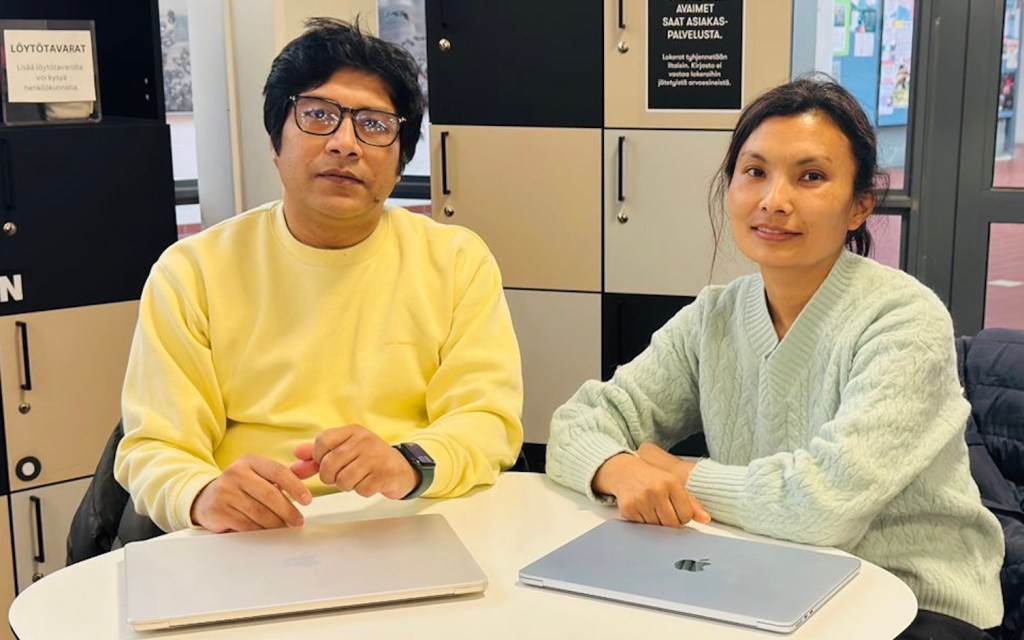
Written By Juneli Dangol and Mirza Mahamudul Hasan

At first, design thinking (DT) appeared to us as a structured method used mainly by designers. However, during the contact sessions on 9–10 March, our understanding evolved through hands-on activities and collaboration. Through interviewing, idea generation, clustering, and prototyping, we experienced DT as an iterative, human-centred approach to innovation. Our reflections are informed by Kimbell’s articles (2011; 2012), the practical tools presented in her book The Service Innovation Handbook (2014), and the workshop materials used during the sessions.

From Observation to Understanding

The workshop began with an interactive interview exercise. In groups, one participant spoke about themselves while another created a quick portrait based on what they heard. At the same time, another member documented key points and others observed.
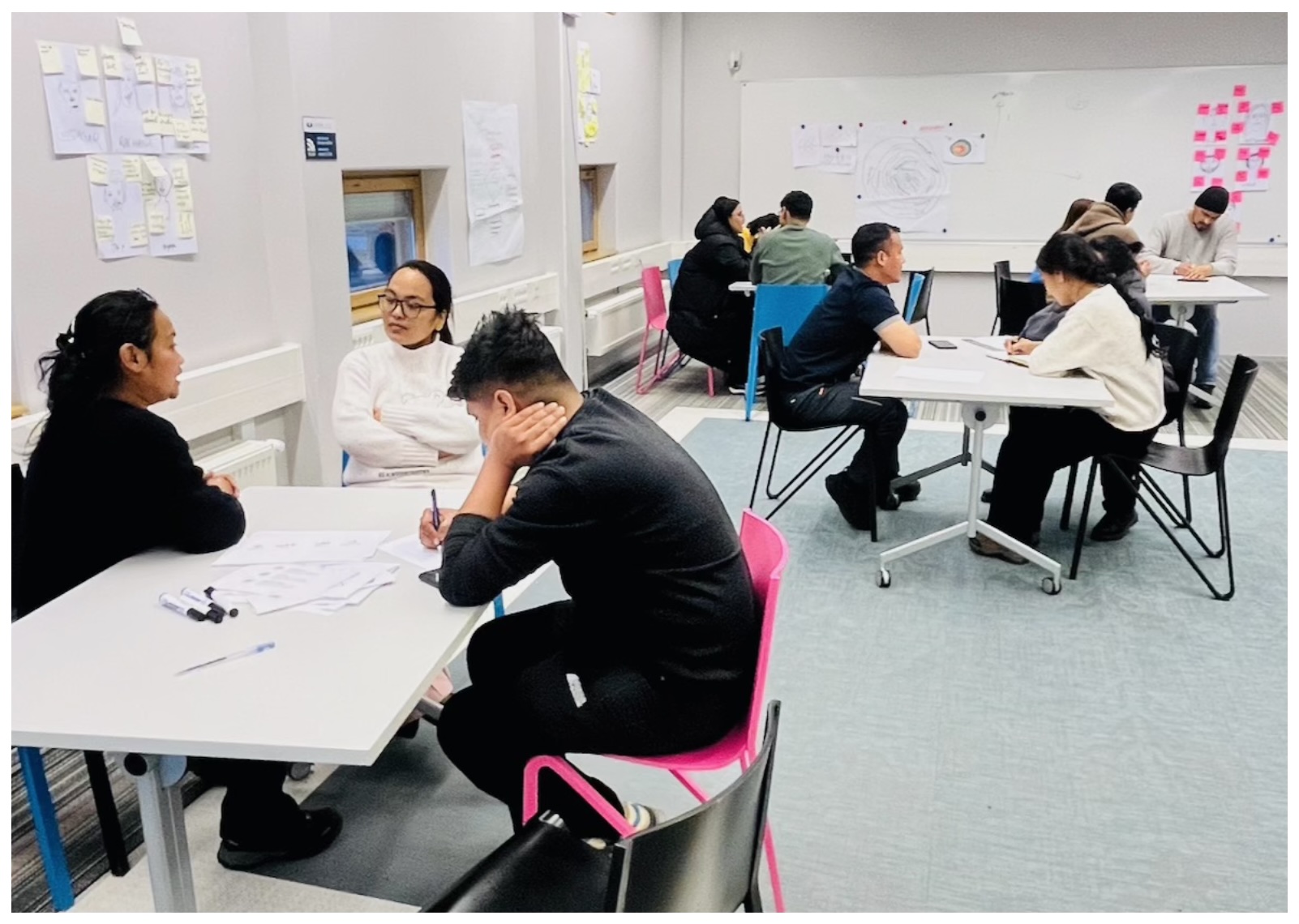
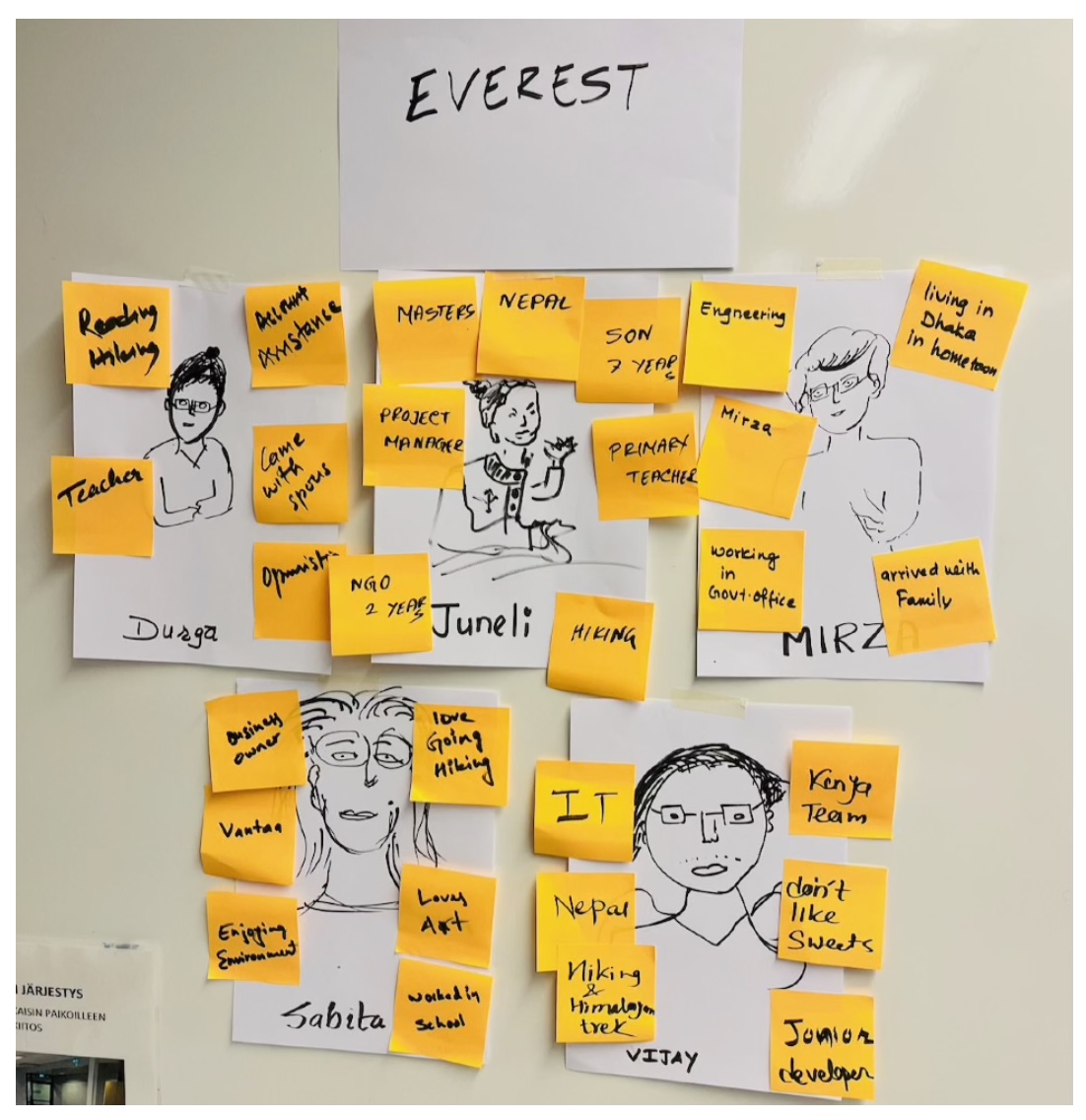
Interviews, portrait, DT process model exercise and observation activity

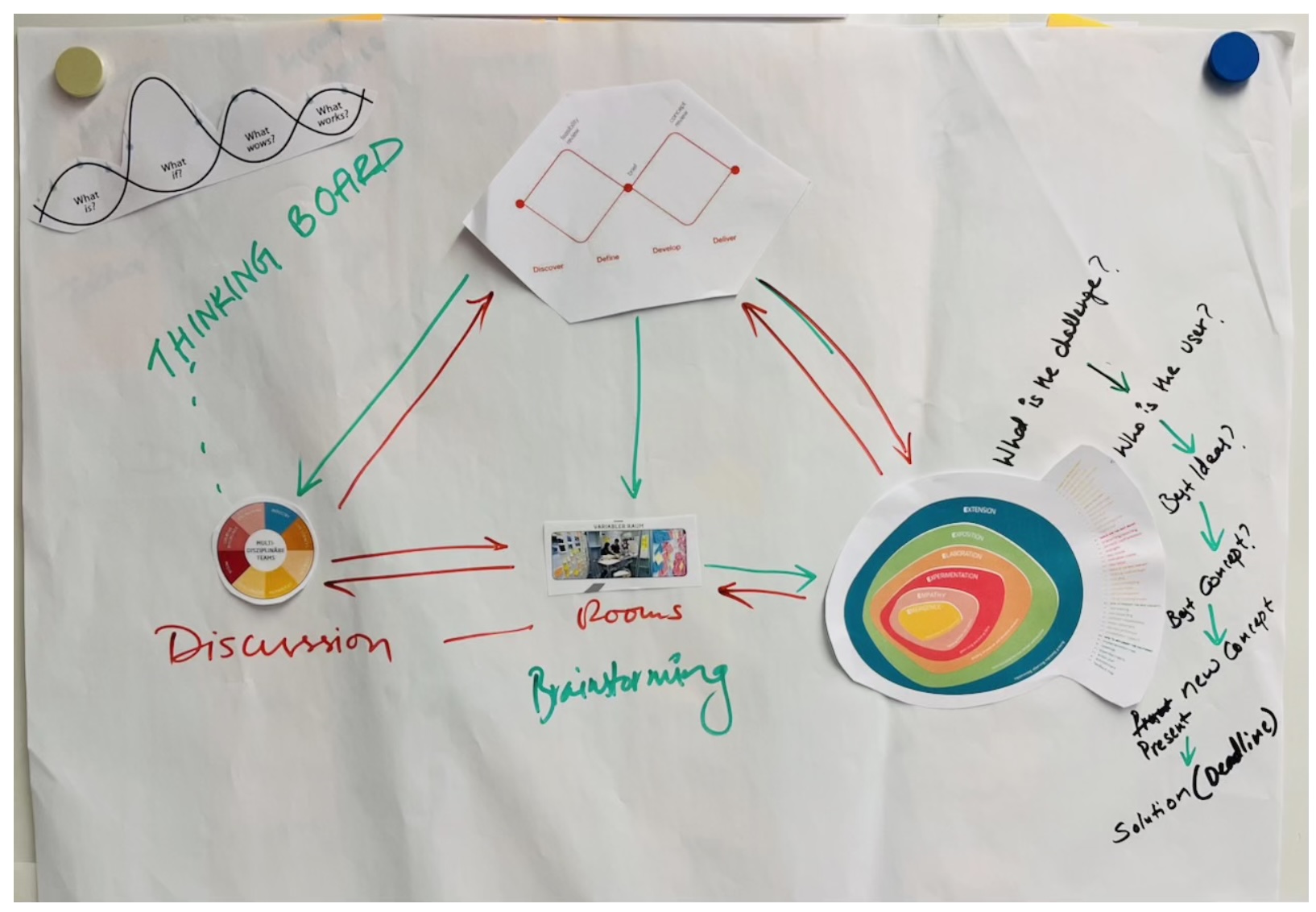
This activity highlighted the importance of listening, observing, and interpreting information, which are essential for understanding users. During the workshop, we were also introduced to different design thinking process models and were encouraged to develop our own framework. However, we found the Double Diamond model most effective due to its clear structure. Within this framework, the activity reflects the Discover phase, where insights are gathered through user interaction.

Divergent Thinking: Expanding Possibilities

A creativity task required us to divide a rectangle into four parts in as many ways as possible. Initially, we struggled to move beyond obvious solutions, but gradually we realised that there are almost infinite possibilities when thinking creatively.
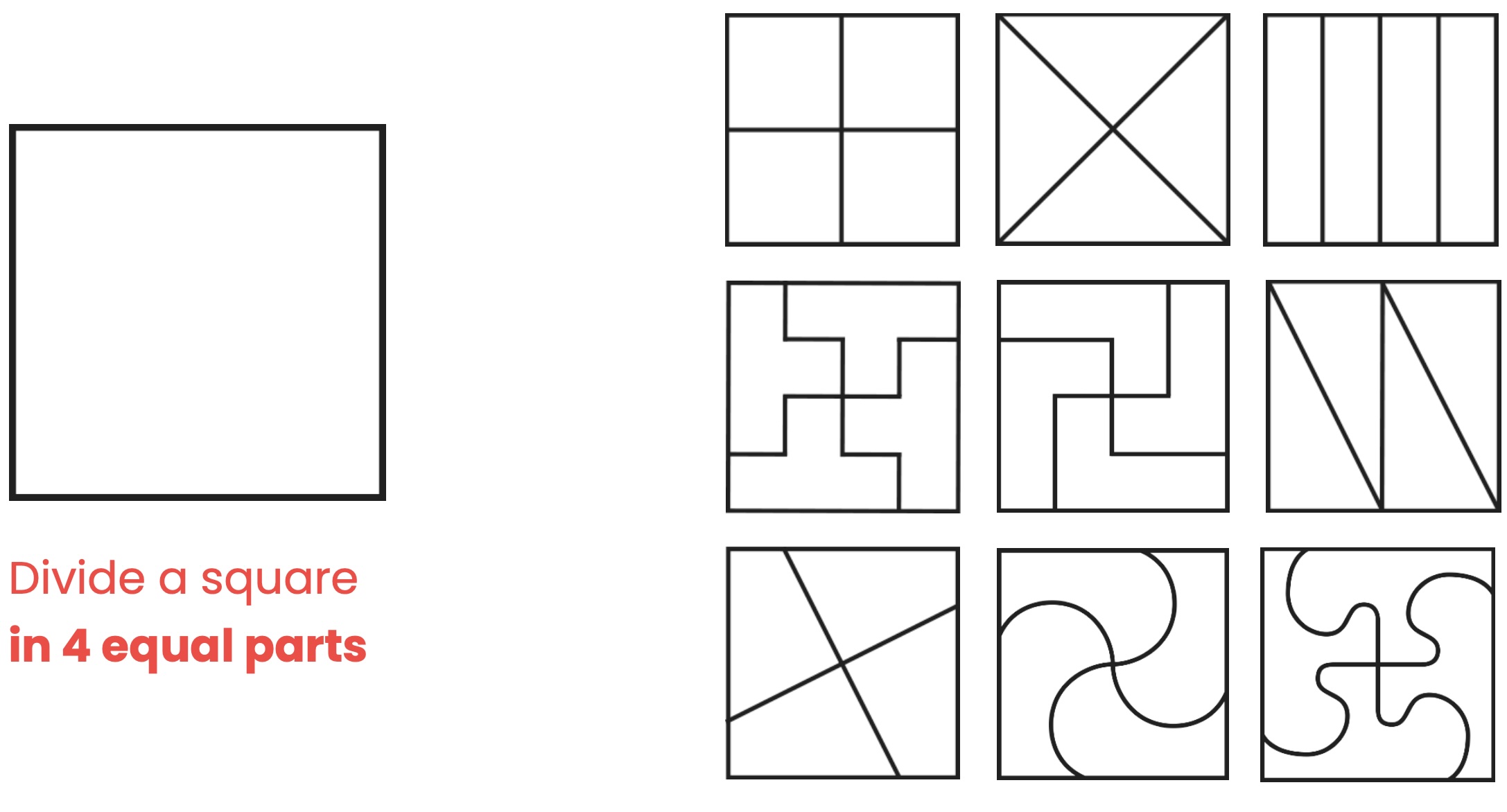
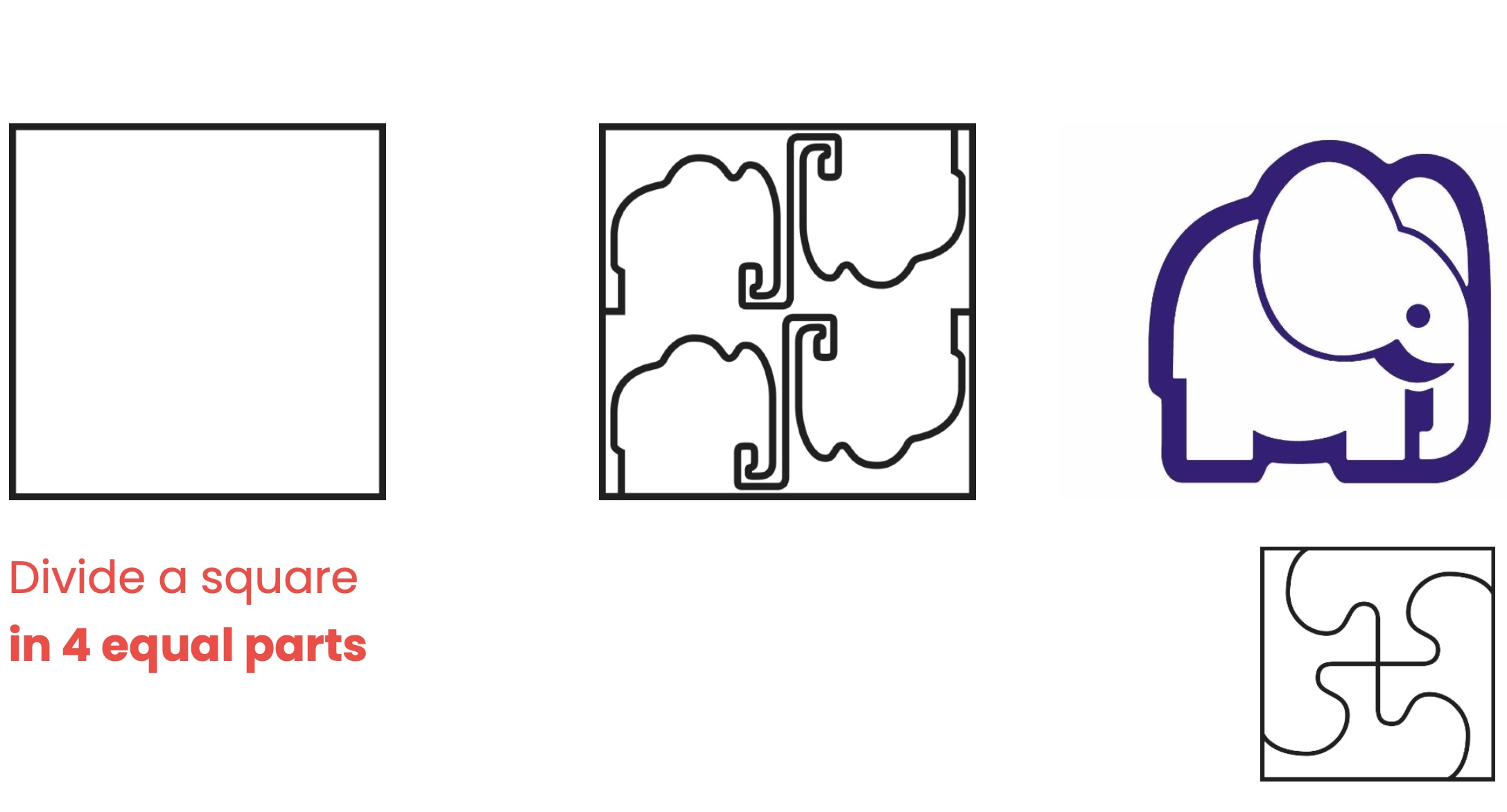
Exccercise design thinking mindset by Katja Tschimmel, 2026 / MINDSHAKE for SID / Laurea University

This exercise demonstrated divergent thinking, a key principle in design thinking where multiple ideas are explored without early judgement. As highlighted in the workshop materials, this stage encourages openness and flexibility in problem-solving.

From Findings to Insights

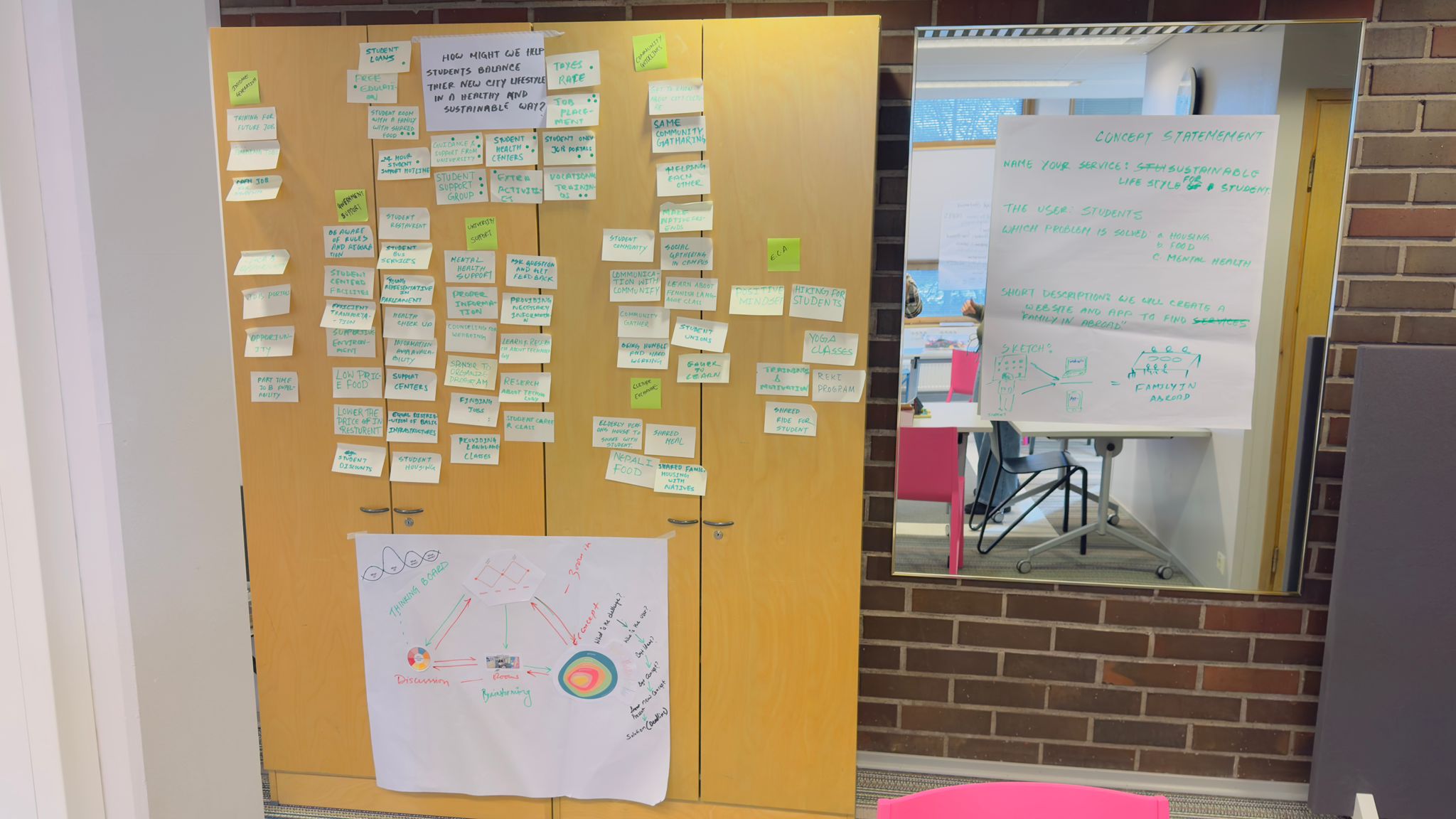
After the interview, we analysed the collected information and identified key findings, which were then transformed into insights. Based on these insights, we developed “How Might We” questions to define our design challenge:
How might we help students balance their new city life style in a healthy and sustainable way?
As international students, this topic felt highly relevant to our own experiences.

Convergent Thinking: Developing Solutions

Following individual idea generation, we clustered ideas into categories and conducted a voting process to select the most promising concept.
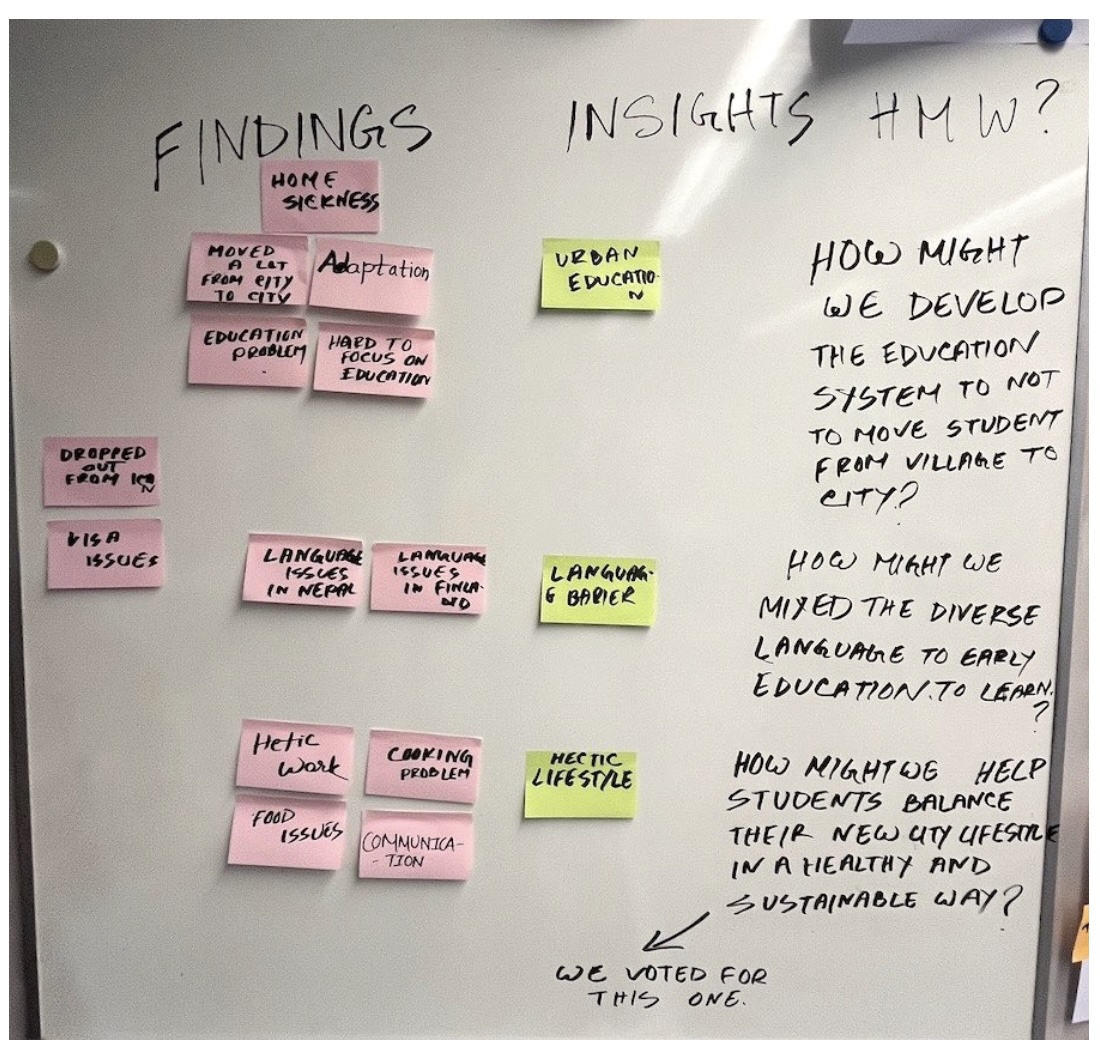
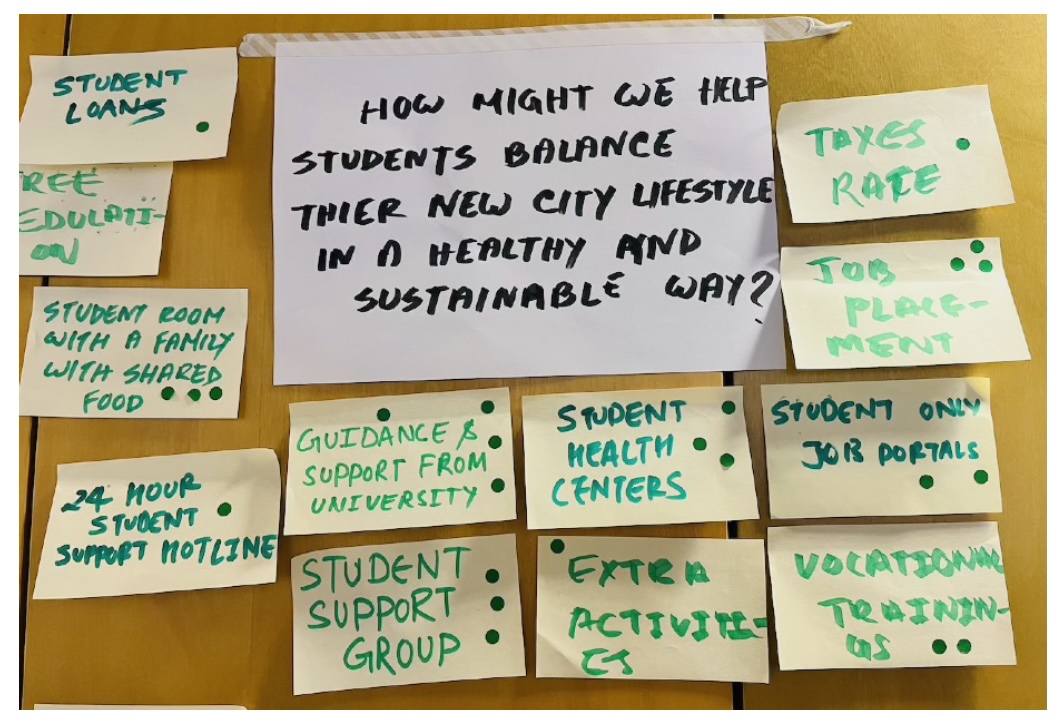
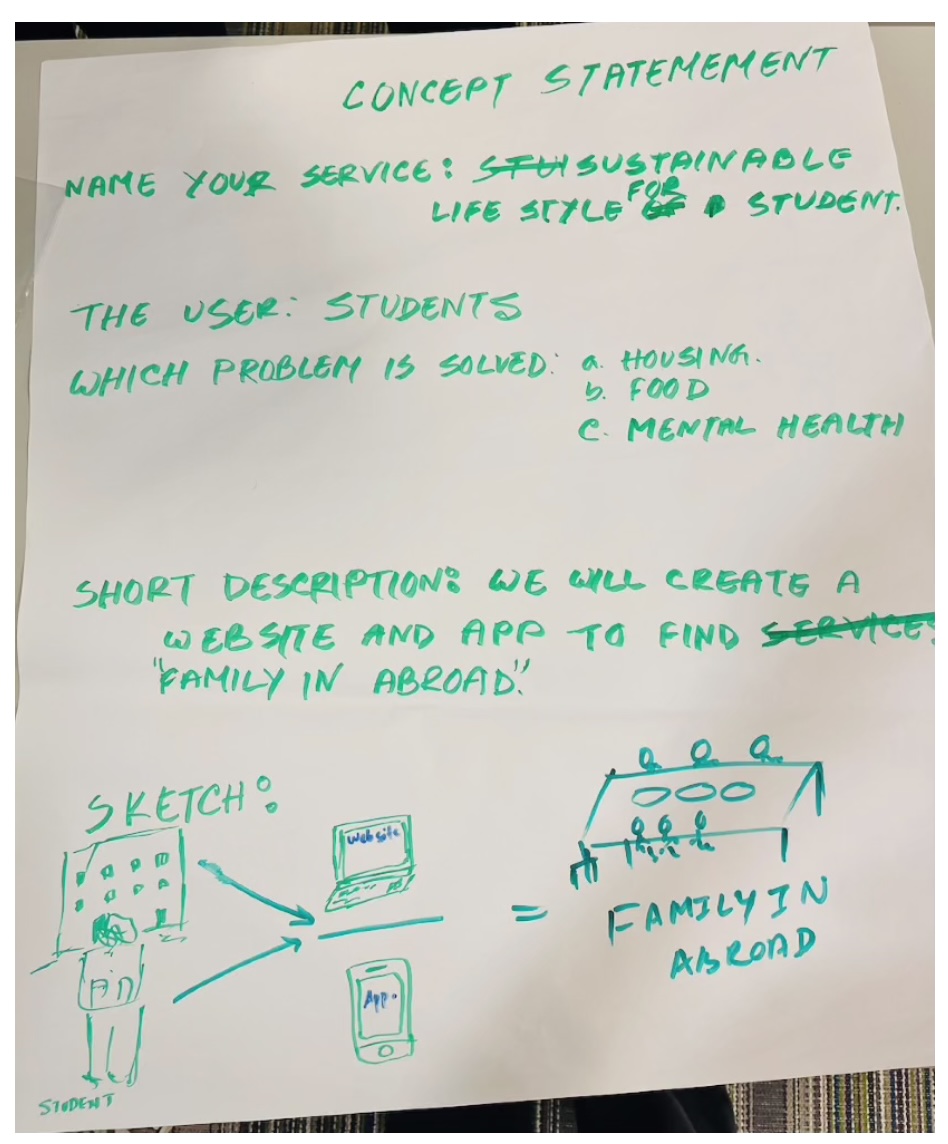
Everest team’s findings, insights and voting to concept statement

This stage reflects convergent thinking, where ideas are evaluated and refined. Our group developed the concept “Family In Abroad,” a service designed to support international students in building communities while promoting sustainable living. We then created a prototype concept for a mobile application to visualise the idea.
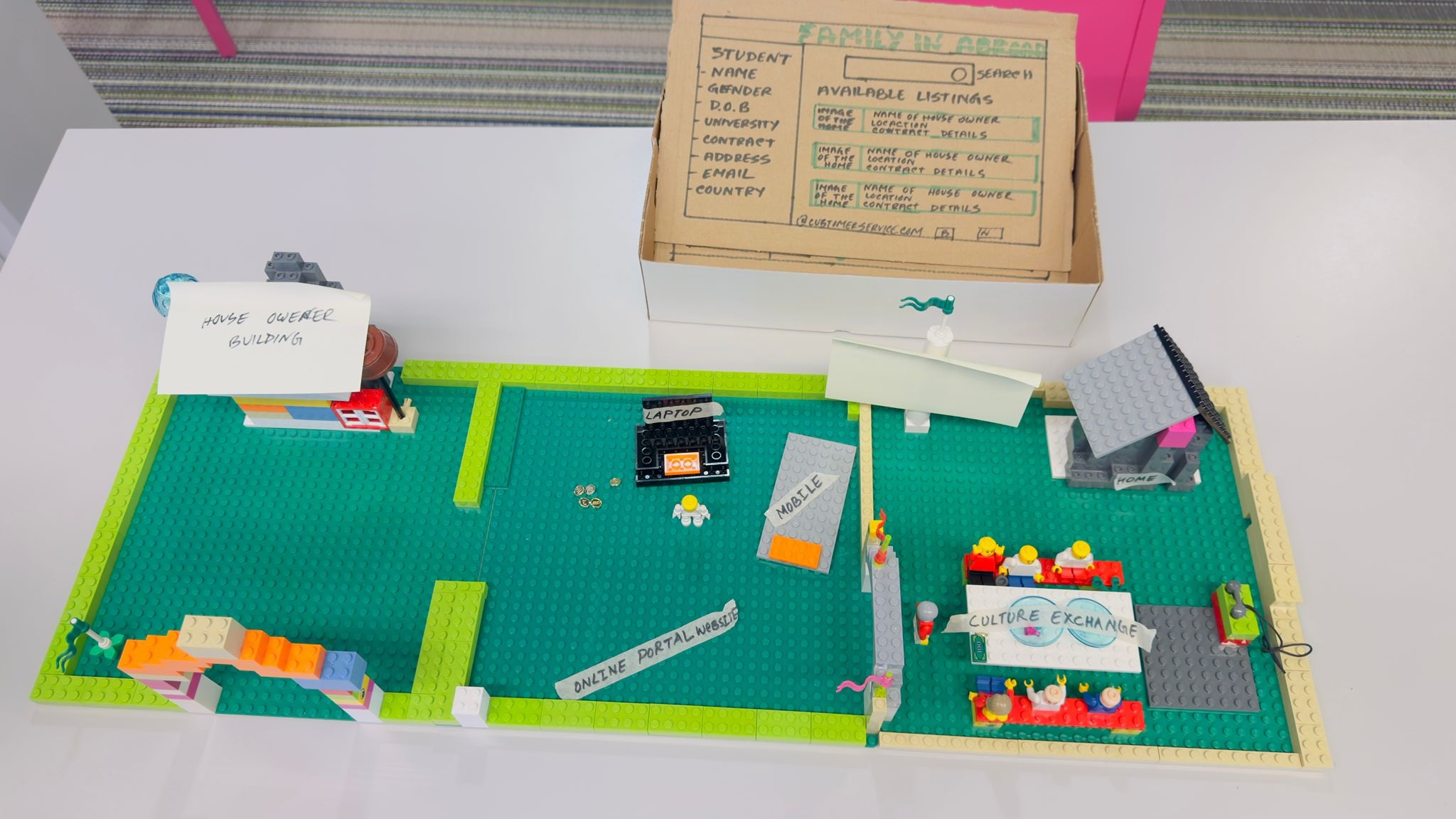
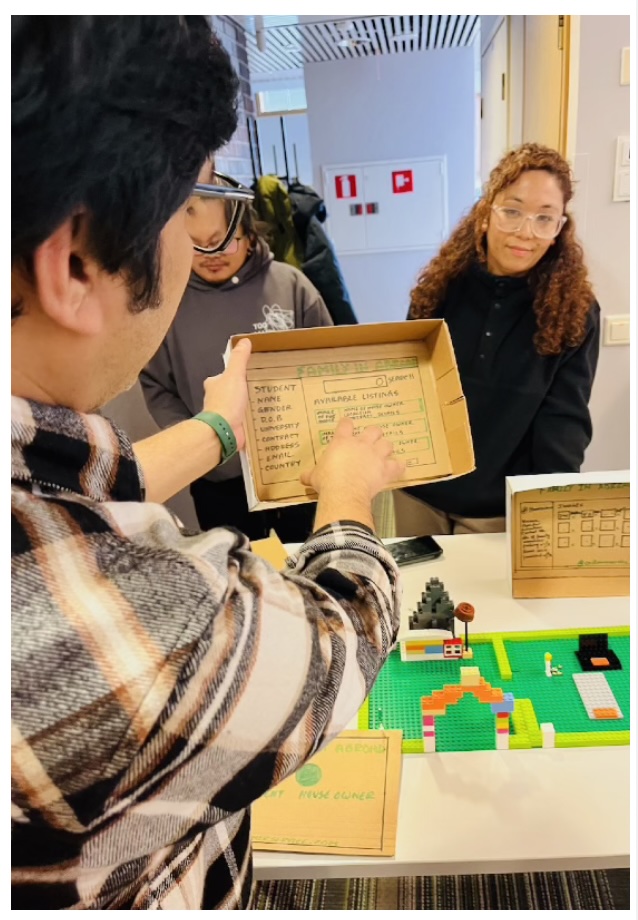
Everest team’s Prototype of ”Family In Abroad” app.

Rethinking Design Thinking

Our experience aligns with Kimbell’s argument in her article (2011) that design thinking should be seen not only as a set of tools but as a collaborative practice. In her second article (2012), she further explains that innovation emerges through interactions between people, tools, and contexts.
Similarly, in her book (2014), Kimbell presents practical tools such as interviewing, idea generation, and prototyping, all of which were applied during the workshop. The workshop materials also reinforced the importance of the Double Diamond model, showing how innovation moves between divergent and convergent thinking.

Reflection

Overall, this experience demonstrated that design thinking is not only about creativity but also about structured collaboration and continuous learning. Innovation does not emerge from a single individual but through shared exploration, testing, and reflection.
This leads us to ask: How can we continue applying design thinking beyond the classroom to create meaningful solutions in real life contexts?

References

  1. Kimbell, L. (2011). Rethinking Design Thinking: Part 1 Download Rethinking Design Thinking: Part 1Design & Culture, Vol. 3 (3). 285-306.
  2. Kimbell, L. (2012). Rethinking Design Thinking: Part 2. Download Rethinking Design Thinking: Part 2.Design & Culture, Vol. 4 (2). 129-148.
  3. Kimbell, L. (2014). The Service Innovation Handbook. Amsterdam: BIS Publishers.
  4. Tschimmel, K. 2026. Design Thinking Masterclass at SID. [lectures]. Held on 09-10 March. Laurea University of Applied Sciences.

Posted

in

by

Comments

4 responses to “From Insights to Innovation: Exploring Design Thinking Through Practice and Reflection”

  1. Amrit Dhakal Avatar
    Amrit Dhakal

    I liked your thoughtfully and thoroughly organized blog post about design thinking. You have explained the several steps of the process in a well-structured manner, and it was easy to follow because you have presented examples of how these steps were applied during the workshop (interviews, creation of ideas, and prototyping). I also appreciate the fact that you related your real-life experience to the theory, particularly in the concepts of Kimbell and the Double Diamond model. Hence, this helps to explore an excellent knowledge of design thinking as a structured and supportive process.
    At the same time, your reflection could be more critical and analytical. The main idea of the blog is to explain what you both did, and it would be more effective to reflect on the difficulties or constraints faced in the process. For instance, did the teamwork, idea picking, or user insights application have any challenges? This would be more advantageous to include for a well-balanced and realistic assessment.
    Similarly, your ultimate solution, “Family in Abroad”, makes sense and is relevant to us as well, but it is described in a somewhat general manner. You have a prototype of a mobile app, but you fail to provide a clear picture of its main characteristics or explain how it will address the identified issue. It would be more influential to include more detailed information and consider the practicality or realism of the solution.
    In conclusion, the blog post is solid and informative, and further critical reflection and elaboration of the solution would make it even more scholarly.

  2. hemantalamsal Avatar
    hemantalamsal

    Your blog provides a rich and thoughtful reflection on how design thinking becomes meaningful when it is experienced through real, hands‑on practice. You describe your journey from initially seeing design thinking as a structured method used mainly by designers to understanding it as a human‑centred, collaborative, and iterative approach to innovation. The way you narrate the workshop activities interviewing, observing, sketching portraits, generating ideas, clustering findings, and prototyping makes the learning process feel very real and relatable. Each activity clearly contributed to deepening your understanding of how insights emerge from people, interactions, and shared interpretation rather than from tools alone.

    Your connection to Kimbell’s work is especially strong. You show how her arguments about design thinking as a social practice align with your own experience in the workshop. By linking the exercises to concepts like divergent and convergent thinking, the Double Diamond model, and the transformation of findings into insights, you demonstrate a solid grasp of both theory and practice. The example of your group’s concept, “Family in Abroad,” adds a personal and meaningful touch, showing how design thinking can address real challenges faced by international students.

    Overall, your reflection highlights that design thinking is not just about creativity but about collaboration, empathy, and continuous learning. You effectively show that innovation grows through shared exploration and testing rather than individual inspiration. The blog ends with a thoughtful question about applying design thinking beyond the classroom, which reinforces the idea that this mindset can create meaningful impact in real‑life contexts.

  3. manishagurungranaac8d27a1b5 Avatar
    manishagurungranaac8d27a1b5

    While reading your blog post, it brought back so many vivid memory from our class on that day as you have mention real pictures and prototype as well. I found this blog really insightful specially the part where you mention “mind shake” which was taught by “Katja Tschimmel”, it was really interesting to learn. Yes it’s true that we are use to do the things what have been in a practice from a previous time, but through mind shake we learned that, there are infinite possibilities of creating new design if we think out of the box.

    You have mention the value of collaboration on this post very nicely, which is also another interesting aspect for me. Definitely, innovation does not emerge from a single individual, it needs shared collaboration of a team to do various task according to their expertise. It is mainly about the process , not just platforms; it’s how we align on shared goals.

    In short, I really enjoyed reading your blog post ” From Insight to Innovation ” and it helps me to boost my knowledge on Design Thinking as well as the importance of team work for innovation.

  4. sabitashrestha04649091d3 Avatar
    sabitashrestha04649091d3

    As you know, kind of wow! post hits differently and touches the reader and this is the kind of post which inspires me to thrive. Your clear explanation of every step brings a reader to the rabbit level, and your real life examples of workshops, which you mention, to interviewing,observation, idea generation, clustering and prototyping, assist in the process of translating theory to a practical and interesting experience. I appreciate the way you connect your meditation with some already existing models, such as the works of Kimbell, the Double Dimond model, and the concepts of divergent and convergent thought.

    The best part is the capabilities that you demonstrated the fact that design thinking is best acquired through a process instead of being taught in theory alone. The transformation done in your reflection looks more flexible, more social, context dependent process is appropriate according to Kimbell’s perspective on meaning being created in interaction. I also found your concept on family in abroad to be specially telling, which puts a personal touch on the matter and links theory to a concrete problem faced by international students.

    As a whole, your reflection is very insightful and interesting since your work shows that ideas are developed by working together and sharing ideas, as compared to working individually.

Leave a reply to manishagurungranaac8d27a1b5 Cancel reply