
“How many of you consider yourselves as design thinkers?” asked our guest lecturer Gijs van Wulfen (Innovation Consultant and founder of FORTH Innovation method) when our SID 2014 group started the Design Thinking course. Not so many hands rose at that point, I was certainly hesitating. However, we were soon about to learn what Design Thinking is, what kind of challenges we face in innovation processes, and what kind of methods and tools we could use to improve our skills as design thinkers. In addition to Gijs, we had the pleasure of having another great guest lecturer, Design Professor Katja Tschimmel from ESAD Portugal, to teach us more about Design Thinking.
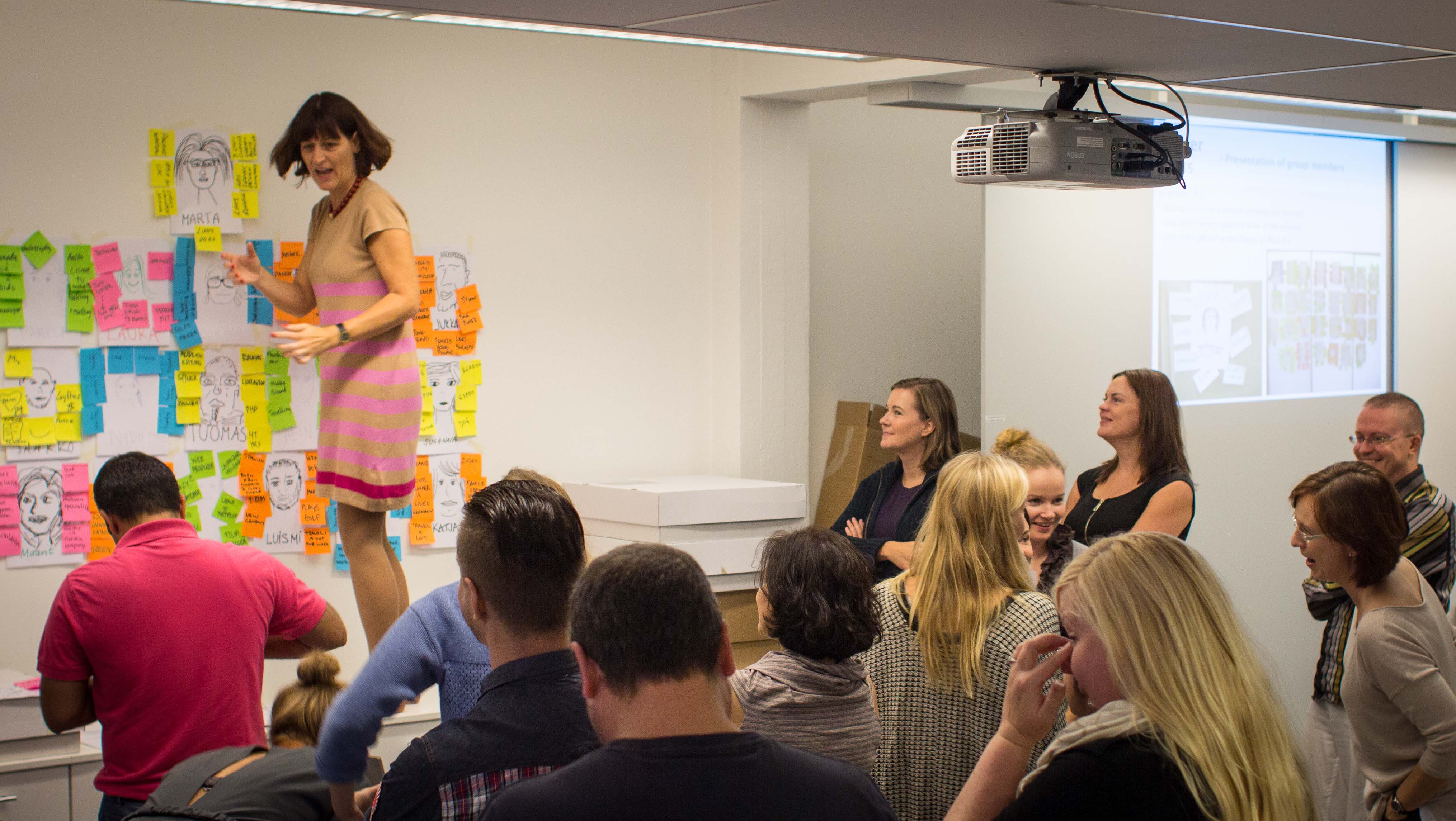
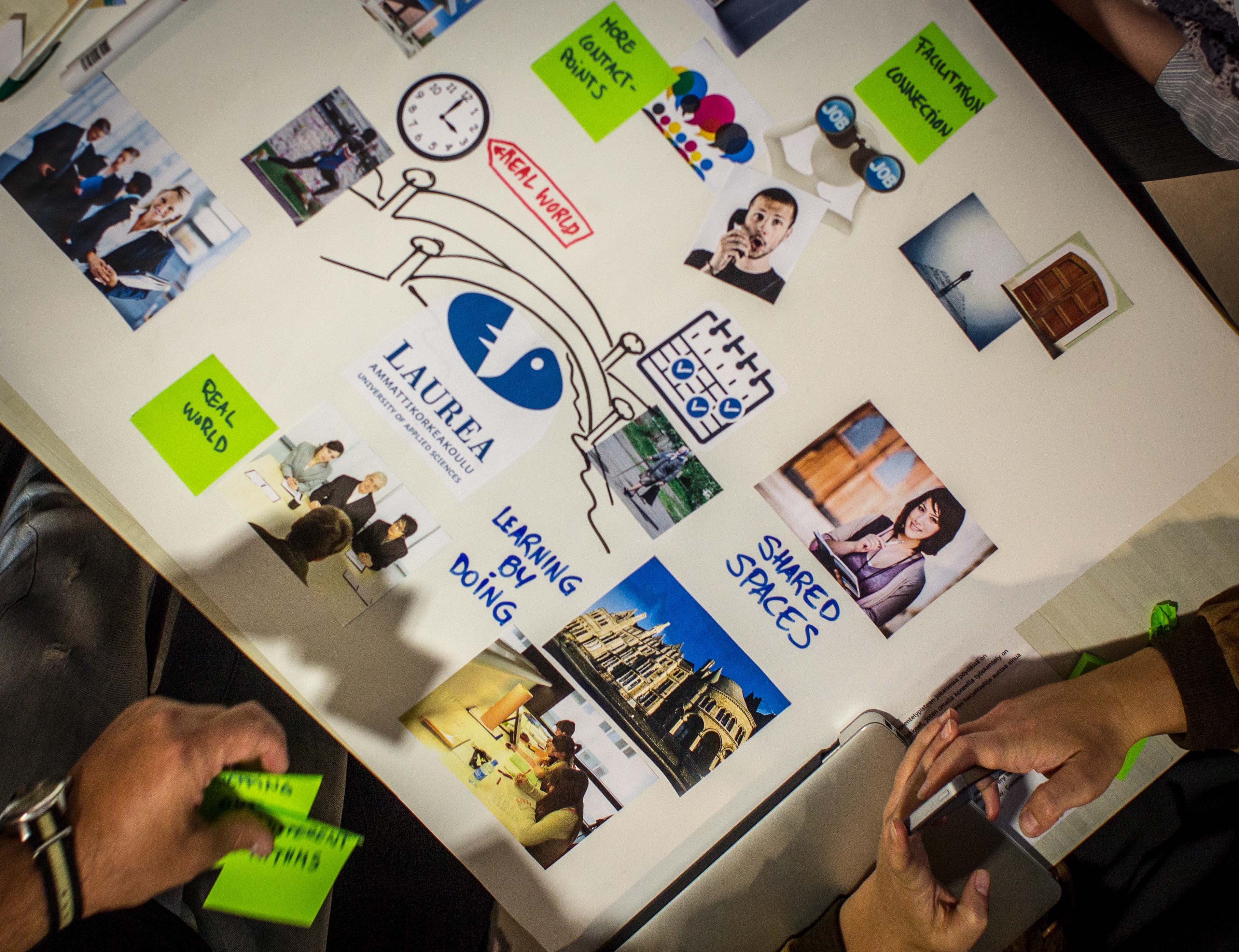
The course started with simple visual Design Thinking exercises. Katja and Gijs then teached us about Design Thinking in general, innovation processes and methodology, as well as Design Thinking tools. After the theoretical part it was time to put our design thinking abilities to test! Once we were divided into teams our assignment was to come up with a new service for better learning. We learned how to use Design Thinking tools such as mind mapping, foto safari, image interview, visual research, moodboard, brainwriting, and desktop walkthrough. In the end we communicated our new concept business models to the audience and got feedback.
So, what does Design Thinking mean exactly? Katja Tschimmel’s research paper Design Thinking as an effective Toolkit for Innovation (2012) states that Design Thinking is nowadays understood as a complex thinking process that leads to transformation, evolution and innovation, to new forms of living as well as to new ways of managing business. Liedtka & Ogilvie (2011) define Design Thinking as a systematic approach to problem solving. I especially like how they state; “You’ve already got the power. You just need to figure out how to use it“. No supernatural power or magic is required and you can safely try it at home!
During our two-day Design Thinking course we had Gijs’ FORTH Innovation method as a basis for our learning activities. In real situations this method would take several weeks, or months to be exact. Check out this short introduction video to FORTH Innovation method by Gijs.
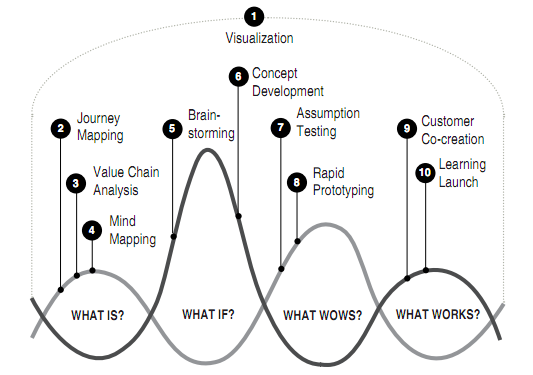
There are also many other methods or models for Design Thinking processes such as; Human-Centered Design Model, 4 D or Double Diamond model by Design Council, and Hasso-Plattner Institute’s model. However, there is nothing objectively true or right, and every innovator has to assess the value of each model him– or herself. Furthermore, selection of the appropriate process model includes criteria such as characteristics and context of the innovation task, team composition and dynamics as well as time available for the process. Katja Tschimmel has also created her own Design Thinking model; Evolution 6 (E6). You can learn more about the model here or here (helps if you are good at Portuguese). Below is yet another way to look at it; the Design process model proposed by Liedtka and Ogilvie.
There is also a question whether Design Thinking could be implemented in more traditional business environment. Both Tschimmel and Liedtka & Ogilvie discuss the differences between traditional business thinking and Design Thinking, how those should be combined, and how businesses can benefit from Design Thinking. Tschimmel states that Design Thinking is a useful toolkit for any business to apply when moving through creative processes of problem solving, or when looking for new opportunities and challenges. The key question on how to succeed for both business and design approach is whether they are really creating value for somebody out there, establishing a deep understanding of those who they are designing for. Successful invention takes experimentation and includes a lot of learning, and making mistakes is allowed too. It takes empathy, invention and iteration. For an invention to become an innovation it has to create economic value, or revenue growth. Finally, contrary to expectations, it is possible and advisable to apply Design Thinking in even the most traditional organizations.
As a conclusion these are some of the highlights, in no particular order, that really stuck to my mind during our Design Thinking -course;
- Visualization and Design Thinking go together
- You can invent alone but can’t innovate alone
- Take human centered empathetic approach, ask the question: What is the value for end users?
- Wait for the right moment,
- Best ideas usually come when you’re not busy,
- You have to make “outside the box” –ideas look more normal and get them back in the box before things start happening, and
- You are allowed to fail, and the sooner you do the better.
In addition, I’m happy to say I feel more free to raise my hand the next time someone asks if I’m a Design Thinker, and I’m sure my colleagues in SID 2014 feel the same way!
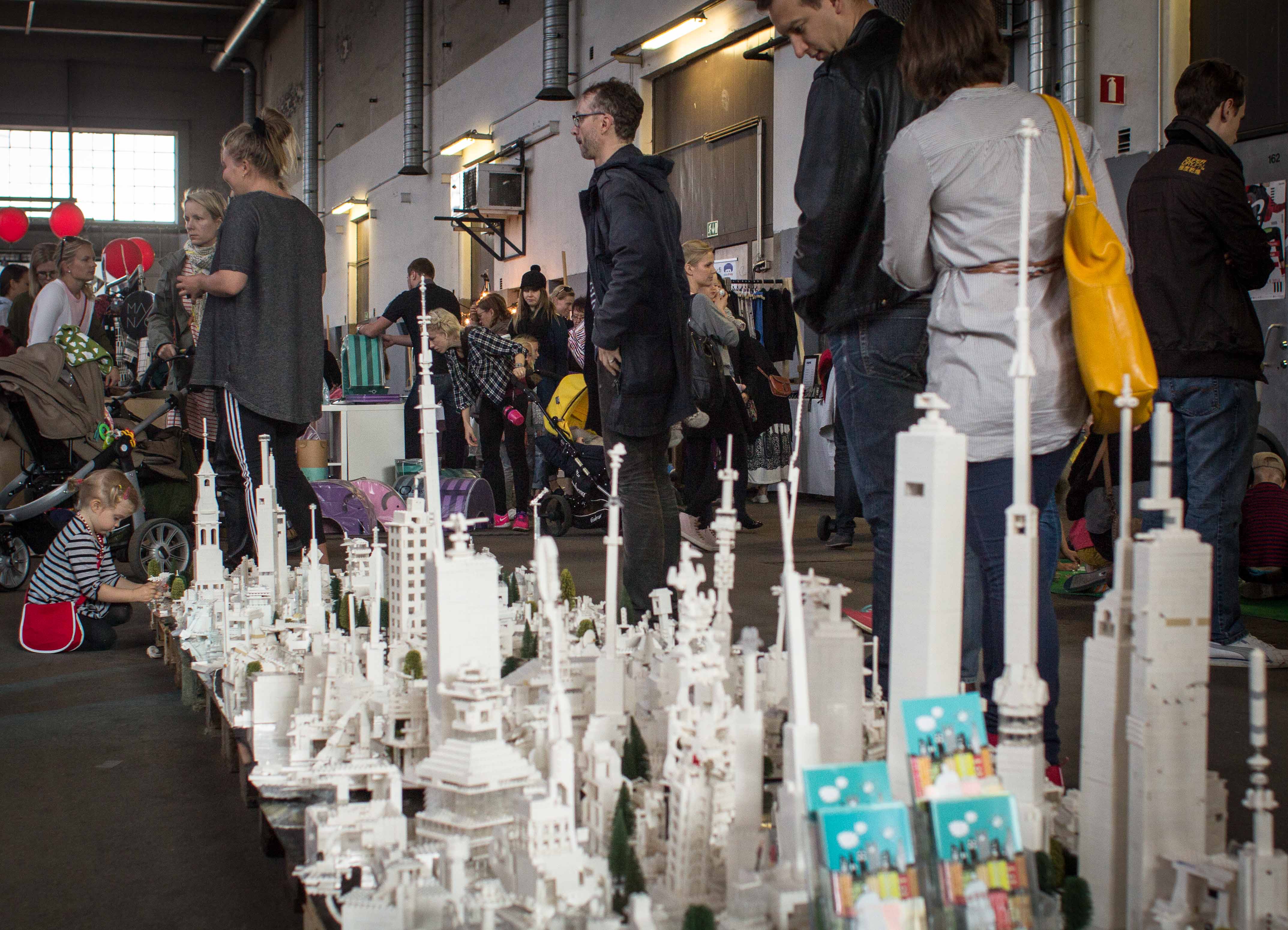
After two days of practicing Design Thinking I was so excited and energized that I wanted to continue my weekend with the design theme in mind and headed straight to Helsinki Design Week’s events.
Written by Heini Kauppinen, 1st year SID Student at Laurea UAS
Sources:
Liedtka, Jeanne & Ogilvie, Tim 2011. Designing for Growth: a Design Thinking Tool Kit for Managers, New York: Columbia University Press.
Tschimmel, Katja 2012. Design Thinking as an Effective Toolkit for Innovation. In: Proceedings of the XXIII ISPIM Conference: Action for Innovation: Innovating from Experience. Barcelona.


Leave a comment