
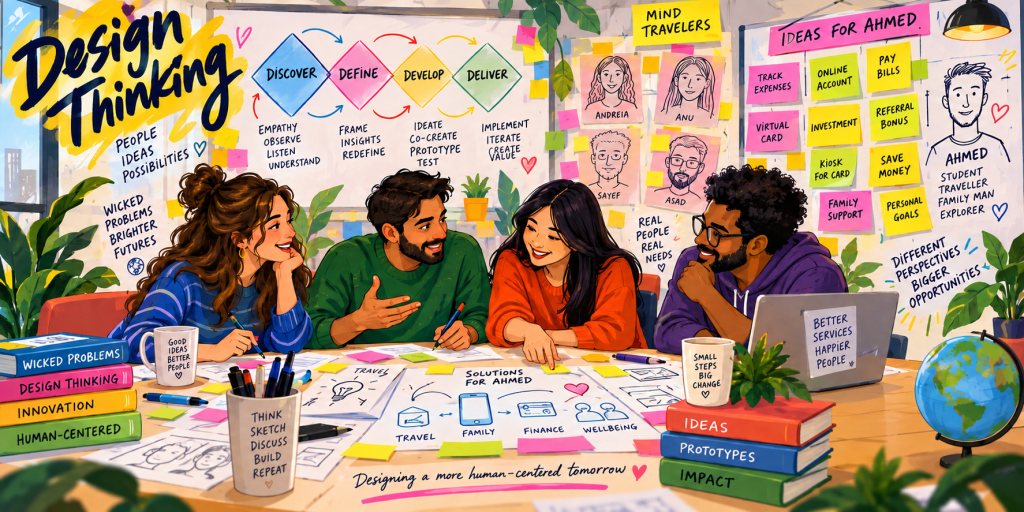
by Andreia Pais da Cunha & Sayef Md Uddin
We usually associate Design Thinking with sticky notes and frenetic brainstorming, but our two‑day course with Katja Tschimmel showed us it is a deliberate mindset. It helps us reframe situations, look at problems from different angles, and explore possibilities we don’t see at first or never, and we need others to show it.
From the very first exercise, Katja encouraged us to shift perspectives and put empathy into action. A pencil became a set of possibilities, and a photograph by Marcilio Gazzinelli opened space for “What if?”. Our personal stories shaped a shared persona, Ahmed, whose struggles with time and anxiety guided our ideation. “How might we help Ahmed…” pushed us to explore curiosity instead of right answers. Doug Dietz’s MRI redesign shown in class is one example of how empathy and storytelling can transform resistance into engagement, showing how reframing constraints can lead to beautiful products.
Diving into Ahmed’s persona might have been the core of this course for us. His struggles of time management and anxiety become our own. Through empathy exercises, creative reframing, and “How Might We” questions, we saw how human struggles can shape new design solutions. We were not only trying to solve Ahmed’s problem; we were redefining what the problem actually was. Our journey moved from brainwriting to sketching to imagining a service ecosystem around a scheduling app for Ahmed and his family.
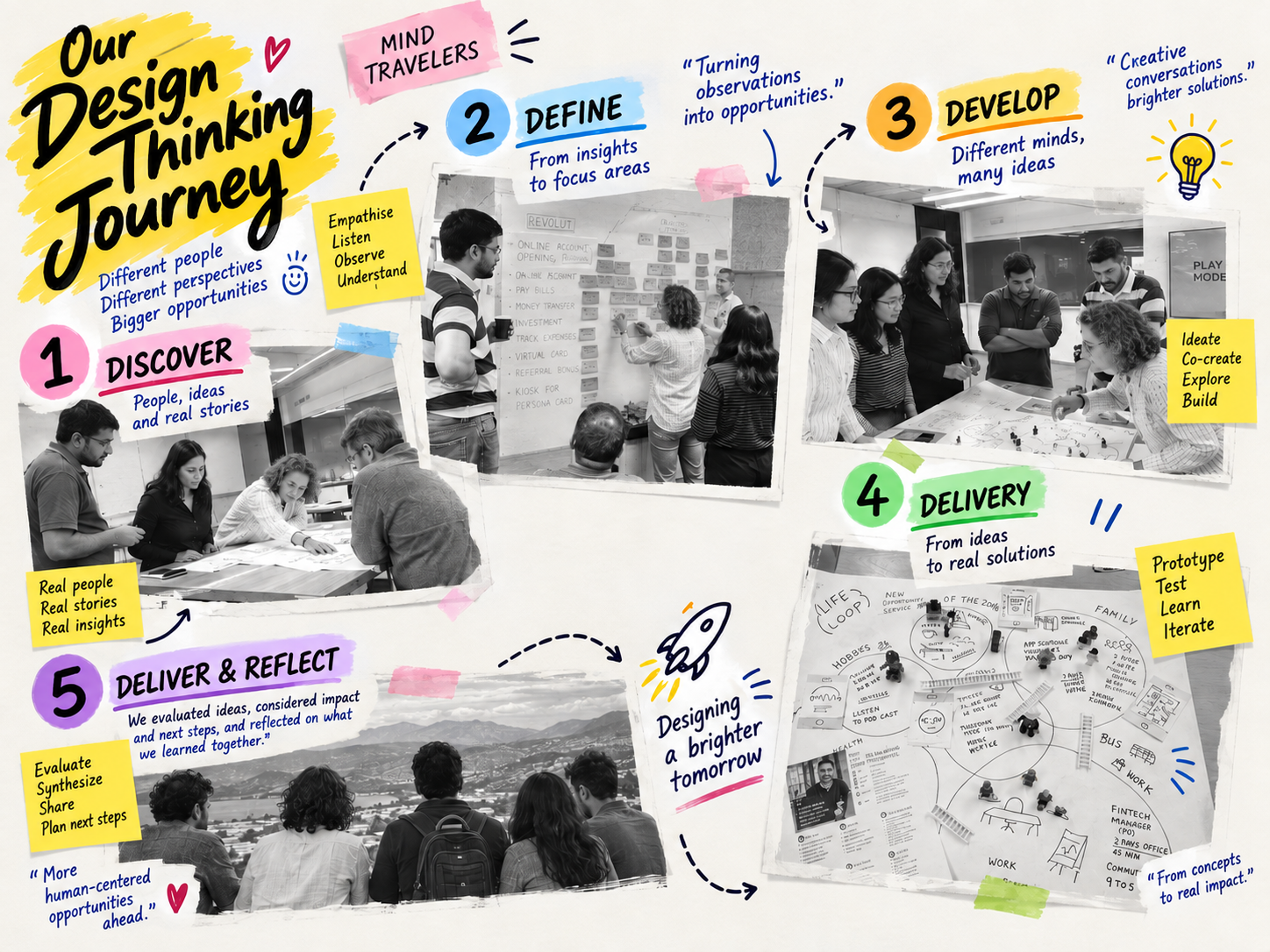
The course readings we explored were key turners and seem to be the extent of these 2 days. For example, Idris Mootee described Design Thinking as a strategic mindset rather than a process, a balance of logic and intuition, structure and chaos. This is similar to the ambiguity and exploration we experienced in each exercise. Buchanan’s idea of wicked problems aligns with our process of solving Ahmed’s problem. The author pointed out how new ideas often come from small shifts in point of view, something we practiced constantly through Katja’s suggestions of placements and reframing activities. Kolko’s emphasis on fast experimentation connected to our prototyping sessions, where mistakes became essential to improve our service proposal to the end.
Across the two days, we saw Design Thinking appear in user engagement, sketching, imagining services, planning for uncertainty, and even in everyday examples Katja shared from a gourmet chef and its creation process. Her reminder that creativity becomes “valuable” only when society recognizes it also made us reflect on how ideas sometimes arrive early yet still hold future potential.
Looking back, we realized we had lived the principles we later read about: reframing, experimenting, collaborating, and learning through action. We can truly say we left gratefully tired and a new awareness of experimentation, collaboration, and reframing.
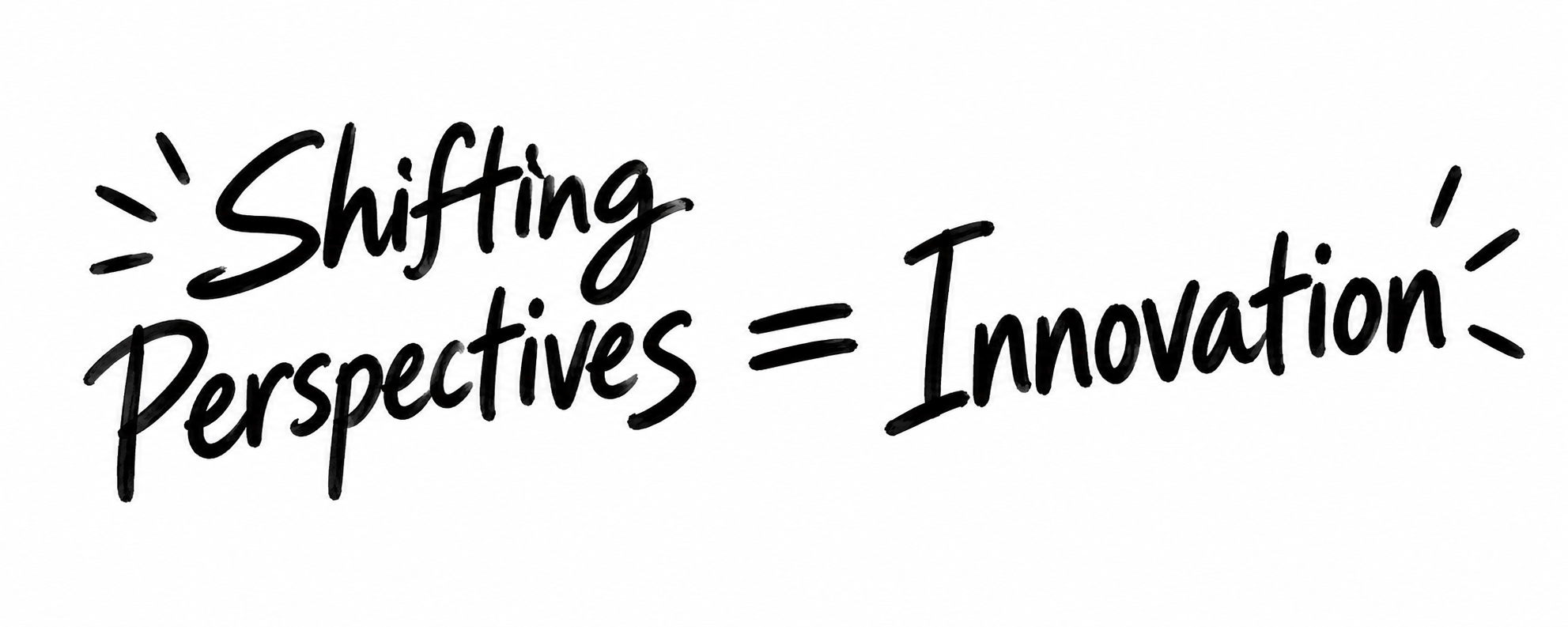
Key insight
Bibliography
Mootee, Idris. Design Thinking for Strategic Innovation : What They Can’t Teach You at Business or Design School, John Wiley & Sons, Incorporated, 2013. ProQuest Ebook Central, http://ebookcentral.proquest.com/lib/laurea/detail.action?docID=1358566. Created from laurea on 2026-09-13 13:17:49.
Buchanan, R., 1992. Wicked Problems in Design Thinking. Design Issues, 8(2), pp.5–21. Cambridge, MA: The MIT Press. Available at: http://www.jstor.org/stable/1511637 (Accessed: 11 April 2008).
Kolko, J. (2015) Design thinking comes of age. The approach, once used primarily in product design, is now infusing corporate culture.Links to an external site. Harvard Business Review September 2015, 66-71.
Tschimmel, Katja. Design Thinking Model Evolution 6.2 (2012-2017).
Figures
All images were created using original photographs taken during the course and then edited with ChatGPT.


Leave a Reply