
Written by Sundar Lamsal and Hemanta Lamsal
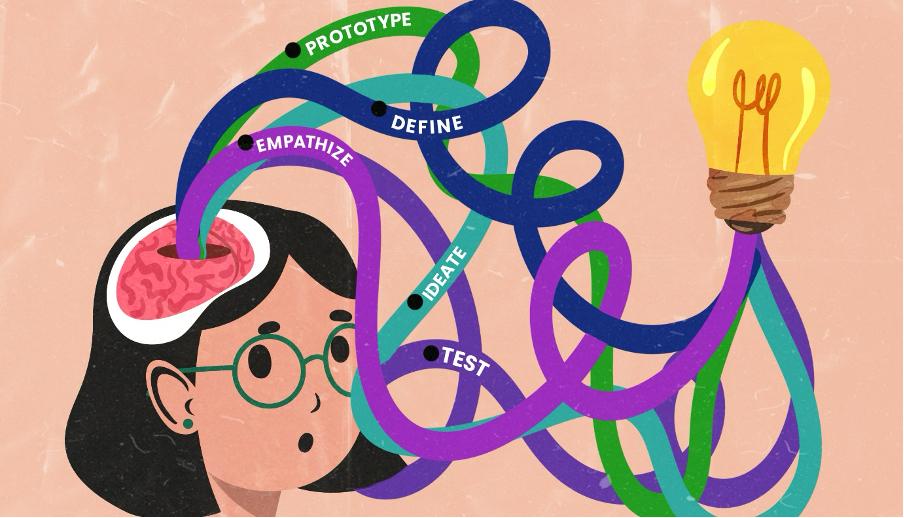
Did you ever ask yourself how some ideas become solutions which really reach a point of contact? This is the point to which design thinking belongs. At the contact sessions, we did not only learn the theory but we went through the process. We started to grasp the actual meaning of design thinking in action through these sessions and the associated concepts.
Design Thinking: Human-Based Innovation
Throughout our sessions, we had an opportunity to learn to focus on actual people and not on the target groups, since we were designing user roles and watching keenly. Among the things Tim Brown has taught us is that when we start thinking over ways in which we may solve a problem, we should never start by thinking about technology, but rather on the human need and that is how we will find ourselves with the significant solution like the coasting bikes that IDEO has presented to us. The simplistic guideline of rapid prototyping and testing ideas fast taught us that empathy, creativity and the exploration of ideas and ideas practically could make an innovation.
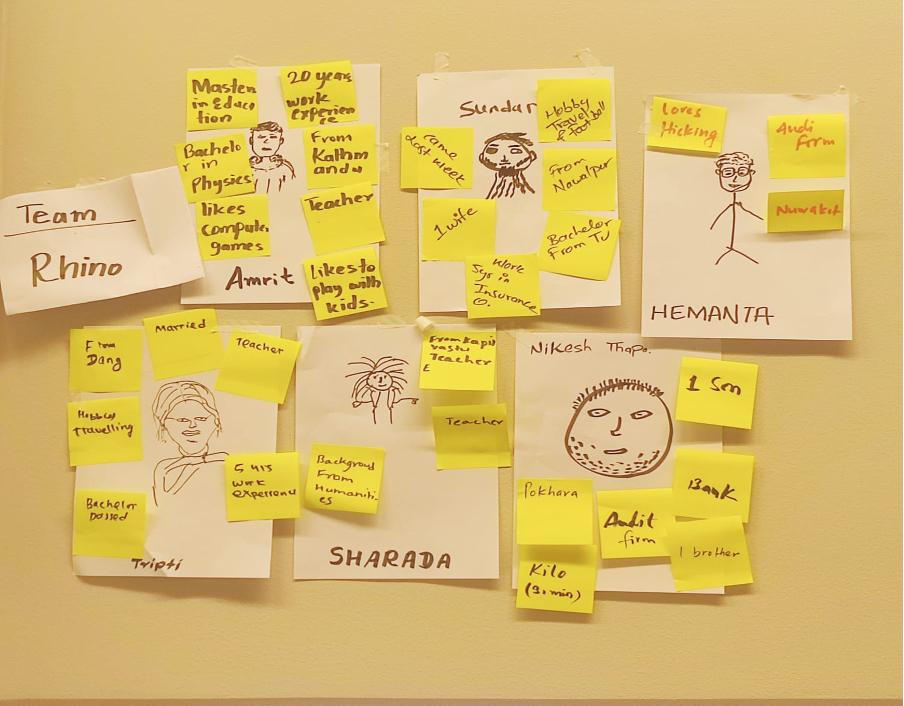
“Team Rhino draw portraits and learned more about each other “
Idea generation was one of the largest aspects in the context of our work. As depicted in our work, questions of how might we in the form of sticky notes on the wall could be found quite fast. At first it was somewhat difficult to comprehend with that number of concepts. But we are aware that it is but a little portion of the entire process. Design thinking is not the process of finding one way of doing things right. Actually, it is a matter of experimenting with numerous ideas and making the most appropriate choice.
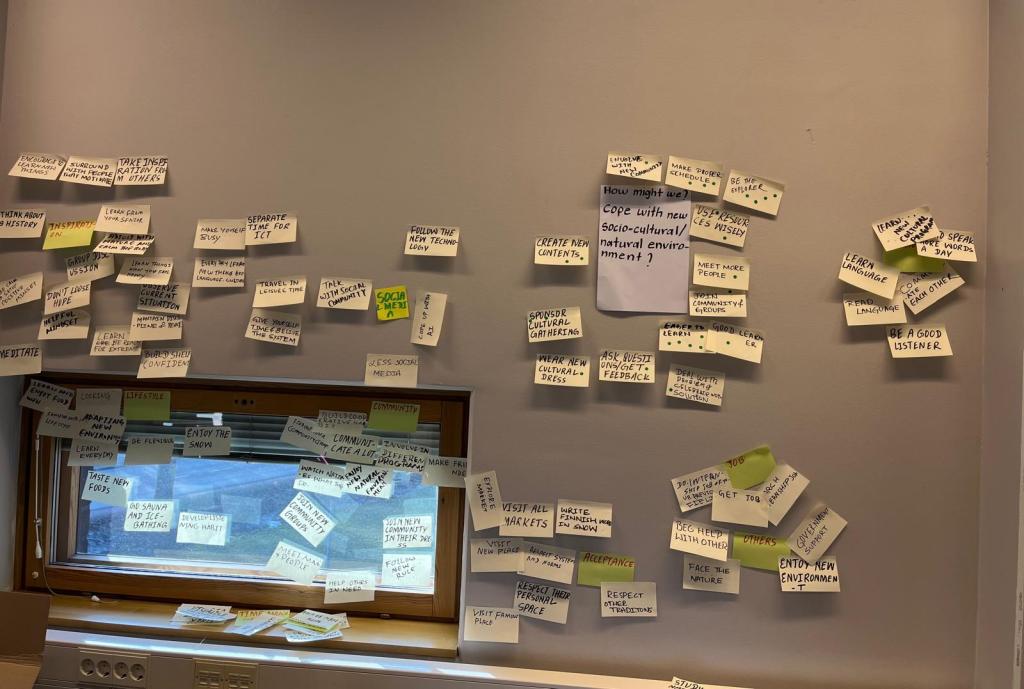
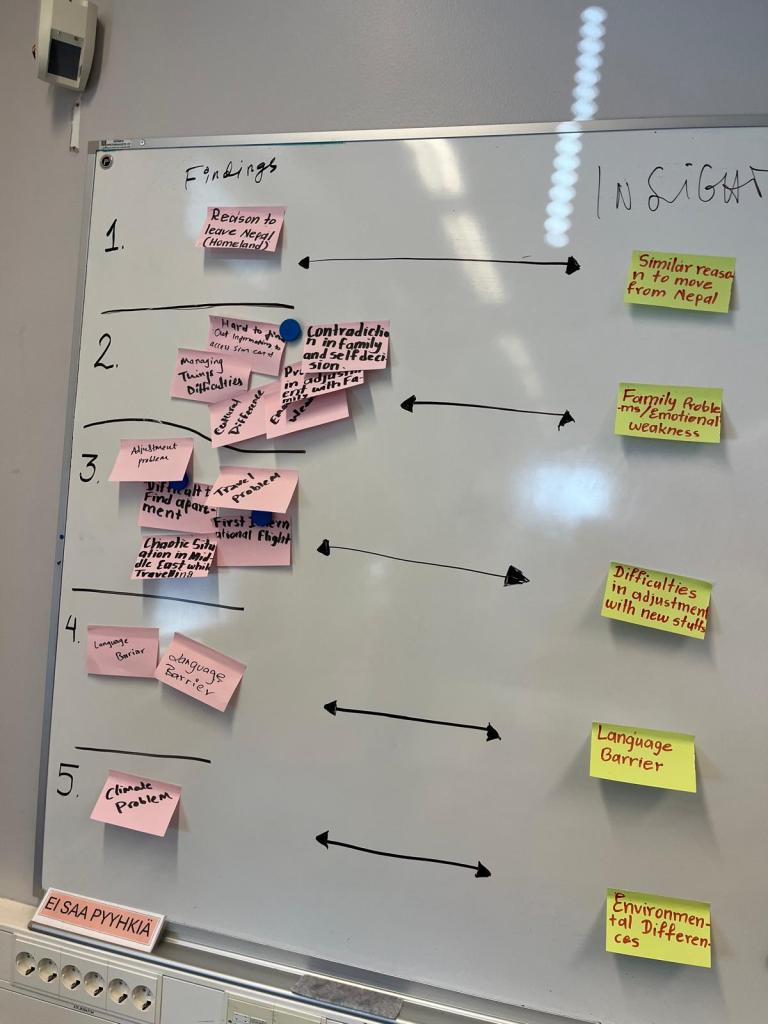
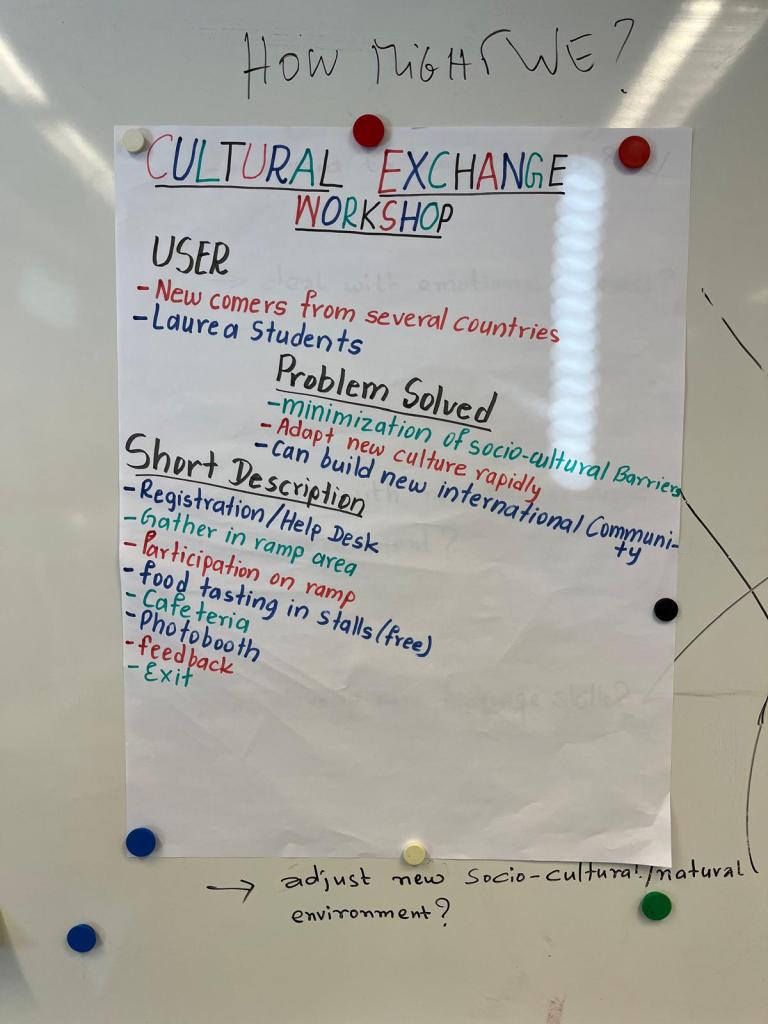
“Team Rhino wrote their ideas on sticky notes and also brainstormed a lot of creative solutions together“
Prototyping was the most interesting section. We utilized such a basic item as LEGO to construct a model of a cultural exchange workshop. We did not merely talk about things, we made ourselves something real and visible. This assisted us in testing and refining our ideas more rapidly. we understood that plain prototypes are effective since they simplify the comprehension and explanation of ideas. It also taught us that failure is good as it assists in enhancing the solution.
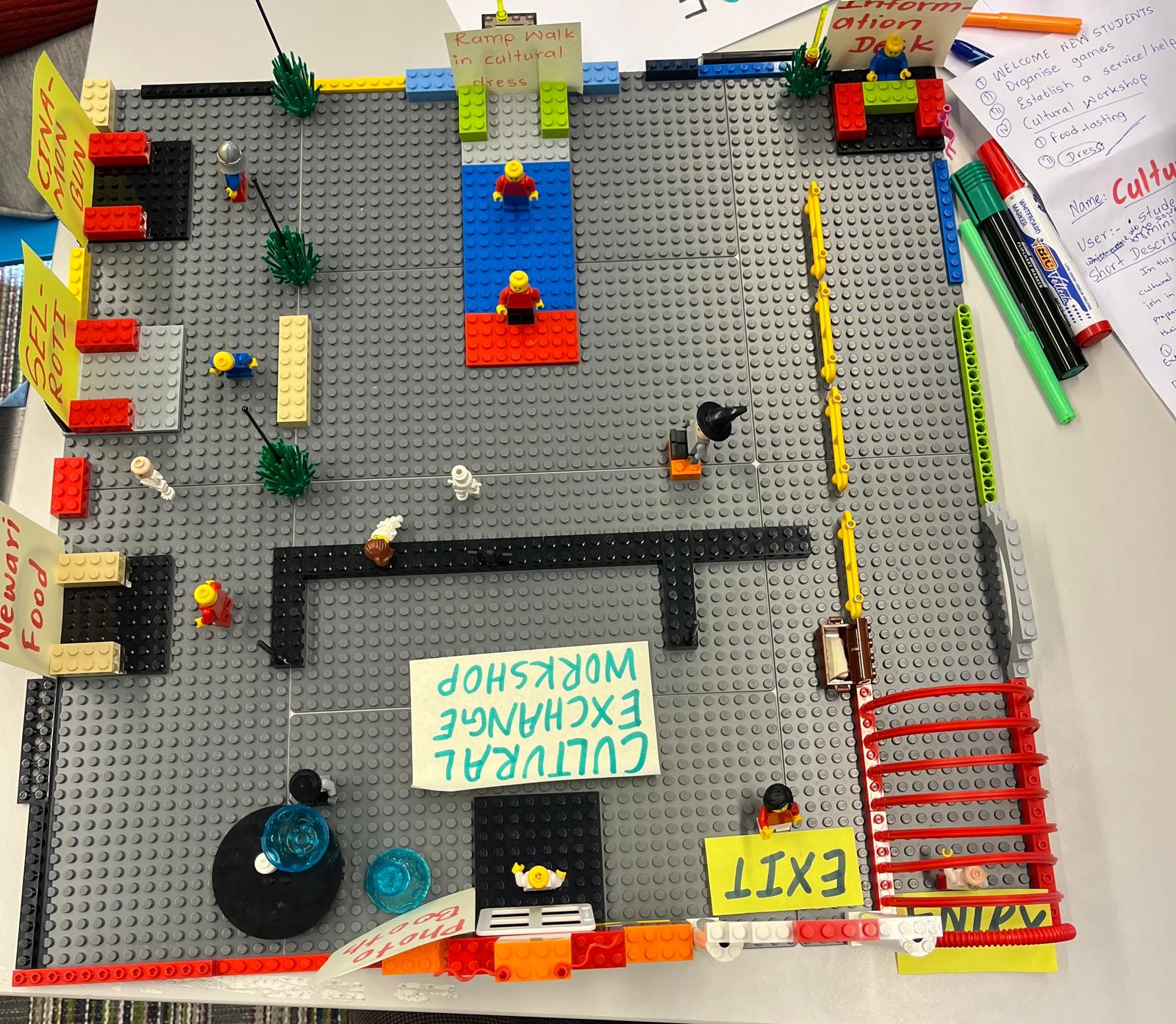
“Team Rhino ready to demonstrate the prototype“
What The Literature Says?
Tim Brown sees design thinking as a human-focused approach. His model includes inspiration and ideation and implementation which we applied in our work. In Change by Design, he talks about the need for quick prototyping which we did in class. Rather than lengthy planning, we understand by doing. But design thinking can be tough. Lucy Kimbell notes it’s often shown as simple and organized but is more complicated in real life. She sees design as something that comes from actions and working together and adapting to change. This matched our experience..
Conclusions
The assignment made us rethink our perspective on how to solve problems. For the links between steps to become a better process, design thinking is as much about thought process. Bringing all the design thinking sessions, we went through to make sense of them in relation with readings, it is clear that design thinking was about perspective taking. This is about people, testing ideas and learning from failure. It specifically caters to real-life situations where problems are ill-defined, and the goal is innovation.
But what happens next? How do we bring design thinking into reality and use that to create real change ?
References:
Brown, T. (2009). Change by design: How design thinking can transform organizations and inspire innovation. New York, NY: HarperCollins.
Kimbell, L. (2011). Rethinking design thinking: Part I. Design and Culture, 3(3), 285–306.
Kimbell, L. (2012). Rethinking design thinking: Part II. Design and Culture, 4(2), 129–148.
Tschimmel, K. (2026). Design thinking masterclass at SID [Lecture]. Laurea University of Applied Sciences, March 9–10.


Leave a comment