
Written by Tero Kauppinen and Edrish Md Abdul
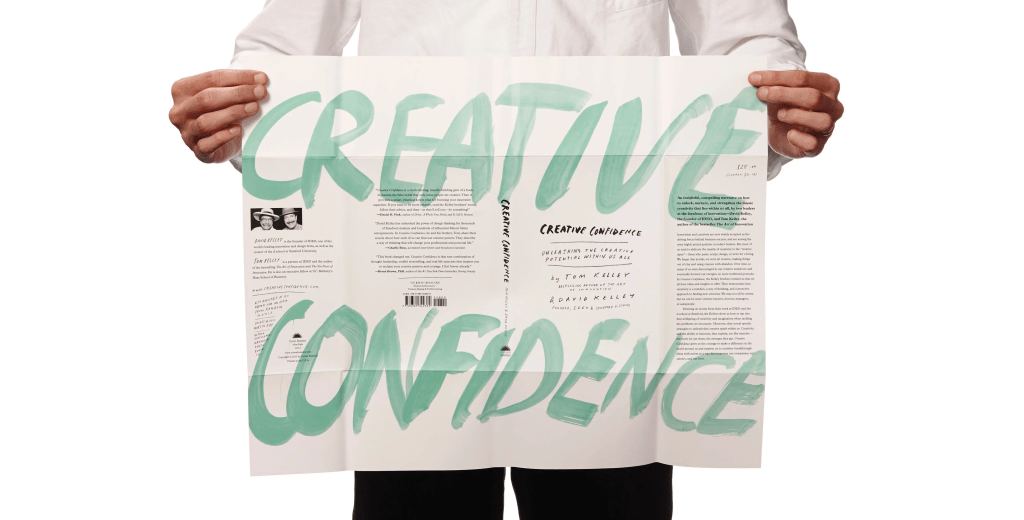
This SID article integrates insights from two workshop days focused on practical Design Thinking and creative thinking, along with the book ‘Creative Confidence’ by Tom & David Kelley (2013), and two articles ‘Design Thinking’ by Tim Brown (2008), and ‘Design Thinking Comes of Age’ by Jon Kolko (2015).
The Creativity Myth
There is a “creativity myth” among many people that being creative is a fixed trait reserved for those special few in creative fields (Kelley & Kelley 2013, 1). This misconception is rapidly being changed by Design Thinking practicioners and researchers, who are spreading the word of this concept to an ever-growing and diverse group of individuals and organizations.
“Creative confidence is like a muscle – it can be strengthened through effort and experience” (Kelley & Kelley 2013, 2-3).
At the heart of Design Thinking is creativity. The good news is that creativity is a skill that can be practiced and developed. This was the central insight from our time during the workshop. That creativity is a skill set that anyone can improve through repeated practice and experience.
During the workshops we practiced using various methods and tools with different teams and pairs. This process of learning by developing (LbD) was crucial in developing our creative confidence, which is the “ability to come up with ideas and try them out.” (Kelley & Kelley 2013, 3).
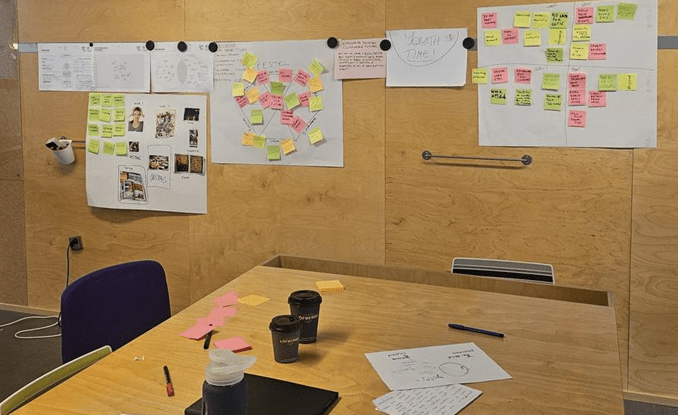
A picture of some of the iterative work produced by our multi-disciplinary group including the viewpoints of a sales manager, recruitment professional,
HR manager, and management consultant.
Practicing our creativity through these exercises was an eye-opening experience that allowed us to go through many iterative cycles, become comfortable with failure, and learn from each other.
So, what is Design Thinking?
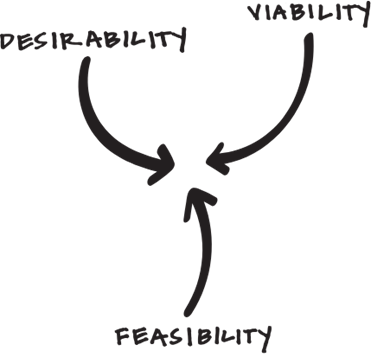
The CEO of IDEO, Tim Brown, defines Design Thinking as “an idea, a strategy, a method, and a way of seeing the world… A way to solve problems through creativity.” (Brown 2008). As a human-centred approach to solving problems, Design Thinking considers what is desired, what is technologically feasible and what is economically viable (Brown 2008). Good design considers all three aspects, and the intersection is known as the sweet spot of feasibility, viability, and desirability (Kelley & Kelley 2013, 19).
A case example presented during the workshop that demonstrated the power of Design Thinking and human-centredness is Airbnb. Initially, the company struggled with user engagement. The founders decided to change to a user-centered approach, visiting hosts and gathering user feedback. They identified low-quality images as a key issue affecting trust. By emphasizing and improving the image quality of their listings, they immediately saw an increase in bookings. This empathetic approach aligned Airbnb’s services with their end users’ needs, propelling the company to significant growth (Ramsey 2023).
At its core, Design Thinking promotes empathy through understanding the needs of the end-user. A crucial addition to this definition was brought up in the pre-assigned reading materials and during the class is that Design Thinking needs to evolve to also having a planet-centred perspective. Alves Dos Santos and Moireira (2022, 53) establish that being only human-centred can lead to unwanted consequences with issues, such as negative environmental impact. Thus, having a sustainability focus is also important when engaging in Design Thinking processes.
Why is Design Thinking necessary?
The need for Design Thinking is growing all around us. It is a crucial skill that organizations and individuals need to develop. In today’s world, the problems and challenges we are facing as individuals, organizations, and societies are becoming increasingly complex. This is creating a need for Design Thinking to become a central part of how organizations work (Kolko 2015). As Kolko (2015) points out, “people need their interactions with technologies and other complex systems to be simple, intuitive, and pleasurable.”
Design Thinking is a way to enable organizations and individuals to respond to problems produced by constantly changing circumstances in an empathetic, fast, and practical way. The workshops we attended demonstrated the effectiveness of Design Thinking processes in solving problems in such a way.
Tim Brown best sums it up in his statement that “these problems all have people at their heart. They require a human-centred, creative, iterative, and practical approach to finding the best ideas and ultimate solutions. Design thinking is just such an approach to innovation.” (Brown 2008).
References
Alves Dos Santos, J., Moireira, J., Marzavan, D., Kaartti, V., & Tschimmel, K. 2022. (p. 26-65) Are they or are they not? Creativity Innovation Affairs. Porto: Mindshake.
Brown, T. 2008. Design Thinking: Thinking like a designer can transform the way you develop products, services, processes – and even strategy. Accessed 30 September 2024. https://hbr.org/2008/06/design-thinking
Brown, T. 2008. Ideo: Design Thinking Defined. Accessed 30 September 2024. https://designthinking.ideo.com/
Kelley, D. and Kelley, T. 2013. Creative Confidence: unleashing the creative potential within us all. New York: Crown Business.
Kolko, J. 2015. Design Thinking Comes of Age: The approach, once used primarily in product design, is now infusing corporate culture. Harvard Business Review, September, 66-71. Accessed 30 September 2024. https://hbr.org/2015/09/design-thinking-comes-of-age
Ramsey, I. 2023. From Shaky Airbeds to Soaring Success: Design Thinking Takes Airbnb to New Heights. LinkedIn Pulse Article. Posted 9 April 2023. Accessed 30 September 2024. https://www.linkedin.com/pulse/from-shaky-airbeds-soaring-success-design-thinking-takes-isaak-ramsey/


Leave a comment