
Reflection by Nikhil Agarwal, Heini Hutinen and Sahan Ganegama
Design thinking has emerged as a dynamic, multifaceted approach to problem-solving, blending creativity, user-centered insights, and structured methodologies to foster innovation. Reflecting on the literature and discussions surrounding design thinking, several key insights arise, highlighting both the potential and complexities of this approach.
A Shift from traditional Problem- Solving
At the heart of design thinking is empathy, a principle that challenges traditional problem-solving methods by shifting focus from the technical or business-centric lens to a human-centered approach. This reflects a broader trend in design thinking: the move from problem-solving as a purely cognitive process to one that is deeply experiential and relational (Kimbell, L 2012).

Reflecting on the “Define” phase, it becomes evident that the articulation of the problem itself is a critical, often overlooked part of design thinking. This synthesis of data and emotional understanding offers a balanced view of the challenges, avoiding overly simplistic solutions (Kimbell, L 2012).
Thinking through doing
The “Ideate” phase reveals the playful yet serious nature of design thinking. It invites divergent thinking, where quantity is prioritised over immediate quality, pushing the boundaries of what is possible. It is here where creativity thrives, fuelled by diverse perspectives and the freedom to explore “wild” ideas. Design thinking’s emphasis on ideation highlights an openness to innovation that is often constrained in more traditional fields like engineering or management, where logical, linear thinking prevails (Kimbell, L 2012).
Prototyping, as represented in the design thinking process, is an iterative and highly experimental phase that values action over extended deliberation. Reflecting on this, it is clear how crucial it is to “think by doing”. Prototyping in design thinking is not just about validating an idea, it is about discovering new insights and reshaping concepts in response to real-world feedback (Brown, T 2009).
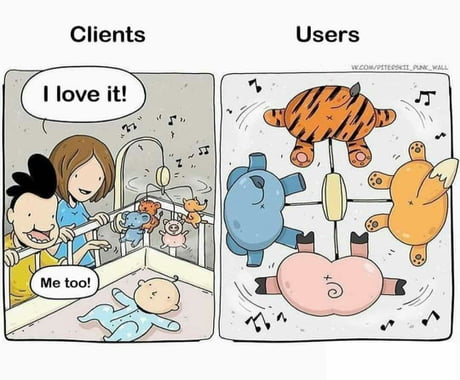
Testing, the final stage of the design thinking process, reinforces the non-linearity of the methodology. This iterative loop of learning, adjusting, and retesting is a powerful reminder that solutions are rarely perfect from the outset. They evolve, driven by real-world interaction and iterative refinement (Brown, T 2009).
Cognitive versus practice-based approach
Looking at the broader adoption of design thinking beyond traditional design fields, the reflections bring up a few concerns. While design thinking offers valuable tools and methods, there is a risk of generalising it as a one-size-fits-all solution to any problem. Design thinking, when abstracted from the environments and institutions in which it originated, can become oversimplified, losing the richness of its practical applications, and falling short of its transformative potential. (Kimbell, L 2011).
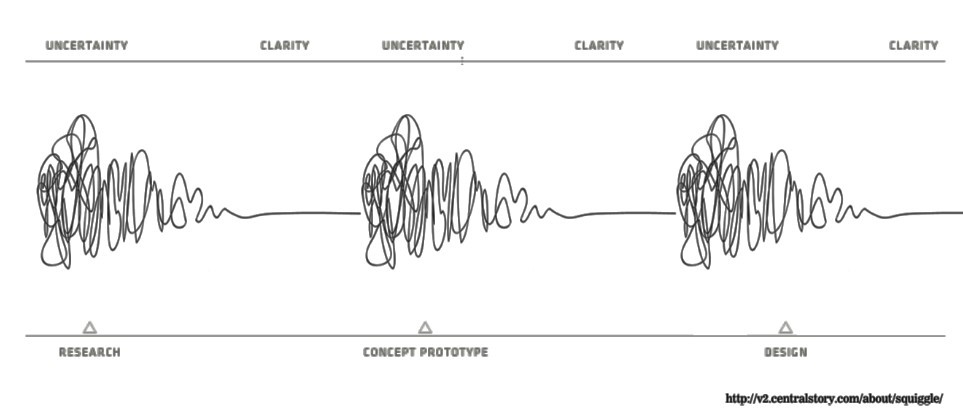
It seems clear that as an emerging field, there is still no clear definition for design thinking, and its critical study has only just begun. As such, the discipline, and the shift from the design of objects into the design of complex systems, processes, and services, might “sit uncomfortably between academic and professional boundaries” (Kimbell, 2011).
In summary, our reflections on design thinking point to its strengths as a flexible, user-centered, and innovative methodology. However, it also calls for caution in how broadly and universally it is applied. Design thinking’s real power lies in its ability to bring diverse perspectives together, engage deeply with human needs and iterate toward solutions that matter.
References
- Brown, T. 2009. Change by Design: How Design Thinking Transforms Organizations and Inspires Innovation. New York: HarperCollins Publishers.
- Marzavan, D. 2024. Design thinking [lecture material]. Held on 6 and 7 September 2024. Laurea University of Applied Sciences.
- Kimbell, L. 2011. Rethinking Design Thinking: Part 1. Design & Culture, Vol. 3 (3). 285-306.
- Kimbell, L. 2012. Rethinking Design Thinking: Part 2. Design & Culture, Vol. 4 (2). 129-148.


Leave a comment