

With emerging complex health and societal problems, such as Covid-19 and climate change, the world needs creative mindset and collaboration more than ever. Two new Laurea SID students interviewed each other about the key elements of design thinking after taking the master class of design thinking at Laurea.
M: Ahmed, what made you interested in service design?
A: Well, I was born and raised in Egypt. It’s a country with no structure, and for me being creative was the only chance of survival. I have always dreamed of assisting humanity and adding value to the world. While I was participating in a fellowship in Washington and working on a digital application, I got introduced to service design. During the master class in Finland, I learnt that design thinking is actually a language of empathy and creativity, and that it allows us to create better solutions that are tailored based on consumer’s needs. What about you, Mirkka?
M: That’s so fascinating. I can certainly recognise the desire for wanting to create something meaningful that’s valuable for people and the planet we live in. I have previously studied social anthropology and have been always interested in human behaviour. While working in the communications roles, I have noticed that often companies lack resources or tools to understand consumers and service users. I agree that catching the valuable “native’s point of view”, as described in anthropology, is essential in order to create better services. Nowadays it´s even more important because we live in a world where every service is expected to be a great experience.
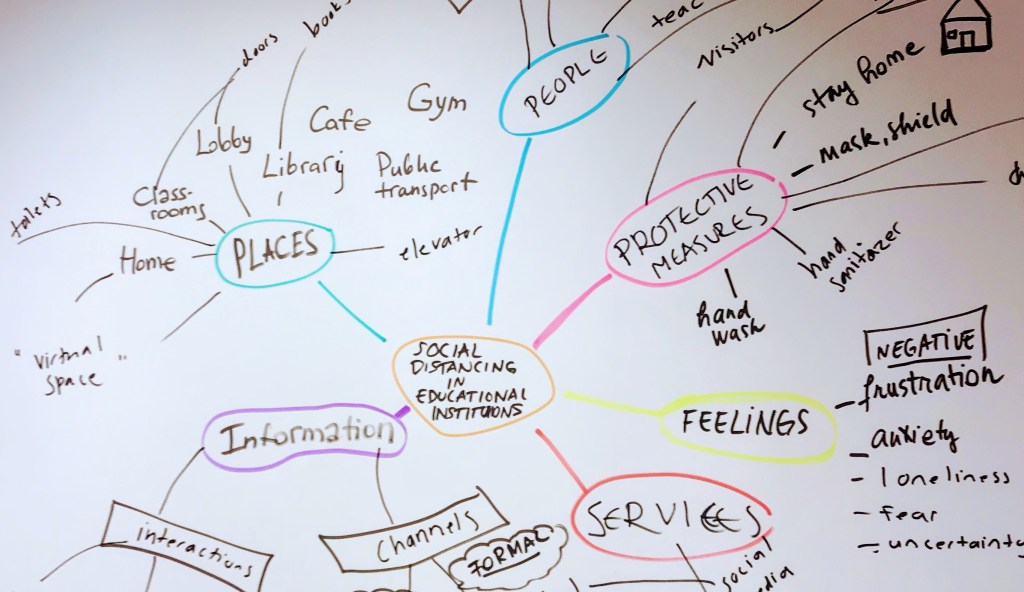
A: What are your first impressions about design thinking based on the course?
M: One reason I like the design thinking approach is that it brings different people and perspectives together. It forces people to think differently, and more visually. Design thinking means exploring new opportunities, “thinking with your hands”, as Tim Brown puts it in his book Change by design. During our class, the creativity exercises demonstrated well how our own perspective is limited to what we understand and know already. If we want to find new solutions it’s essential to create an environment where a constant flow of exchanging ideas takes place. I see that the tools of design thinking are facilitating that shared process of thinking differently.
A: I totally agree with you. Also in my opinion, The Mindshake Design Thinking Model Evolution 6² with its six steps makes the process of innovating even more logical. In my opinion, empathy is the most important part of the design thinking process. Empathy focuses more on the consumer’s feelings and experience, by how they think, and what they feel. When an innovation project is based on the deep understanding of the consumer, you can develop truly creative solutions. Without empathy results can be very unsatisfying.
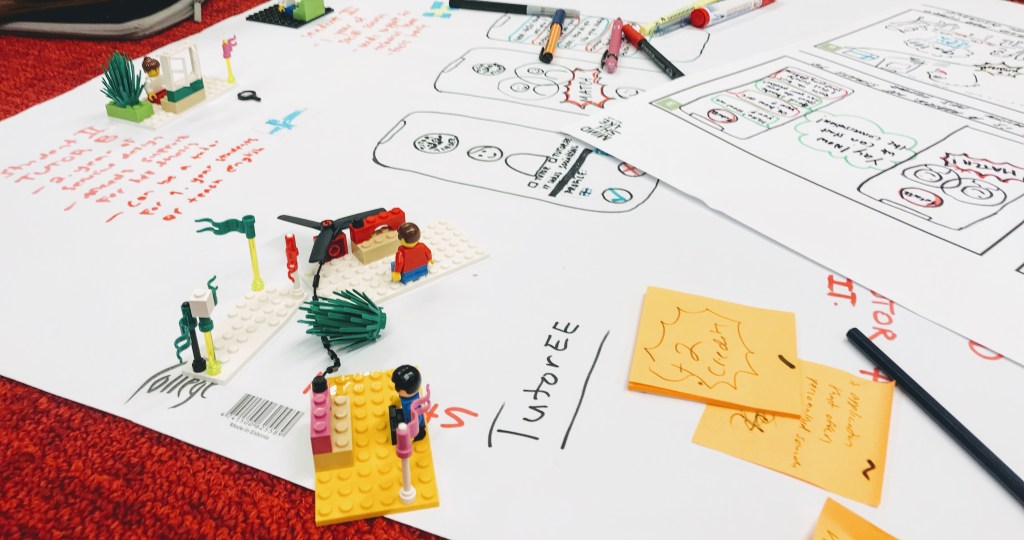
M: I agree that the user understanding is probably one of the most important elements in the design thinking process. Without it the service might be innovative but not necessarily needed or wanted. Empathic design requires curiosity and motivation from designers but also design techniques that assist designers in stepping into the world of a user. I used to understand empathy as an individual attribute, not as something you can trigger in yourself or in others or even create systematically. But it makes sense, even literature or theater uses the very same tools. Yet, I think that even empathy or user data isn’t enough if designers seek to be human-centered. Whenever possible, the users should be included in designing the services that matter to them. After all, they are the people whose lives we are designing.
A: Exactly the point. I also see that testing and evolving ideas is very important. One of the tools that grabbed my attention is the feedback map. The design team will develop and elaborate the prototype based on the consumers’ feedback. Only after this point you can be assured that the idea is 100 per cent user-centric. I can’t wait to apply all of these tools to the design challenges of our times.
M: Indeed. We really need new ways to tackle the world’s complex issues and in that design thinking can be very useful.
Text by Ahmed Abdrabo and Mirkka Helkkula
A note from authors: We wanted to test a different method of writing an article, using a dialogue as a format. We also used images to feed our imagination. Our goal was to demonstrate how an unconventional concept combined with a free flow of thoughts could create something unexpected, similarly to a design thinking process.
Inspired by:
Brown, Tim 2009. Change by design: how design thinking can transform organizations and inspire innovation. New York: HarperCollins Publishers.
Brown, Tim (2008) Design Thinking. Harvard Business Review, June, 84-95. http://www.ideo.com/images/uploads/thoughts/IDEO_HBR_Design_Thinking.pdf
Kouprie, M & Sleeswijk Visser, F. (2009) A framework for empathy in design: stepping into and out of the user’s life. in Journal of Engineering Design Vol. 20, No. 5, October 2009, 437–448
Tschimmel, Katja (2020). Design Thinking course lectures, September 4–5 2020. Laurea University of Applied Sciences. Espoo, Finland.
Tschimmel, Katja (2018). Evolution 6² Toolkit: An E-handbook for Practical Design Thinking for Innovation. Mindshake.


Leave a comment