
We are honored to have contact lessons with Dr. Katja Tschimmel, Design Professor at ESAD Portugal, and Gijs van Wulfen, Innovation Consultant about design thinking. I work in a design organization surrounded by designers; I always wanted to know how design thinking can be used by anyone as a toolkit. This course gives me the absolutely fantastic opportunity to learn to think like designer.
After the course, I feel am fulfilled with power which will help me to continue with my rest of SID programs. I can’t wait to learn more. Now, let me share with you essential personal takeaways from the course.
1. The power of “Visual”
During the course I remember all the time Katja and Gijs have been talking about “Visual”, I believe that is the most important aspect which makes design thinking standing out. We tried mind mapping, foto safari, image interview, moodboard, brain writing, sketching and desktop walk through (Katja Tschimmel’s research paper Design Thinking as an effective Toolkit for Innovation (2012) https://www.academia.edu/1906407/Design_Thinking_as_an_effective_Toolkit_for_Innovation) in step 1 (Full Steam Ahead) and 2 (Observe and Learn) of FORTH method (http://www.forth-innovation.com/home/) by Gijs van Wulfen. The commonality of all of these tools above is all of them are very visual.
The power of visual is obvious. Research paper shows that people remember 80% of what they see and do (Figure 1 below). That is why if you really want what you said to be remembered, you must use visual tools.
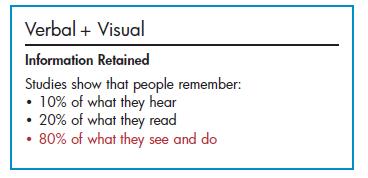
(Figure 1: Resource: http://www.hp.com/large/ipg/assets/bus-solutions/power-of-visual-communication.pdf)
I totally felt thrilled by how much more effectively I remembered our course by using sketching, mood-board, mind-mapping and desktop walkthrough. It is also very interesting to me that many times when we discuss with team members, I thought we were on same page already but not until we draw our ideas on paper or write them down, we realized that we actually didn’t understand each other fully. I learned so much by doing the exercises given by Katja and Gijs.
Right after the course, I started applying visual communication immediately into my current work. Below is an example of fast drawings to illustrate focus areas in our operational development projects portfolio (Experience Innovation collaboration and Product Execution (Figure 2)).

(Figure 2: example of using visual tool in my own work after the course)
It is also important to remember that it doesn’t matter if the drawings are not beautiful. Don’t be shy to try it out, like Katja and Gijs said, you need not to be designer to think or work like designer. Having said that, I believe the more you practice the better you will become. The key is to start using the visual tool and do it more often. This will help you to become a natural design thinker.
2.The power of brain writing
In step 3 (Raise Ideas) of FORTH Innovation method (http://www.forth-innovation.com/home/) by Gijs van Wulfen. We practiced brain writing.
Writing down ideas on post-its isn’t new since I have done that tons of times but what amazes me most is the method of generate ideas from others ideas. We also tried to generate ideas from 2 totally different areas to come up with new ideas. Katja has also introduced the detail of using the same color marker (so that it is not possible to distinguish whose idea it was using different colors). Our team generated about 100 ideas in the given time which was amazing!
3. The power of desktop walkthrough
In step 4 (Test Ideas) and 5 (Homecoming) of FORTH Innovation method (http://www.forth-innovation.com/home/) by Gijs van wulfen, we practiced a design thinking tool named desktop walkthrough using Lego.
Lego is itself is an innovation which also inspired other innovation (such as Minecraft video game, the most popular computer game of all currently). One should never underestimate the power of Lego. Our minds start to think very creatively when we are building our Lego blocks.
Inspired by the course and Finnish autumn, we had a Lego building session with co-workers. The goal is to make a tower by randomly distributed Lego in each table. Below you see some pictures of Lego towers built by different designer and non-designers co-worker group. In the end the tower will be evaluated by the judge based on the wind testing result for stability, functionality and etc.

At last , as written in the book Designing for Growth ( A Design Thinking Tool Kit for Manager), design thinking is a process of innovation and with user centric mindset and questioning and visualizing until your find the satisfactory solution together with your target user. Design thinking should be used as much as possible in whatever you are working on. Let us become a design thinker right now!

Posted by Shuang Mikkola, SID 2014 student
Reference
Brown, Tim. 2008. Design Thinking. Harvard Business Review.
Tschimmel, Katja. 2012. Design Thinking as an effective Toolkit for Innovation. In Proceedings of the XXIII ISPIM Conference: Action for Innovation: Innovating from Experience. Barcelona, Spain.
Gijs Van Wulfen, G. 2013. The Innovation Expedition, A Visual Toolkit to Start Innovation. Amsterdam, Netherlands: BIS Publishers.
Designing for Growth: A Design Thinking Tool Kit for Managers. New York, NY, USA: Columbia University press, 2011.


Leave a reply to heinikauppinen Cancel reply