
Reflections by Judyta Kontoniemi and Namrata Sethi
Design Thinking. Sounds simple, right? Just follow the classic 6-stage Design Thinking process, reserve a couple of hours, get a room with a whiteboard and brainstorm a solution. Without involving real end users.
There is much more to it. Let’s find out what Design Thinking is really about.
According to Tim Brown (2009, p.16), Design Thinking is a non-linear, exploratory process that encourages experimentation and learning as you go. Design Thinkers shall embrace the unexpected turns and let the process itself guide their discoveries. During our masterclass at Laurea, we experienced it firsthand, explored various stages of DT and delved into diverse methods and techniques.
Inspired by Daniela Marzavan’s words: “DT is about bringing an idea from the head, through the heart, to the hand” in this blog post we will explore the DT journey and the skill set that Design Thinkers should be equipped with.
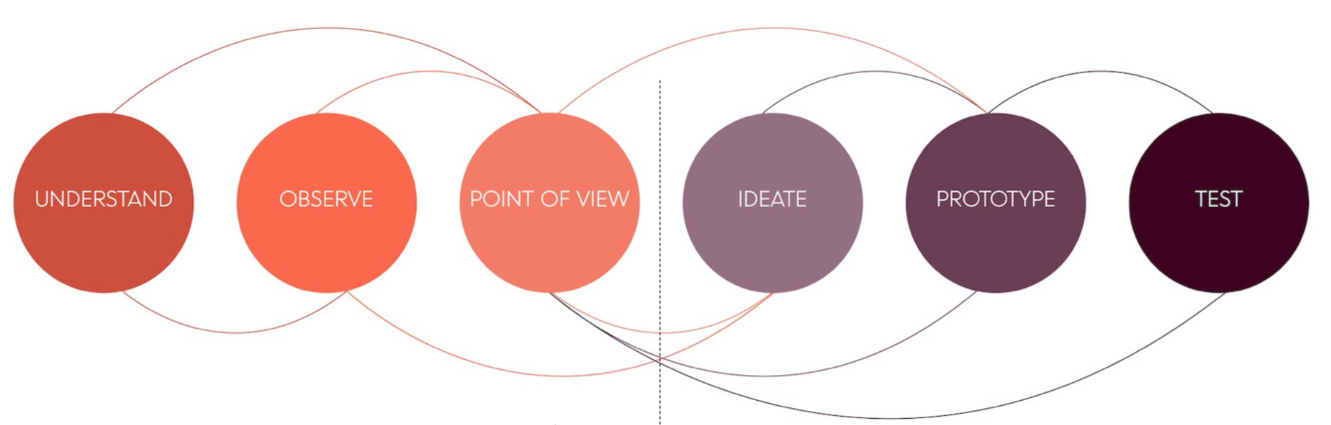
First stage of the DT process engages our mind and head in understanding the problem we are trying to solve. We analyze trends, build stakeholder maps and may conduct exploratory interviews, but while asking people about their needs is important, it’s not enough to uncover truly groundbreaking solutions (Brown 2009, p. 40). We need to go beyond surface-level questioning and focus more on the observation stage to gain more insightful perspectives.
To unlock the power of our observations and insights, we need to connect with people on a deeper level – through empathy (Brown 2009, p. 49), which is one of the key skills identified in the Design Thinking process.
But what exactly is empathy?
McDonagh (2006,as cited in Kouprie et al. 2009) defines it as “the intuitive ability to identify with other people’s thoughts and feelings – their motivations, emotional and mental models, values, priorities, preferences, and inner conflicts.”
Empathy in design goes beyond mere knowledge; it is about truly understanding the user without judgment (not to be confused by sympathy).
As Battarbee (2004,as cited in Kouprie et al. 2009) explains, empathy involves emotionally connecting with users to understand why certain experiences hold meaning for them, a process that strengthens this bond. In Design Thinking, empathy is not just a quality of the process but a skill that varies from person to person. To foster empathic understanding, designers often use storytelling techniques such as personas, scenarios, and role-playing. These tools help designers to immerse themselves in the user experience and see the world from their perspective.
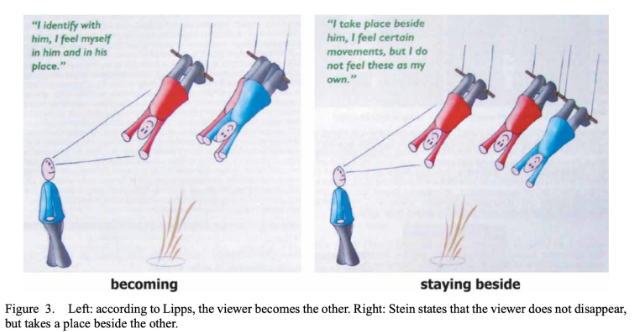
How can empathy be practiced:
Empathy in design follows a phased process: discovery, immersion, connection, and detachment. While moving through the different stages, the relationship with the user evolves, requiring a balance of emotional and cognitive engagement. This structured approach helps designers to step in and out of the user’s life, enhancing their empathic ability. However, for empathy to be truly effective, there must be motivation and dedication and sufficient time to process and reflect on the user’s perspective fully.

While empathy is at the heart of design, the journey to tangible solutions involves many processes. During our class, we discovered that storytelling and prototyping bring ideas to life. These methods help designers build empathy by immersing themselves in users’ lives, creating a deeper connection to their motivations and challenges.
Design Thinking isn’t just about following steps; it’s about being open to unexpected changes and learning as you go. Storytelling and prototyping are key tools that make ideas real, turning user experiences into practical, empathy-based solutions, thus bringing an idea from the head, through the heart, to the hand.
Music: Bensound.com/royalty-free-music License code: OCWH67MMSBFEKY5H
References:
Brown, T. (2009) Change by design: How design thinking can transform organisations and inspire innovation. New York: HarperCollins Publishers.
Kouprie, M., & Sleeswijk Visser, F. (2009). A framework for empathy in design: Stepping into and out of the user’s life. Journal of Engineering Design, 20(5), 437–448.
Kimbell, L. (2011). Rethinking design thinking: Part 1. Design and Culture, 3(3), 285-306.
Marzavan, D. 2024. Design thinking [lecture material]. Held on 6th and 7th September 2024. Laurea University of Applied Sciences.


Leave a comment