
Ups & downs… but they remain… resilience is not the result… they were already like that… they discontinue their activity… but they rise again, like the phoenix… result of their true alignment with their mission and values … they can just not help it.

Fragility is a constant in small to medium NGOs, that have a significant dependency on grants and voluntary services. Adaptability and endurance, resilience, need to be in the DNA of these organizations, to ensure they prevail in the change of times and the inevitable turbulences that come with them. Mission and values are at the core, but being resilient just with the heart can be very tough and sometimes fatal.
In this article, I’ll briefly share a reflection about the path towards resilience, rooted on the one side on literature about the topic, and on the other, on my journey as a junior facilitator during Holis School 2023 (WeareHolis – Building resilience of NGOs 2023), where resilience in social organisations was the central theme, and where we worked directly with 3 NGOs in the pursuit of resilience at different levels.
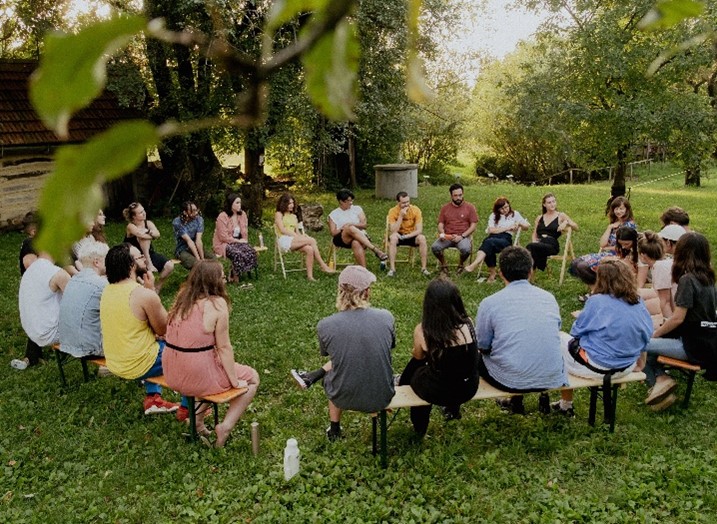
Resilience can significantly be improved. This muscle can significantly be strengthened, to increase the probability of prevailing, to be in good shape for when the bad times come, to not leave it all to the heart. Proven tactics and strategies to increase resilience can be found in articles, and research papers, and organizations and NGOs that wish to, can develop and master their ability to navigate difficulties with a higher probability of success.
To name some of those strategies, research points to teams and individuals as one of the touchstones to strengthen resilience. They talk about having members of the organization personally aligned with its mission, to ensure commitment and support in any circumstance (Witmer and Mellinger 2016). Building self-sufficient teams, that will look for opportunities proactively and for solutions autonomously when facing a challenge is also a key strategy to follow, according to Maor, Park, and Weddle (2022). Both Witmer and Mellinger (2016) and Suarez and Montes (2020) talk about exercising teams in doing more with fewer resources, so they will be ready to use creativity and find ways to get things done in more adverse scenarios. Additionally, Suarez and Montes (2020) explain how ensuring that individuals have visibility on how each one’s tasks fit in the organization, make them aware of the way it would be affected when there is a concrete disruption. These strategies have in common the importance lying on the self-sufficiency and self-motivation of the members of the organization. Such members will act as a driving force in both good and bad times, having on the one hand the awareness and understanding of the organisation to look for the right solutions or opportunities, and on the other hand the will to make things happen.

Continuing with tactics and strategies towards resilience mentioned in the literature, and in terms of management, authors (Witmer and Mellinger 2016 and Maor, Park, and Weddle 2022) propose having team leaders with a servant attitude, that put the mission of the organization up front, and that are ready to support and push the growth of the members of the team. We were able to recognise the latter practice at this year’s edition of the Holis School at Hostětín (WeareHolis – Building resilience of NGOs 2023), where the leaders were fully focused on providing a complete transformative experience for the participants, while paving the way to produce the best results for the challenges at hand. This was translated in a full commitment of participants with those proposed challenges.
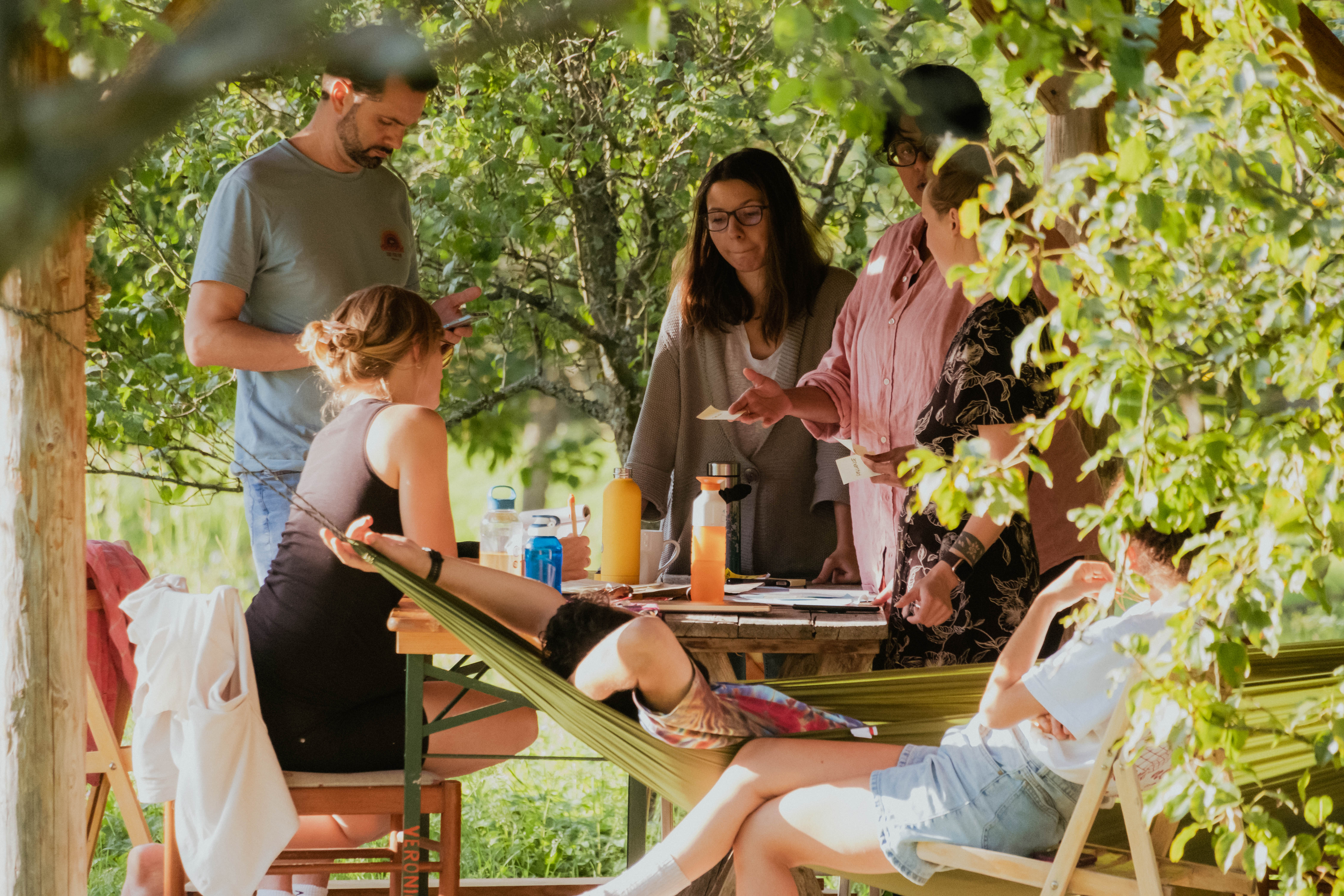
Healthy practices for organizations in search of resilience are not forgotten in the literature. Among others, there is having a well-established decision system, where each decision is taken at the right level of responsibility and with different tactics depending on the circumstances, to gain the precious agility required in times of change (Suarez and Montes 2020). Internal transparency needs to be a constant, to be trusted by employees and collaborators and have their commitment (Witmer and Mellinger 2016). Regular re-evaluation of routines and the assumptions in which they are based will bring a culture of continuous improvement and adaptability to changes (Suarez and Montes 2020). Indeed, as a reflection, not for being a non-profit organisation, NGOs can forget about excelling on processes refinement and efficiency. On the contrary, and due to the mentioned fragility and external dependencies, they need to be even more competent on these aspects as they will have less margin for mistakes in bad times.
The relation with the community within which the organizations operate is also highlighted in academic sources, as an important pillar of a resilient organisation. Earning the trust of the community, by being exemplary and reliable in your actions over time, will make other players become your partners and allies, and will pay off when they have an opportunity to support the organization (Witmer and Mellinger 2016). A clear example of this are the collaborations that many NGOs have been able to sign with Holis School over time, to have its support in the shape of interdisciplinary social innovation projects to address their main challenges (WeareHolis – About 2023). The altruistic participation that Holis School itself gets year after year from experts of different fields (WeareHolis – People 2023) is another good example.
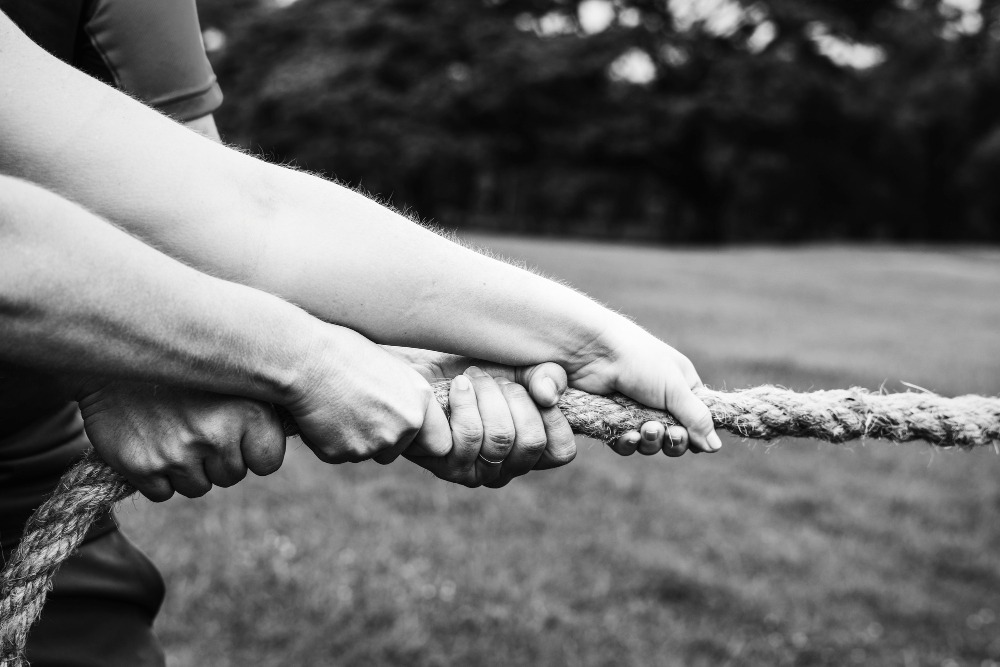
There are many strategies, good practices and tactics, the ones presented here are just a few. The knowledge is out there. Slowly but firmly, cultivating them in the organizations, whatever the size is, will undoubtedly help hearts to ease the adversities and turbulences of the environment when following a mission. Once again: It is within reach. It won’t be easy, just as things that matter are not easy. Proper planning will need to be done to implement, steadily, those strategies that better fit each organization, to customize the best practices to the nature and character of each enterprise. But it is doable. The mission is worth the effort.
References
Maor, D., Park, P. & Weddle, B. 2022. Raising the resilience of your organization. Article from McKinsey & Company. Accessed 15 September 2023. https://www.mckinsey.com/capabilities/people-and-organizational-performance/our-insights/raising-the-resilience-of-your-organization#/
Suarez, F. & Montes, J. 2020. Building Organizational Resilience. Magazine (November – December 2020). Article from Harvard Business Review. Accessed 15 September 2023. https://hbr.org/2020/11/building-organizational-resilience
WeareHolis – About. Accessed 20 October 2023. https://www.weareholis.org/about
WeareHolis – Building resilience of NGOs. Accessed 20 October 2023. https://www.weareholis.org/experiences/building-resilience-of-ngos
WeareHolis – People. Accessed 20 October 2023. https://www.weareholis.org/people. See Team Facilitators and Experts
Witmer, H. & Mellinger, M. 2016. Organizational resilience: Nonprofit organizations’ response to change. Work (Reading, Mass.). 54. Doi: 10.3233/WOR-162303


Leave a comment