It’s time to play, seriously! – Using design thinking to solve today’s problems

Remember when as a child you used to build stuff out of everyday things like sticks and sand? Maybe role play as a doctor or a parent? This all comes naturally for children but for some reason we stop playing as adults. It is time to bring those old skills back and put them to good use with design thinking. By incorporating aspects of a designer’s way of thinking anyone can participate in innovating solutions to today’s complex issues. Add a sprinkle of serious play to the mix and you can have a bunch of fun while doing it. 
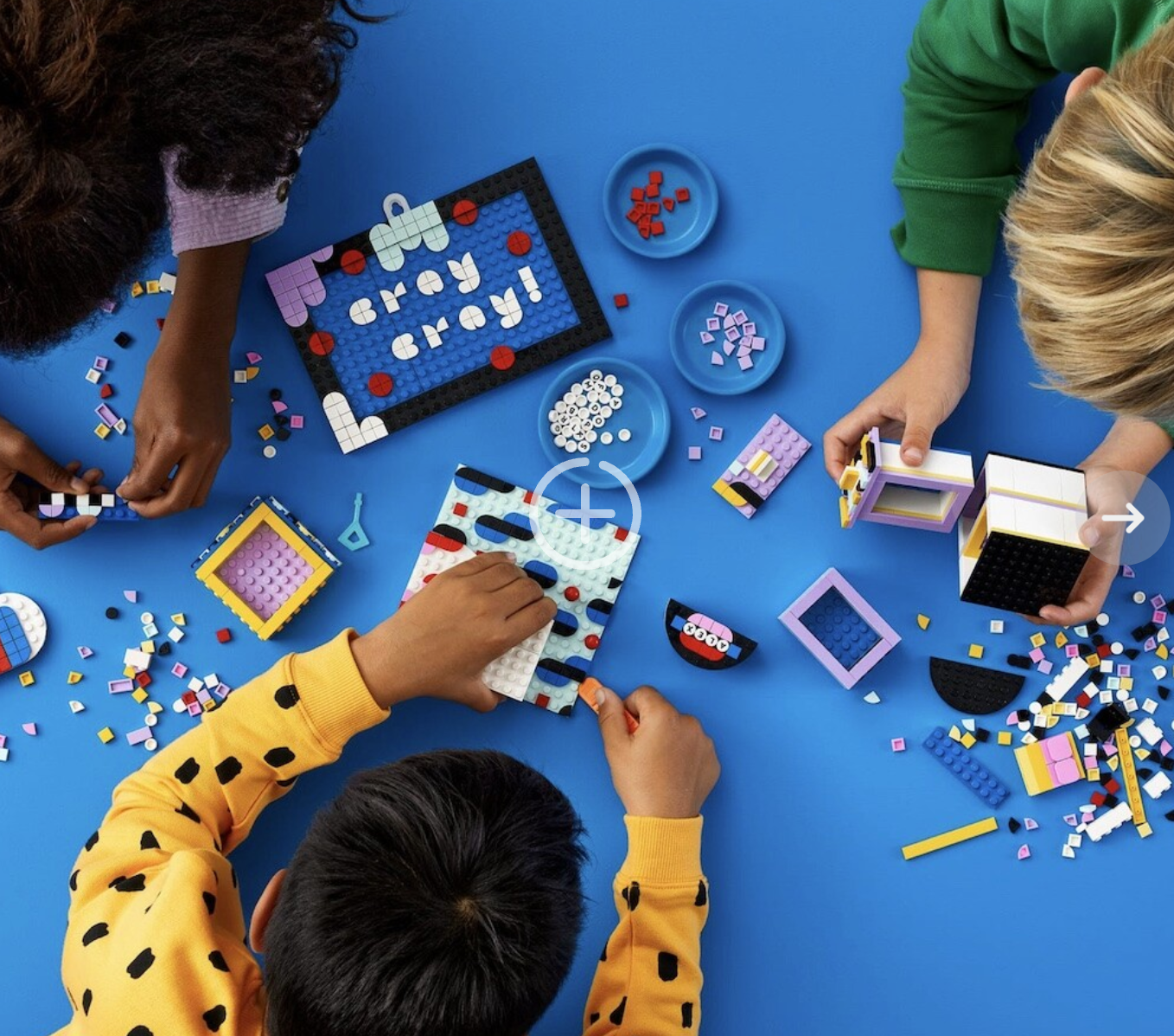
Picture 1: Creation with legos

What is design thinking?

According to Katja Tschimmel (2021), design thinking is a set of tools and models which help the creative processes of multi-disciplined teams. It has found its way to larger organisations as an answer to simplifying the challenges of both modern business and technology. (Kolko 2015.) Through an iterative process of 6 steps a team can innovate solutions to complex problems. These 6 phases (Picture 2) are Understand, Observe, Point of view, Ideate, Prototype and Test (Marzavan, 2023). 
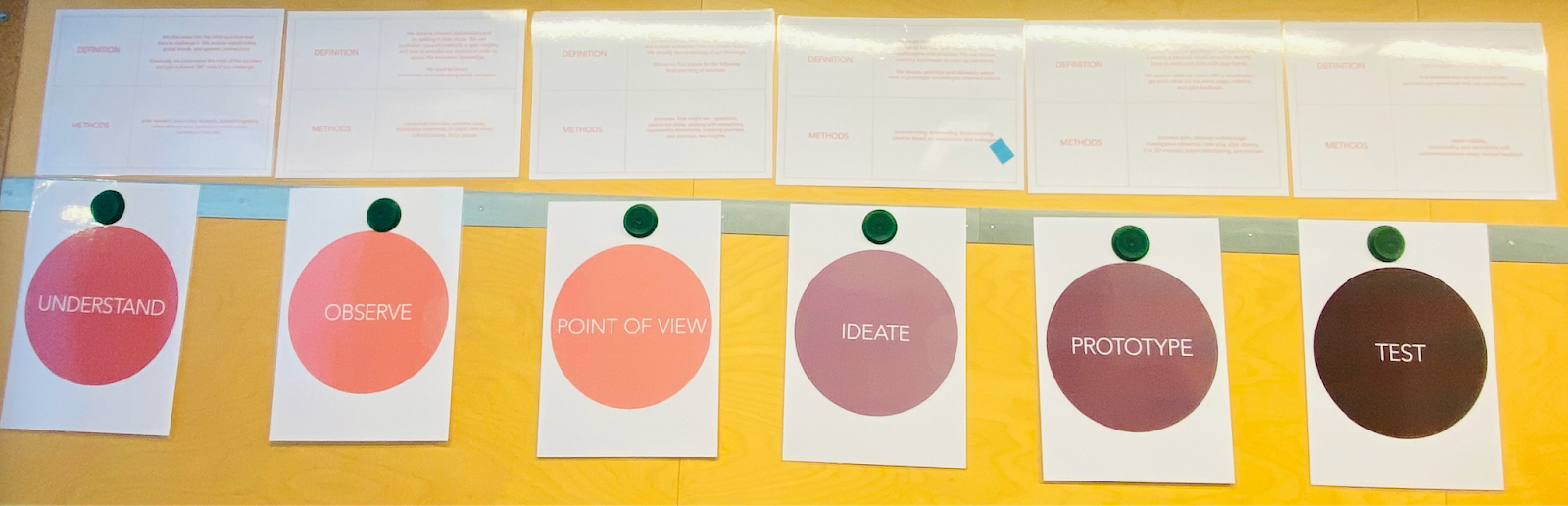
Picture 2: Phases of design thinking

In the Understand phase the aim is to increase understanding of the problem via various kinds of research. The aim of the Observe phase is to find underlying pain points and motivations of the stakeholders related to the problem. This can be achieved using observations, interviews and above all applying empathy to gain insights from other people’s perspectives. 

In the Point of view phase we focus on specific persons via questions like “How might we help person X to…”. We might also create personas representing specific types of people and envision stories of how our personas interact with our problem. The Ideate phase is about generating as many ideas as possible. Let your mind go free and create wild, disruptive ideas. Instead of just thinking, use your hands and draw your ideas instead.

The Prototype phase (Picture 4) is all about creating hands-on models. The goal is not to create something working, but to figure out the idea’s strengths and weaknesses and use that to create more detailed and refined prototypes in the future (Brown, 2009). The prototype should be self-explanatory. Show, don’t tell ! Test and validate to fail early by killing your darling ideas if they don’t work.

Picture 3 (Marzavan, 2023) shows how the methods are put together to truly understand the problem and generate ideas to work towards a solution by repeating & iterating as needed. Key sources of design thinking are insight (learning from the lives of others; observation (watching what people don’t do, listening to what they don’t say), and empathy (standing in the shoes (or lying on the gurneys) of others). 

Picture 3: How the methods fit together (Marzavan 2023)

“Serious play”

The term “serious play” was popularised by Michael Schrage in his book Serious play: How the world’s best companies simulate to innovate. It refers to the use of play in innovation and problem-solving. It is most well known in the form of LEGO® Serious Play, a methodology developed by the LEGO Group. 

During our 2 day workshop with Daniela Marzavan, we learnt how we can use legos to make a prototype to visualise our ideas, and created models which we later tested with our fellow student colleagues. Based on the feedback we received we were able to cocreate a better solution for our problem.
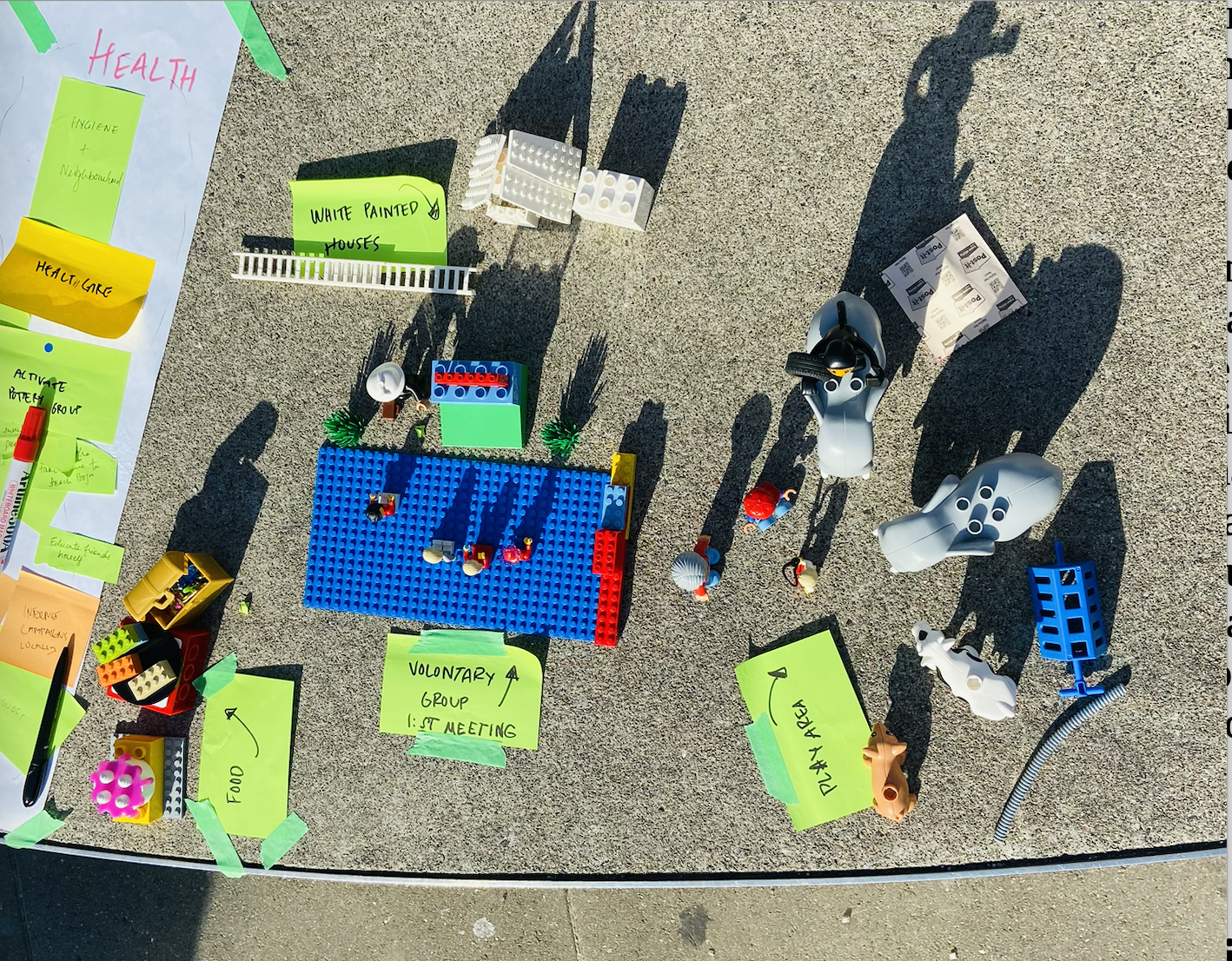
Picture 4: Lego Prototype for challenge: How can we solve the problem of heat islands in cities?

Hopefully we have shown how design thinking and serious play can be used to innovate solutions and thus create a competitive advantage in today’s fast-paced business environment.

Although the problems of the world can be difficult and stressful, solving them doesn’t have to be!

Written by Mani Gupta #SID22 and Tommi Kujanen #SID23 (Service Innovation and Design students)

References

Brown, T. (2009) Change by design: How design thinking can transform organisations and inspire innovation. New York: HarperCollins Publishers.

Kolko, J. (2015) Design thinking comes of age. The approach, once used primarily in product design, is now infusing corporate culture Harvard Business Review September 2015, 66-71.

Kouprie, M & Sleeswijk Visser, F. (2009) A framework for empathy in design: stepping into and out of the user’s life Journal of Engineering Design Vol. 20, No. 5, October 2009, 437–448

Marzavan, D. 2023. Design thinking [lecture material]. Held on 8 and 9 September 2023. Laurea University of Applied Sciences. 

Tschimmel, K. (2021). Creativity, Design and Design Thinking – A Human-Centred ménage à trois for Innovation. Perspectives on Design II. Ed. Springer “Series in Design and Innovation”.


Posted

in

by

Tags:

Comments

6 responses to “It’s time to play, seriously! – Using design thinking to solve today’s problems”

  1. susannaehulkkonen Avatar
    susannaehulkkonen

    Thanks for this good wrap-up! Very useful. What I find especially interesting is the same thing you mention: the meaning of using your playing skills and imagination just like children. After Design Thinking contact lessons last month, I have started to view my kids playing and prototyping all the time. How they copy real life in their imaginary world is fascinating! That’s why I think teaching kids not to forget play’s meaning is super important.

    Through hands-on activities like building legos, you can engage in a creative process that encourages you to think beyond conventional boundaries. This approach not only revitalizes the imaginative spirit but also promotes collaborative thinking. Visualizing ideas in a tangible form can provide a unique perspective, leading to innovative solutions. In this way, the interactive and playful nature of the prototyping method in Design Thinking enhances teamwork and fosters a dynamic problem-solving environment, making play a valuable tool.

  2. coreyjhope Avatar
    coreyjhope

    Thank you for the refreshing read, Mani Gupta and Tommi Kujanen!

    I enjoyed reading about the idea of ‘serious play’ within the ‘design thinking’ methodology.

    It did make me think about my own childhood when I played with Leggos. I guess I need to push myself to bring back some of that curiosity and imagination! Your article does a great job of encouraging us to channel those inherent skills into practical, innovative solutions for contemporary challenges.

    I agree that these playful and explorative behaviors from our childhood inherently mirror the core principles of design thinking.

    Incorporating idea of ‘serious play’ makes the process of innovation way more enjoyable and also produces a more collaborative and engaging environment. The hands-on approach while solving real-world problems is an important approach.

    The article has gotten me interested into reading Michael Schrage’s book “Serieous Play”, of course when I have time.

    You also mentioned how individuals and teams should empathize, experiment, and iterate with a solution-focused mindset. I found the emphasis on empathy particularly important, as it’s fundamental to understanding the needs and difficult points of the people we design for.

    Lastly, the workshop experience you also shared also serves as a practical, relatable example of this theory in action, it showcases how what our team did in class applies to these methods.

    It’s refreshing to see the combination of light-hearted play and serious problem-solving showcased as not just beneficial, but essential in navigating the complex business and technological landscapes of today. Thanks for your perspective!

  3. mia00058laureafi Avatar
    mia00058laureafi

    Thank you Mani and Tommi for an insightfull read! I like to think that just like children in the kindergarden have “free play time” and “structured play time”, we, in our corporate every day life, should also take time to free play (our free time) AND sturctured play.

    By that I mean that we should every now and then take time and take a look at our product or service we provide, and have an innovative, facilitated session (nicely described in your blog post) playing around with new crazy ideas – have room for innovative thinking outside our routines and structures!

  4. leocaetano Avatar
    leocaetano

    You beautifully highlight the importance of “serious play” in problem-solving and innovation. It’s a refreshing reminder that even when dealing with complex issues, we can inject fun and creativity into the process. I particularly appreciate the use of LEGO as a prototyping and visualisation tool, which engages the imagination and promotes practical, collaborative problem-solving.

    As mentioned in the article and comments, it’s interesting that, as adults, we often have difficulty reconnecting with the fun and creativity we had as children. Thinking like a child, with an open and imaginative mindset, can lead to innovative solutions and unlock new and inventive approaches to solving complex problems. Incorporating “serious play” elements and Design Thinking can help bridge the gap between the structured adult world and the imaginative world of a child, making problem-solving a more fun and creative endeavour. It’s a valuable perspective in our fast-paced business world, where creativity is a competitive advantage.

  5. johannalangskog Avatar
    johannalangskog

    Thank you Tommi and Mani for summarizing the Design thinking process and highlighting the importance of “serious play”. You made the process clear and easy to understand and I especially like your take on “serious play”. This is exactly what I’ve learned in my previous work, that in order to find those really golden ideas you need to “let loose” and bring out that inner child of yours. I also think it’s important that the environment where you ideate is open for any kind of corky ideas and that you feel comfortable and safe without being judged.

    It’s sad in a way that most of us loose that playfulness we all once had a child. The Design Thinking workshop we had in class was a real eyeopener for me. The co-creation environment and playfulness is something I will take with me to my work.

  6. nikhilagarwal59738d6d07 Avatar
    nikhilagarwal59738d6d07

    This blog brilliantly captures the essence of how design thinking can transform problem-solving into an innovative, collaborative, and even playful process. The emphasis on serious play, particularly through methods like LEGO Serious Play, showcases how tactile and visual tools can lead to deeper insights and creative breakthroughs. I especially appreciate the breakdown of the six iterative phases of design thinking, which highlights how empathy, observation, and continuous prototyping are critical for addressing complex challenges. It’s inspiring to see how combining structured methodologies with creativity can foster more effective and human-centered solutions. A truly insightful read that makes the idea of tackling tough problems feel accessible and, importantly, enjoyable!

Leave a reply to leocaetano Cancel reply