
Design thinking can be defined as a human-centered approach to problem solving, creativity and innovation that brings along new and more effective solutions (Kaartti 2022; Brown 2019). Its definition has evolved since the 1990s; with some viewing it as a cognitive process or a mindset, and others seeing it as a toolkit for innovation processes, connecting creative design approaches to business thinking.
Whichever the definition, what is certain is that it allows for exploration occur in multiple contexts and scenarios. As Brown (2019) stated, it is not only for trained professional designers, it is available to people from all disciplines, who wish to master its mindset and methods.
Tschimmel (2022, 28) presents a five-principle model for design thinking as a process:
1. Human-centered approach, 2. Collaboration, 3. Experimentation, 4. Visualisation and
5. Holistic approach. Whereas Brown (2019) notes design thinking to consist of three spaces of innovation: inspiration, ideation, and implementation; with the steps often overlapping.
Whilst there are several different models for design thinking, they all hold empathy as central, helping create a deep understanding of people and experiences (Kouprie & Sleeswijk Visser. (2009).
How can design thinking support innovation?
Design thinking can support innovation, helping organisations to differentiate themselves in our fast moving world. Services are becoming more complex, and ideas can be easily copied; thus design thinking can be used to allow true innovation to occur.
By supporting the mindset and process to explore, take risks, fail quickly and learn, as well as allowing peoples’ empathetic horizons to be broadened, valuable insights are brought to light, to develop innovative services and products.
Innovation proves not to be the outcome of the “lone genius inventor”, but rather the result of collaboration, hard work, human-centered discovery, and iterative cycles. As Thomas Edison puts it “Genius is 1% inspiration and 99% perspiration”.
Including multiple perspectives early on gives way to complete solutions that bring true value to customers. The designer is not just an add-on at the end, but rather takes part on collecting customer insights to create ideas.
One example for this approach is the Japanese company Shimano, manufacturer of bicycle components. They actively decided to better understand the people outside their core customer base to understand why 90% of American adults don’t ride bikes. This led to identify 4 main insights: intimidation, complexity, cost; and maintenance. Knowing the broader market better, they developed “coasting bikes”, built for pleasure rather than sport. Big manufacturers then began developing new bikes using their components, to reach a new, wider audience.
This is a good example of how design thinking can lead to more innovative solutions, creating breakthrough ideas by using empathy to observe from multiple perspectives and gain deep understanding of their customer’s lives to build value.
Design thinking in action
On our days studying Design Thinking at Laurea, we followed Mindshake’s 6E model, utilising different design thinking methods to create more innovative sustainability solutions for Laurea.
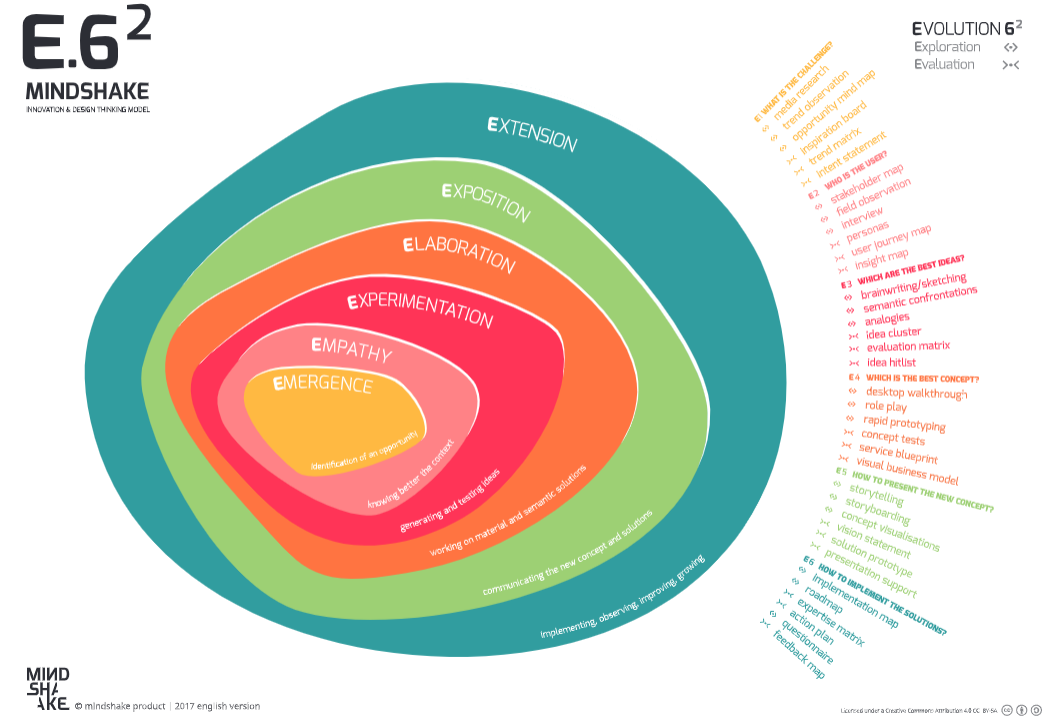
Through this experience, we saw first hand that breakthrough ideas–like our student garden– require strategic approaches, such as exploring lots of ideas quickly. We had to actively observe and listen to students and staff to empathise and identify insights through our teams’ multiple perspectives, as creativity also depends on the way it brings value and is perceived.
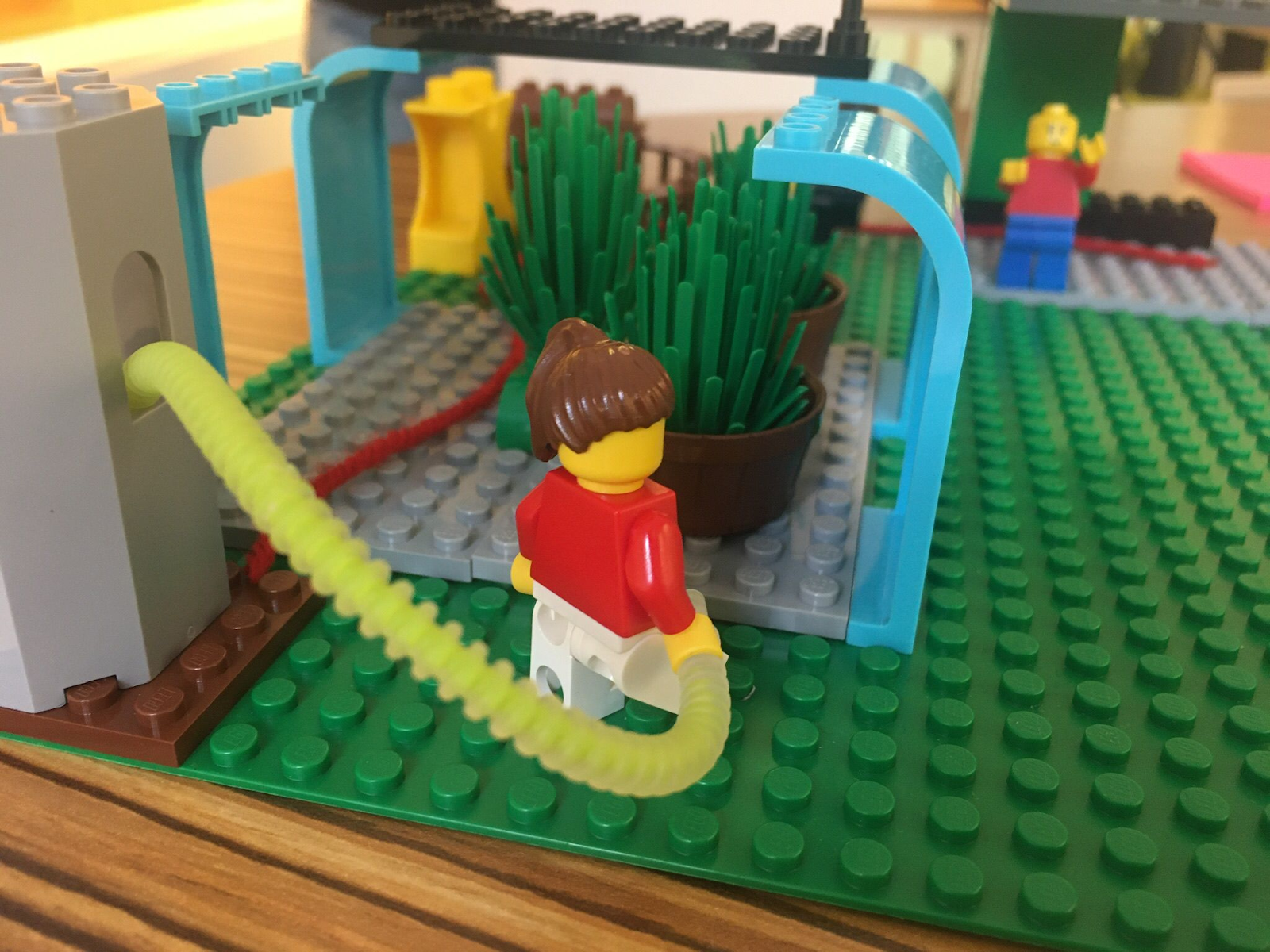
Overall, we learnt that design thinking is about mindset, collaboration and action. It is an iterative process, well supported by literature and models, but also by exploration, collaboration and willingness. Once you take an open minded approach to employ human-centred discovery, innovation begins to happen. And innovating can only lead to further innovation!
Written by Rosanna Thomasoo, Johanna Lahti and Juliana Romero, students in the Service Innovation and Design programme.
Sources:
- Brown, Tim (2009; 2019). Change by design: how design thinking can transform organizations and inspire innovation. New York: HarperCollins Publishers.
- Brown, Tim (2008) Design Thinking. Harvard Business Review, June, 84-95. http://www.ideo.com/images/uploads/thoughts/IDEO_HBR_Design_Thinking.pdf
- Katja Tschimmel. (2022). Creativity, Design and Design Thinking—A Human-Centred ménage à trois for Innovation
- Kouprie, M & Sleeswijk Visser, F. (2009) A framework for empathy in design: stepping into and out of the user’s life
- Kolko, J. (2015) Design thinking comes of age. The approach, once used primarily in product design, is now infusing corporate culture. Harvard Business Review September 2015, 66-71.


Leave a reply to annalaidinen Cancel reply