
Anyone can be creative. That was the key thought gathered from the book Creative Confidence by Tom and David Kelley. Too often creativity is associated with being artistic. In its’ essence, creativity is about finding solutions to open-ended problems – a natural part of us, that we must just learn to unblock.
How does one improve their creative thinking abilities and get rid of the fear of failure, the one thing holding so many of us back from realizing our inner creative potential? One way is through Design Thinking processes, the repetition of which can not only harness our brains to be more in tune with our creativity, but help us realize that failure is an inevitable risk in any endeavour. Every step of a creative journey – whether a triumph or a failure, is a step forward. The one taking the most steps is the most prone to succeed.
“The inescapable link between failure and innovation is a lesson you can learn only through doing.”
First steps of ideation
In a Design Thinking workshop, such as the one we recently attended called Design Thinking Masterclass, taught by Katja Tschimmel, teams were challenged to “shake their collective brains” by going through a process of different creative steps and phases to come up with innovative solutions to open-ended problems and arrive at new, more or less ready-to-go ideas in the end.
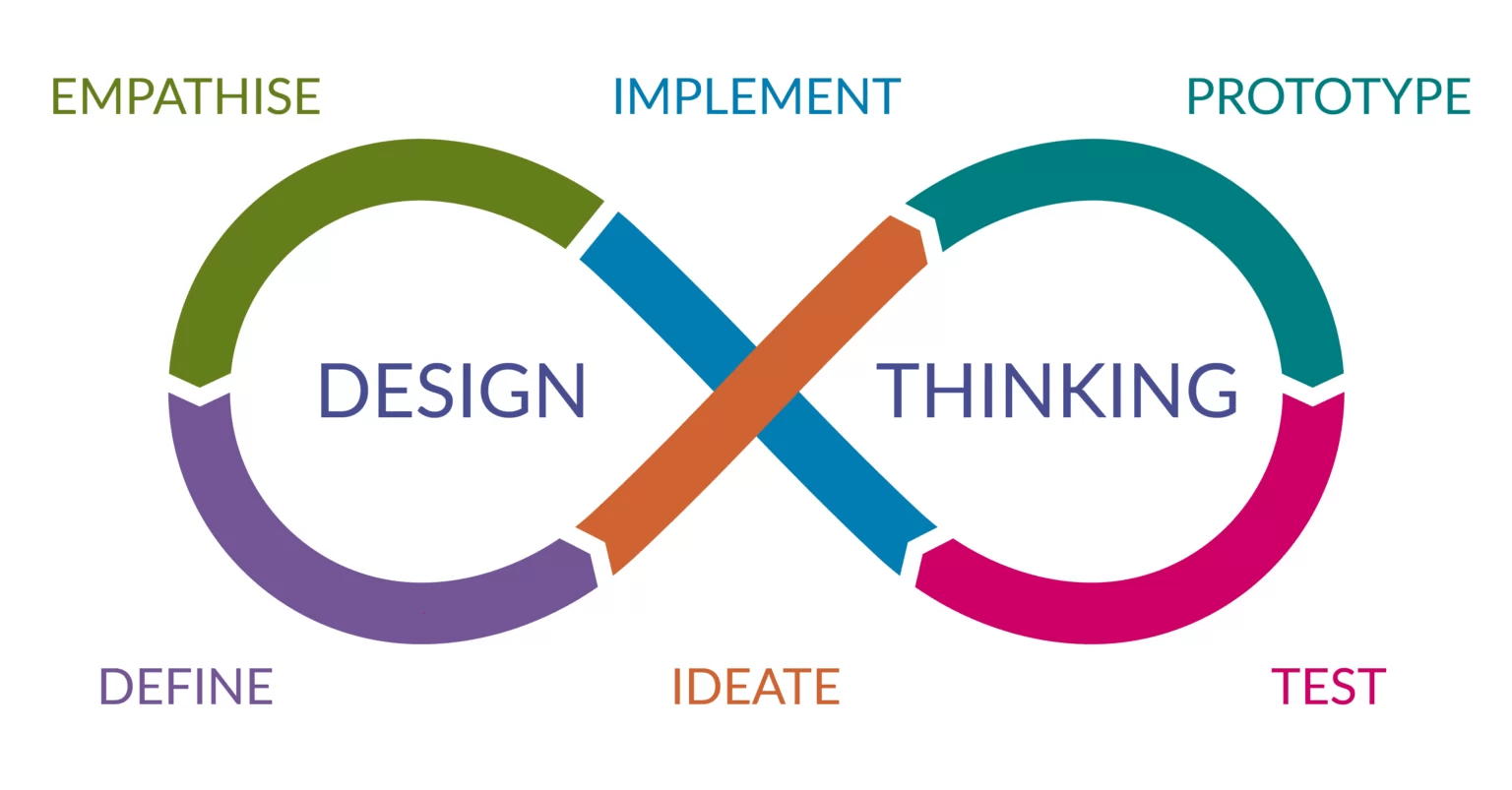
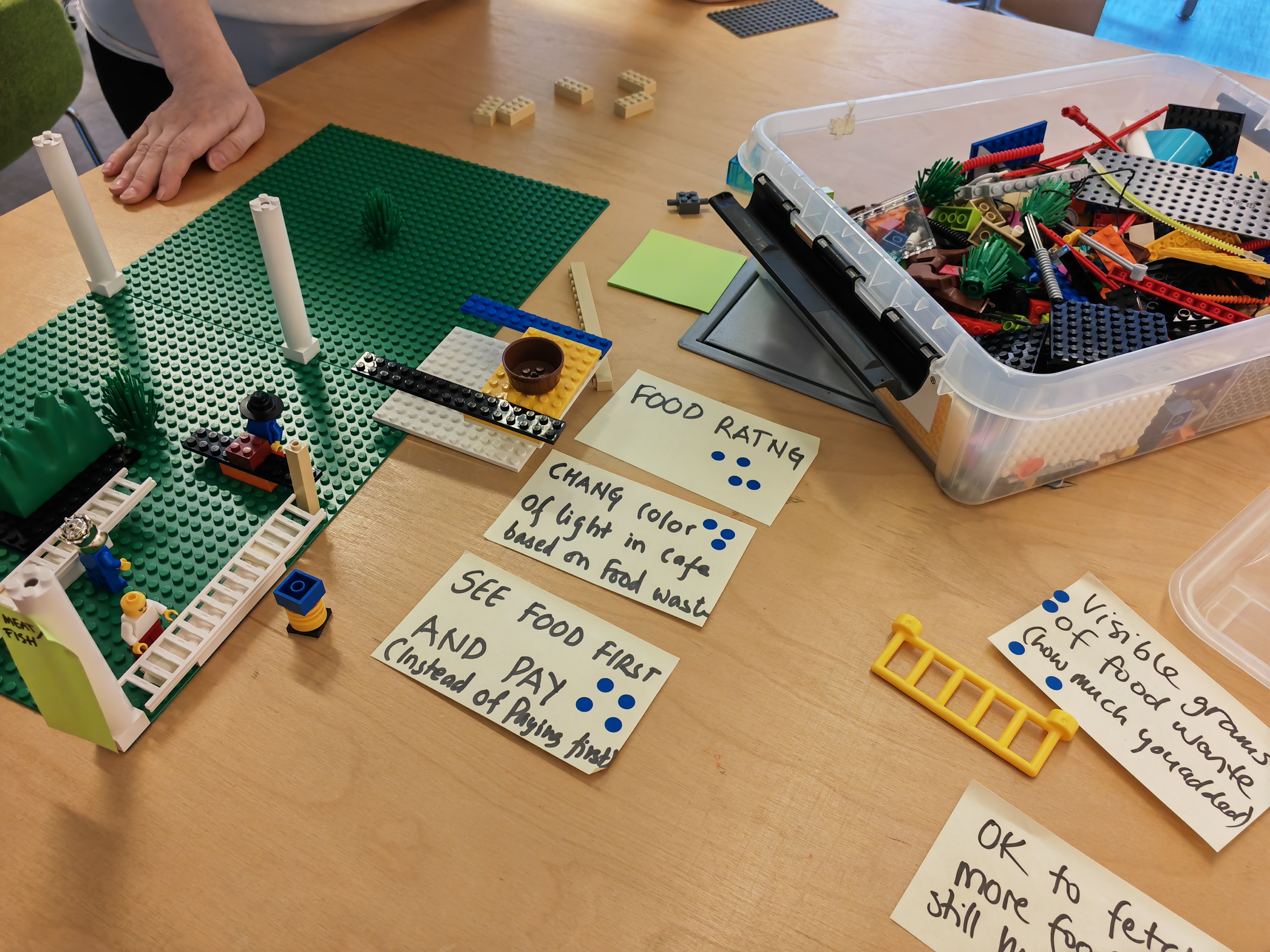
Our creative problem during this workshop was to innovate ways to reduce food waste at the school’s lunch cafeteria. As an example, one step of this creative process was prototyping. As Kouprie and Sleeswijk Visser expressed in their 2009 article titled A framework for empathy in design: stepping into and out of the user’s life, “to evaluate if an early idea would fit the user’s needs, the designers could step in the user’s world, discover what aspects would have influence on the product use, wander around, try to understand how the user would feel and evaluate how the idea can be improved according to the imaginary user’s situation.” One way to step into the user’s world in this case was through prototyping what happens during the service scenario being innovated upon.
In the book Creative Confidence, it is mentioned that Claudia Kotchka, vice president of design innovation and strategy at Procter & Gamble used similar workshops successfully at her company to get executives to brainstorm problems requiring creative thinking.
“The workshop moves so fast they don’t have time to question the process. They are immediately engaged.”
The above quote encapsulates the feeling during Mrs. Tschimmel’s workshop perfectly as well. You were constantly being challenged to come up with new ideas together. Especially the multicultural and multidisciplinary aspect of the teams resulted in a lot of energized discussion and fluid building of ideas on top of the previous ones. I suspect all of us would have had trouble assigning any specific idea to any individual team member after the workshop.
“Bringing together a variety of life experiences and contrasting perspectives results in a creative tension that often leads to more innovative and interesting ideas.”

In closing, it can be said that the power of Design Thinking workshops lies in the very beginning of this post: anyone can be creative. Creativity helps us solve big and small problems daily, whether in our professional or personal lives. As creative confidence is defined as “the ability to come up with new ideas and the courage to try them out”, as with any other ability, being confident helps us move forward. The first step could be as easy as trying to rediscover the familiar: doing something you do every day, a different way, and paying close attention to new thoughts that pop up in your head. You might just discover something new you’ve never thought about before.
Written by Anna Laidinen & Janne Rönkkö
References
Kelley, D. & Kelley, T. (2013) Creative Confidence: Unleashing the Creative Potential Within Us All. Crown Business. (http://www.creativeconfidence.com) Quotes from pages 32, 103, 137, 147.
Kouprie, M & Sleeswijk Visser, F. (2009) https://laurea.finna.fi/PrimoRecord/pci.proquest35179856 Journal of Engineering Design Vol. 20, No. 5, October 2009, 437–448. Quote from page 10.
Brown, Tim (2008) Design Thinking. Harvard Business Review, June, 84-95. http://www.ideo.com/images/uploads/thoughts/IDEO_HBR_Design_Thinking.pdf
Design Kit. Ideo.org. https://www.designkit.org/mindsets/3
Design Thinking: An Introduction. System Concepts. https://www.system-concepts.com/insights/design-thinking-introduction/


Leave a reply to sarisid Cancel reply