
Service Innovation & Design
-
Future at work: What are the new skills service designers will need?
A webinar by Perttu Pölönen, futurist, inventor and author. When thinking about the future, we might assume that the skills we need to have will be related to AI, Robotics, Coding, and everything involving technology, however, Perttu Pölönen has a different view on the skills of the future. The question he posed to everyone during…
-
Unnecessary office?
The global pandemic Covid-19 has changed a whole lot how we relate to work and specially towards workplaces. Since spring 2020 almost all office workers have been quided to work remotely from home offices. Long awaited freedom for some, and prison to those who need social contacts to stay sane. First qualitative studies show that many…
-
Designing a better life
South Africa remains among the world`s most inequal countries. High inequality is perpetuated by a legacy of exclusion, and the economic growth does not contribute to diminishing poverty and generating new, decent jobs. Inequality in wealth is striking: the richest 10% of the population held around 71% of net wealth in 2015, while the bottom 60% held…
-

Aligning strategic foresight in large organizations – Workshop at SDGC
During the Service Design Global Conference (SDGC) arranged in October, a workshop was held around facilitating future visions in large organizations.
-
Embracing change at the Service Design Global Conference 2020
The international community, Service Design Network (SDN), founded in 2004, arranged an online conference focusing on service design in October of 2020.
-

Panel Discussion: Design Thinking – a tool to create and develop better services
Fraktio, a Finnish company crafting state of the art web applications, arranged an online panel discussion where five designers explained and analyzed Design Thinking principles.
-
Let’s play!
In service design you stumble sooner or later in the use of Legos. They can be used in many different ways and stages. In Global CX 2020 Day which themes this year were CHANGE, Transformation and Future of CX, one of the keynote speakers Sirte Pihlaja, CX/EX advisor, community creator and global #1 best-selling author…
-

Designing remote working practices to improve employee experience (EX) in organizations
In recent years, remote working has become a hot topic as organizations are developing new working processes and modern collaborative platforms and technology emerge. At the same time, firms are moving towards human-centric approaches and working in multidisciplinary teams to stay competitive. Due to these rapid changes in several industries, recruitment, finding right competences and…
-
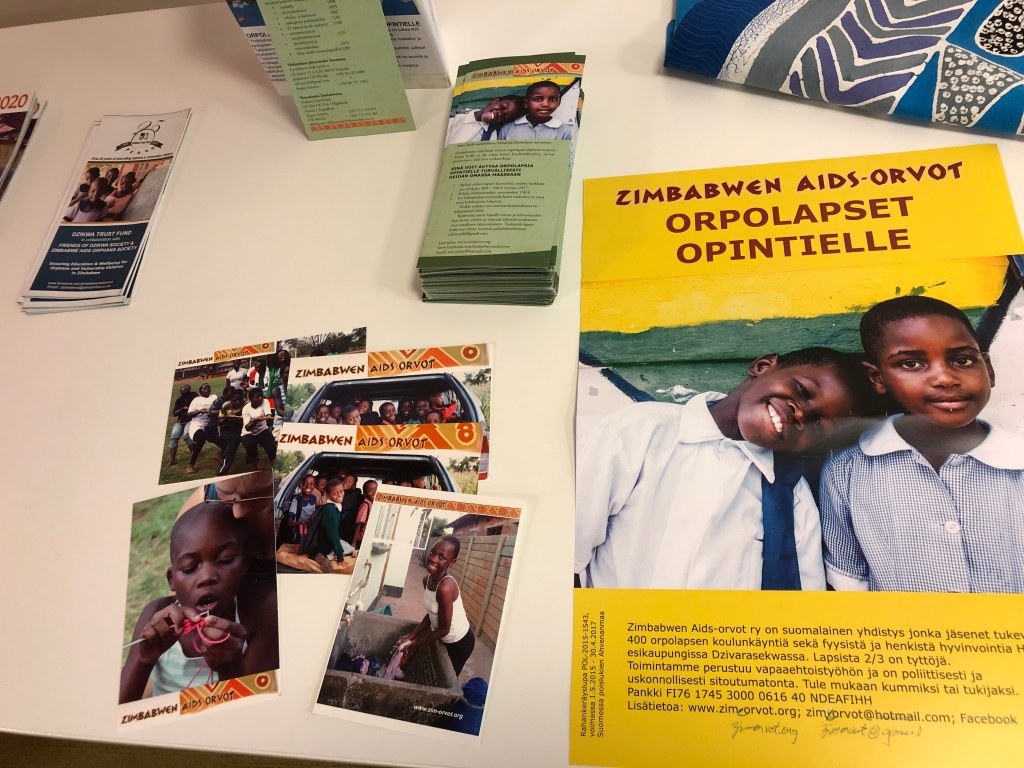
Developing a Non-Governmental Organization’s operations in Zimbabwe through co-creation
Zimbabwe Aids Orphan Society (Zimbabwe Aids-Orvot ry.), founded nearly 20 years ago, is a Finnish non-profit association founded by Seppo Ainamo and Oili Wuolle. The association raises funds for welfare and supports education for orphans in the poor neighbourhood of Dzivarasekwa in Harare, Zimbabwe. Currently, roughly 500 members support almost 400 orphans (out of which 63%…
-

A cocktail of childish playing and academic research
Collaboration and direct engagement were the key words when two distinguished service designer specialists discussed the use of creative practices in designing sustainable futures. This inspirational talk was organized by Design Club, on 23rd September 2020. Associate professor Tuuli Mattelmäki from Aalto University gave an overview of an EU-supported project Creative Practices for Transformational Futures (CreaTures)…

